

[비즈한국] Last year, the domestic steel industry faced a dual crisis: a deepening slump in the construction sector, its primary front-line industry, and the spread of global protectionism. According to the annual performance reports recently released by POSCO Holdings005490 and Hyundai Steel004020, both companies experienced a contraction in revenue. This is analyzed to be primarily due to falling product sales prices and decreased sales volume resulting from sluggish demand both at home and abroad. However, in terms of profitability, operating profits in the steel division showed improvement as cost savings were realized through declines in the prices of key raw materials such as iron ore and coking coal, as well as the stabilization of export freight rates.
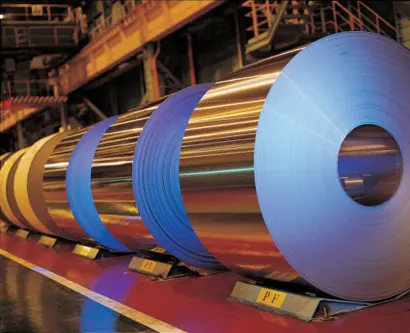
Hyundai Steel Operating Profit Up 37%, Debt-to-Equity Ratio Also Improved
The downturn in the construction industry, a core consumer of the steel industry, served as a direct cause for the decline in performance. In its earnings announcement on the 29th, POSCO Holdings reported that its revenue stood at 69.095 trillion won, a 4.9% decrease from the previous year. Hyundai Steel also announced on the 30th that its revenue was 22.7332 trillion won, down 2.1% from the previous year. Both companies suffered from reduced product sales volumes.
Despite the revenue decline, Hyundai Steel achieved an operating profit of 219.2 billion won, a 37.4% increase compared to the previous year. This result came from efforts to reduce costs alongside expanding the sales proportion of high-value-added products.
POSCO Holdings also managed to recover profitability in its steel division by increasing operating profit by 307 billion won compared to the previous year through reductions in raw material and processing costs. Across the industry, firms are holding their ground by offsetting the impact of stagnant demand with improvements to their cost structures. However, profitability fell due to poor performance in non-steel divisions. The 2025 operating profit was 1.827 trillion won, a 16.0% decrease from the year prior. The main factors for the worsened profitability were the "chasm" (a temporary stagnation in demand) in the secondary battery materials business and large-scale operating losses in the construction division.
The energy materials division saw worsened profitability as revenue dropped due to price declines caused by weak lithium prices and the impact of the end of U.S. electric vehicle subsidies. In particular, the construction subsidiary POSCO E&C posted an operating loss of 452 billion won, negatively impacting the group's overall performance due to loss processing related to the Shinansan Line accident, additional costs from construction suspension, and the recognition of bad debt expenses for overseas projects.
Conversely, within its steel-centric business structure, Hyundai Steel focused on strengthening financial stability by improving its debt-to-equity ratio to 73.6%, a 6.1 percentage point decrease from the previous year.
Aiming for a Rebound Through Electric Arc Furnace Investments and Portfolio Diversification
Domestic steelmakers are also stepping up joint efforts to respond to tightening global environmental regulations and carbon border taxes. Hyundai Steel and POSCO are pursuing investments in an electric arc furnace (EAF) steel mill in Ascension Parish, Louisiana, to produce carbon-reduced automotive steel sheets. In this project, totaling $5.8 billion, Hyundai Steel plans to take a 50% stake and POSCO a 20% stake, aiming to stabilize the local North American automotive steel supply chain while diversifying risks.
The electric arc furnace production method is considered the core of next-generation eco-friendly steel production, as it can reduce carbon emissions by approximately 70% compared to blast furnaces. The Louisiana business site spans about 2.6 times the size of Yeouido and is evaluated as a strategic base to respond to the demand for carbon-reduced materials from global automakers, thanks to its low energy costs and excellent logistics infrastructure. The two companies aim to begin construction in the third quarter of this year and commence commercial production in the first quarter of 2029.
This year, the steel market is expected to see portfolio diversification into new demand industries as the key to a performance rebound. Hyundai Steel is focusing on securing new demand by expanding its nuclear power plant steel business globally and responding to demand for ultra-heavy plates for offshore wind power. In particular, it is actively engaging in global nuclear power plant contract bids based on the ASME QSC (Quality System Certificate for nuclear power plants) certification it acquired, a first for a domestic steelmaker. It is also expanding its business area by supplying steel materials for next-generation transmission towers to Korea Electric Power Corporation (KEPCO).
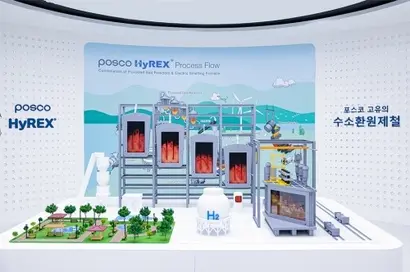
POSCO Holdings is seeking profit growth through the start of commercial production in its lithium business and the full-scale implementation of restructuring effects. The company plans to recover profitability in the secondary battery materials division by shifting the Argentina lithium plant to a full-capacity system and diversifying its customer portfolio, while strengthening low-carbon technology through the commencement of a Hydrogen Reduction Steelmaking (HyREX) pilot facility.
Having passed through a period of revenue contraction last year, the steel industry is expected to attempt to secure competitiveness this year through the expansion of high-value-added product sales and the establishment of carbon-reduced production systems.