

[비즈한국] The government's ambitious plan to expand urban housing supply has faced opposition immediately after its announcement. Following the Seoul Metropolitan Government's swift backlash, criticizing it as being "obsessed with public-led supply," major civic groups and local governments have also expressed their opposition. With a series of objections emerging against the Ministry of Land, Infrastructure and Transport's housing supply plan, concerns are rising that the housing supply could face setbacks. The Ministry plans to announce additional supply measures within February.
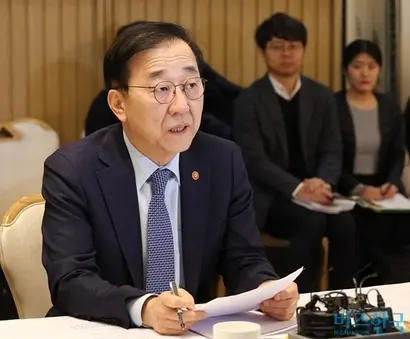
On the 29th, the Ministry of Land, Infrastructure and Transport announced that it would supply more than 1.35 million homes in the metropolitan area by 2030, as a follow-up to last year's September 7 housing supply measures. The plan includes supplying a total of 60,000 homes—32,000 in Seoul and 28,000 in Gyeonggi—by utilizing public land and old government buildings in city centers.
However, immediate backlash erupted. The Seoul Metropolitan Government issued a statement criticizing the government for being obsessed only with a "public-led approach." Subsequently, opposition opinions were raised by major civic groups and local governments such as Gwacheon City.
Gwacheon City and KRA: "Unilateral Announcement… Cannot Accept"
The government plans to supply a total of 9,800 homes by utilizing sites such as the Gwacheon Horse Racing Park and the Counterintelligence Command site. As soon as the government announced it would utilize the Gwacheon Horse Racing Park site for housing supply, the City of Gwacheon and the Korea Racing Authority (KRA) labor union expressed their refusal to accept the plan.
Gwacheon City had already released a statement on January 23, before the government's announcement, saying, "We clearly express our opposition." This was an immediate rejection of the potential designation of new housing supply sites within Gwacheon.
Gwacheon Mayor Shin Gye-yong stated, "Gwacheon is currently undergoing development that already exceeds the capacity of its urban infrastructure," and added, "I stand with the citizens and clearly oppose the designation of additional housing supply sites within the city." She pointed out, "While I agree with the purpose of the government's housing supply policy, a cautious approach that fully considers local conditions is necessary. "
The KRA Labor Union released a statement on the 29th, showing an outraged reaction to the government's plan, calling it a "unilateral announcement without consultation with the institution." The union condemned the move, stating, "This announcement is a typical example of administrative failure, carried out unilaterally without any discussion with the public institution involved," and warned that "demolishing this site is an 'industrial massacre' that would deliver a death sentence to the entire industry, from production farms to distribution and management. "
The KRA union stated that it would engage in a strong struggle if the housing supply plan utilizing the Gwacheon Horse Racing Park site is not withdrawn.
Civic Groups: "Re-examine Housing Supply Method from Scratch"
Backlash also came from civic groups classified as part of the broader ruling coalition. The Citizens' Coalition for Economic Justice (CCEJ) issued a statement on the 29th, pointing out, "The volume with specific construction schedules amounts to only 9,894 units on state and public land in Seoul, Gyeonggi, and Incheon," adding, "It is impossible to know how feasible the remaining volume actually is."
The CCEJ strongly criticized the measures, expressing concern that "this plan will not contribute in the slightest to the stability of housing for the working class, but will only fuel a rise in housing prices."
Criticism also continued regarding the method of selling public land. The CCEJ argued, "The supply of housing for sale is in direct opposition to President Lee Jae-myung's campaign promise not to sell public land," and asserted, "Public land should exclude private participation, and public enterprises should directly build and supply long-term public housing such as permanent, 50-year, national, and long-term lease housing, as well as basic housing." They also urged President Lee Jae-myung to step in personally to lead real estate reform.
The area receiving the largest supply in the government's plan is Yongsan, Seoul. The plan intends to supply a total of 13,501 homes, including 10,000 in the Yongsan International Business District, 2,500 at the Camp Kim site, and 480 at the Yongsan detention basin. Regarding the tug-of-war between the Seoul Metropolitan Government and the Ministry of Land, Infrastructure and Transport over the supply volume for the "Yongsan International Business District," People's Solidarity for Participatory Democracy (PSPD) criticized both, saying, "Both are wrong."
PSPD issued a joint statement pointing out, "While the government and Seoul City seem to be in conflict over the housing supply volume at the Yongsan Maintenance Depot (International Business District) site, the method of selling and disposing of large-scale (approximately 450,000 square meters) public land in the heart of Seoul to the private sector is not significantly different."
They further argued, "The problem is serious in that neither the government nor Seoul City has the will or a plan to expand public rental housing. Rather than discussing the scale of housing supply at the Yongsan Maintenance Depot, the development method should be re-examined from scratch."
They continued by demanding, "The Yongsan International Business District development plan, which intends to hand over scarce public land to the private sector, should be immediately withdrawn," and urged the government to supply 100% public housing on public land, including a significant expansion of public rental housing.
Meanwhile, on the morning of the 30th, First Vice Minister of Land, Infrastructure and Transport Kim Yi-tak appeared on MBC radio's 'Kim Jong-bae's Focus' and stated, "Additional supply plans may be announced in February as soon as they are prepared, beyond the 61,000 units announced yesterday," signaling further measures. Regarding the Seoul Metropolitan Government's backlash, he stated, "The Minister of Land, Infrastructure and Transport and the Mayor of Seoul have met and consulted three times since the end of last year."