

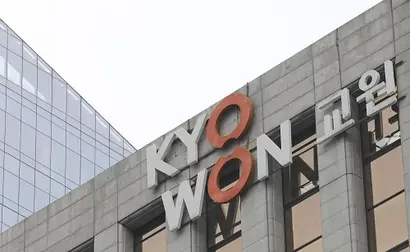
[비즈한국] Twenty days have passed since Kyowon Group identified a massive personal information breach due to a ransomware attack, yet the company still has not identified the specific scale or scope of the leak, fueling growing consumer anxiety. This incident, occurring shortly after President Jang Dong-ha took the helm of the group's management, has sparked discussions regarding the responsibility and crisis management capabilities of the second-generation leader.
Financial Data Leak Status Also Unconfirmed: Controversy Over Kyowon Group's 'Lack of Transparency'
Recently, a security incident occurred at Kyowon Group, raising concerns about potential personal information leakage. On January 10, Kyowon Group confirmed that approximately 600 virtual servers were infected with ransomware and reported the breach to the Korea Internet & Security Agency (KISA) and relevant investigative authorities on the same day.
During the subsequent investigation, further evidence emerged suggesting that data had been exfiltrated due to the ransomware attack. Consequently, Kyowon Group filed a follow-up report with KISA and the Personal Information Protection Commission on the 12th. The investigative team estimated that among the 13 million total users across Kyowon Group's 8 subsidiaries (5.54 million when deduplicated), approximately 9.6 million users of key services were affected by the ransomware infection.
However, as of 20 days after the initial discovery, Kyowon has still failed to specify the items leaked or the victims affected. Unlike typical large-scale hacking incidents where the scope and nature of the leak are generally outlined in the early stages, this situation has seen delays in confirming the scale of the damage, intensifying user anxiety.
As the 'lack of transparency' drags on, concerns over potential personal information exposure are spreading among up to 9.6 million members. Given that the group's core business revolves around education brands like Kumon and Red Pen, the possibility that students' personal data may be included is a major factor heightening unease. Furthermore, Kyowon's failure to provide a clear position regarding the potential leakage of financial information has further exacerbated user concerns.
Industry observers suggest that this security incident could place a significant burden on Kyowon Group's brand reputation. Since education companies rely heavily on parental trust, analysts argue that concerns regarding information management could lead to a broader decline in overall corporate credibility.
A representative from Kyowon Group stated, "As the investigation is currently underway, the specific items leaked and the affected individuals have not yet been identified. It is difficult to estimate the duration of the investigation, so we cannot say when the results will be available."
Bad News Two Months After Taking Sole Control: A Test for Jang Dong-ha's 'Risk Management'
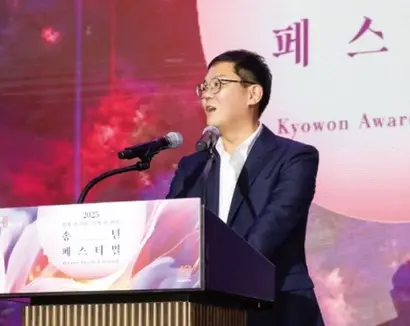
Coincidentally, this personal information leakage occurred shortly after second-generation leader President Jang Dong-ha took full charge of group management. President Jang was promoted from vice president to president during the November 2025 reshuffle, moving to the forefront of group management. He was also appointed as the sole CEO of Kyowon Co., Ltd., the parent company of the group.
President Jang is the eldest son of founder Chairman Jang Pyung-soon. He joined Kyowon Group in 2011, served as CEO of Kyowon Life from 2016 to 2019, and became CEO of Kyowon Tour in 2022. He continued his management training by rotating through major subsidiaries before returning as CEO of Kyowon Life in 2024.
President Jang has focused on the group's digital transformation. Following the COVID-19 pandemic, Kyowon Group prioritized 'building an AI ecosystem' and accelerated digital transformation to cope with the decline in the face-to-face learning market. Under this strategy, President Jang concurrently held the position of head of the Group Planning and Coordination Office, effectively overseeing the group's edutech transition. He led the establishment of an AI Innovation Center and personally managed R&D and infrastructure investments, pushing for a digital-centric structural reform.
As part of this strategy, Kyowon Group announced in 2021 that it would invest a total of 74 billion KRW in R&D and strategic investments for digital transformation. Last year, the group allocated a budget of 91 billion KRW for R&D and investment to advance edutech and expand infrastructure, further bolstering the digital push.
Actual results became visible. Under President Jang's leadership, the group increased its edutech revenue to 50% of the total, earning a reputation as a representative success story for digital transformation in the industry. Based on these achievements, President Jang expanded his scope of management responsibility within the group.
However, this breach has sparked criticism that the company may have been relatively negligent in establishing security infrastructure and governance compared to its business model, which is built on vast amounts of data. Critics argue that while digital transformation based on data utilization and service expansion moved quickly, the corresponding security systems and incident response manuals were relatively weak.
Because the incident occurred shortly after President Jang took over as sole CEO, attention is focused on his risk management capabilities. With criticism mounting over inadequate security management and a rapid decline in brand trust, how he recovers the tarnished image is expected to be a critical test for his future leadership. Some argue that simply restoring the system is not enough; there is a need to establish tangible compensation plans and overhaul security governance to prevent recurrence.
Regarding this, a Kyowon Group official added, "We have invested significant effort into security, and this incident had unavoidable aspects. It is not that we have been negligent in security investments. As of now, since no specific damage has been confirmed, no separate compensation plan is being discussed. We will consider further investments to prevent recurrence in the future."