

[비즈한국] Hyundai Motor Company005380 and Kia000270 both recorded record-high revenue in their 2025 operating results, but left behind a sense of regret. This is because the so-called "Trump risk," including the U.S. Trump administration's imposition of tariffs and the elimination of electric vehicle (EV) subsidies, began to be fully reflected in their earnings, leading to a significant drop in operating profit.
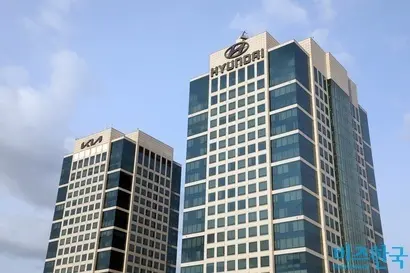
Hyundai Motor announced on the 29th that its annual revenue last year reached 186.2545 trillion won, a 6.3% increase compared to the previous year. This is the company's highest performance since its founding. However, operating profit stood at only 11.4679 trillion won, a 19.5% decline from the previous year.
Kia also broke its own revenue record, reaching an annual revenue of 114.141 trillion won last year. However, its operating profit plummeted 28.3% year-on-year to 9.078 trillion won, and its operating profit margin also fell from 11.8% the previous year to 8.0%.
The biggest variable that shook the 2025 results was the Trump administration's protectionist trade policy. The largest factor in the deteriorating profitability was the U.S. government's tariff policy. Early in the year, pressure was applied to impose tariffs of up to 25% on imported finished cars, which was later adjusted to around 15% through negotiations. Hyundai Motor analyzed that the profit reduction due to the impact of tariffs last year amounted to 4.1 trillion won. At its earnings conference, Hyundai Motor stated, "We expect the profit decline due to tariffs this year to be at a similar level to last year," and added, "Just as we reduced the tariff burden by about 60% last year, we will continue our efforts to cut tariff costs this year."
Kia also tallied a profit reduction of 3.093 trillion won due to the annual impact of tariffs. In particular, the tariff imposition was a decisive factor in the fourth quarter results as well, causing a 1.022 trillion won decrease in profit and leading to a quarterly operating profit of 1.843 trillion won, a 32.2% drop compared to the same period last year.
Furthermore, the elimination of EV tax credit subsidies following the Inflation Reduction Act (IRA) led to a decrease in EV demand. As of the fourth quarter, the proportion of Kia's EV sales in the U.S. market fell by 3.7 percentage points from 6.0% in the same period last year to 2.3%. Conversely, the proportion of hybrid vehicle sales rose by 8.5 percentage points from 10.5% to 19.0%, demonstrating the trend following the "EV chasm" (a temporary stagnation in demand before mass adoption) and changes in subsidy policies.
Both Hyundai and Kia faced skyrocketing costs as they offered aggressive incentives to fill the void left by the disappearing subsidies, which directly led to worsened profitability.
Tesla was also not immune to the impact of the EV subsidy elimination. Its 2025 annual revenue was $94.83 billion (approximately 136 trillion won), a 3% decrease from the previous year. This is the first annual revenue decline in Tesla's history. Operating profit also dropped by 38% year-on-year to $4.4 billion (approximately 6.2 trillion won), and net income plunged 46% to $3.79 billion (approximately 5.4393 trillion won).
What is noteworthy is the shift in the business's fundamental structure. While Tesla's automotive revenue declined by 11%, revenue from the energy storage and generation sector grew by 27% to $12.78 billion (approximately 18.2 trillion won). Specifically, it set an all-time record by deploying 14.2 GWh of energy storage systems in the fourth quarter alone. Tesla CEO Elon Musk proclaimed 2025 as the "first year of transitioning from a hardware-focused company to a physical AI company" and is accelerating investments in robotaxis and the humanoid robot Optimus. The strategy is to offset sluggish car sales with energy business and AI software (FSD) revenue.
This earnings announcement from Hyundai and Kia is significant in that it confirmed with numerical data the practical impact that changes in U.S. economic policy have on the domestic automotive industry. Tariff barriers and the abolition of subsidies are threatening the profit structures of domestic automakers by leading to increased production costs and weakened price competitiveness.
The challenge for automakers this year is to absorb tariff costs and defend profitability through hybrids. Additionally, securing a competitive edge over global automakers through future investments in areas like autonomous driving and humanoid robots is considered the key to success.