

[비즈한국] International gold and silver prices have shown a steep upward trend over the past month, significantly boosting interest in the precious metals market. Gold is trading near all-time highs, while silver has recorded an even steeper rise, leading to increased volatility. However, experts point out that even during price rallies, spot investors must first examine the structural limitations of taxes and transaction costs.
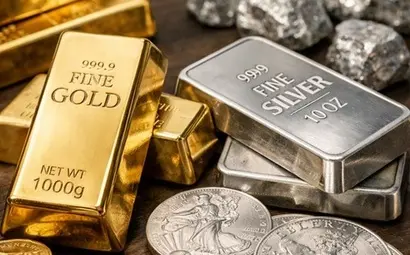
Gold Up 20%, Silver Up 50% in a Month
As of late January 2026, the international price of gold was approximately $5,150 to $5,200 (7.4 million KRW) per ounce (28.3g). Compared to the early $4,300 range at the end of last December, this represents an increase of about 18–20%. This is interpreted as the result of renewed preference for safe-haven assets due to concerns over a global economic slowdown, geopolitical risks, and expectations of a weaker dollar.
While gold prices have maintained an overall upward flow over the past month, they have also shown limited downward movement during adjustments following profit-taking. Market analysts suggest that the gold-buying trend of central banks is acting as a factor supporting the floor price of gold in the medium to long term.
Silver prices have moved much more aggressively than gold. By the end of January, the international price of silver rose to the $110–$115 (160,000 KRW) per ounce level. Considering it was around $70 a month ago, this is a sharp jump of about 50–60%.
Because silver is both a precious metal and an industrial metal, it is characterized by high price volatility when both investment demand and industrial demand enter the market simultaneously. This rise is also analyzed as a combination of safe-haven demand, supply constraints, and speculative demand.
Spot Investment Profits Are Calculated 'Differently'
However, it must be noted that such price increases do not automatically translate into actual profits for spot investors. In South Korea, when purchasing physical gold or silver, a 10% value-added tax (VAT) is immediately applied. Since this VAT is not refunded upon sale, investors start off with a built-in loss.
When manufacturing costs and distribution margins are added to this, the purchase price of physical gold and silver is set higher than the international market price. Conversely, when selling, the price is determined by subtracting the dealer's margin from the international price, creating a gap (spread) between the purchase and sale prices. Because of this, physical gold usually needs to rise by 10–15% or more to reach the break-even point, and silver requires an even larger increase. This means that even though international prices have surged, the actual profit felt by a spot investor may be limited.
Consequently, some investors are looking for alternatives through person-to-person (P2P) trading on second-hand platforms like Danggeun Market or Joonggonara. In principle, a one-time sale of physical gold or silver held by an individual is not illegal. It falls under the sale of movable property under civil law, so second-hand or private transactions are possible. However, if such transactions are repeated or lead to regular trading aimed at capital gains, the National Tax Service may classify them as a de facto precious metal business rather than a personal transaction.
In such cases, it could lead to the pursuit of VAT and income tax on unregistered businesses, or even tax-related sanctions if tax evasion is suspected. Caution is required, especially when users repeatedly post items for sale or "wanted" ads on platforms like Danggeun Market or Joonggonara, or when dealing primarily in cash, as these can become subjects of investigations into the source of funds. Industry experts advise that even when using P2P transactions, individuals should self-assess whether the frequency, scale, and purpose of the trades go beyond simple disposal of personal assets.
Due to these structural characteristics, an increasing number of investors are opting for indirect investment methods rather than physical assets, even amidst the recent precious metal investment craze. Gold passbooks, gold/silver ETFs, and the KRX Gold Market are evaluated as having structures favorable for short- to medium-term investment, as they have no or relatively lower VAT burdens. Gold passbooks are subject to dividend income tax on trading profits, and ETFs also have relatively clear tax and transaction cost structures. The KRX Gold Market allows trading like stocks through a securities account and is praised for high accessibility for individual investors because there is no VAT. On the other hand, spot investment is analyzed as being more suitable for long-term, safe-haven purposes, where the focus is on holding the physical asset itself rather than capturing price differences.