

[비즈한국] Cho Yang-rai, Honorary Chairman of Hankook & Company000240 Group, has won the appeal in a lawsuit filed against his second daughter, Cho Hee-won, for the return of 33.3 billion won in unjust enrichment. Honorary Chairman Cho previously paid gift taxes on behalf of Ms. Cho, but after tax authorities canceled the gift tax assessment and issued a refund to her, he filed a lawsuit to recover the gift taxes he had paid on her behalf. Ms. Cho argued that the lawsuit was not filed legally due to Honorary Chairman Cho's mental incapacity, but the court dismissed this claim.
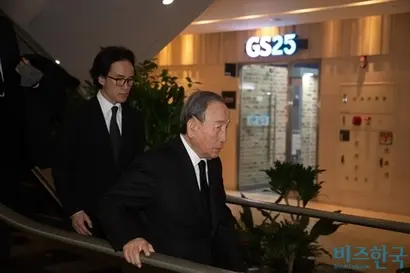
The 20-2 Civil Division of the Seoul High Court (Presiding Judge Kim Kwan-yong) dismissed Ms. Cho Hee-won's appeal on the 14th in the unjust enrichment lawsuit filed by Honorary Chairman Cho Yang-rai. Consequently, the first-instance ruling, which ordered Ms. Cho to pay 33.3 billion won in unjust enrichment to Honorary Chairman Cho, remains in effect. The appellate court stated, "Even after examining the evidence submitted in the first trial and the evidence submitted to this court, the fact-finding and judgment of the first trial are recognized as legitimate."
The dispute began with shares that Honorary Chairman Cho Yang-rai gifted to Ms. Cho Hee-won. In 1996, Honorary Chairman Cho gifted 253,200 shares of Hankook Tire to Ms. Cho. The arrangement included Honorary Chairman Cho paying the resulting gift tax. Ms. Cho later used dividends from the shares to purchase an additional 125,620 shares of the same company in 2009. In 2012, Hankook Tire split into the holding company Hankook & Company and Hankook Tire & Technology161390. The following year, Ms. Cho contributed the split shares in kind to acquire shares of Hankook Tire Worldwide.
Tax authorities initially viewed this share acquisition process as a name-lending arrangement. They judged that the substantive owner of the newly acquired shares was Honorary Chairman Cho, and thus it was also a gift. In 2018, the authorities imposed a total of 182.1 billion won in gift taxes on Ms. Cho. Honorary Chairman Cho was designated as a joint taxpayer and paid 32.7 billion won of that amount. However, in 2021, after the two parties' request for a tax review was accepted, the 179.9 billion won gift tax was canceled. Ms. Cho received a refund of the 33.3 billion won (including interest) that Honorary Chairman Cho had paid on her behalf.
In 2024, Honorary Chairman Cho Yang-rai filed a lawsuit against Ms. Cho Hee-won to recover the refunded gift taxes. The essence of the claim is that Ms. Cho obtained an unjust profit by receiving a refund of the gift tax he had paid without any contribution on her part. The Seoul Central District Court ruled in favor of Honorary Chairman Cho last April. Ms. Cho contested the ruling and immediately filed an appeal.
The largest shareholder of Hankook & Company, the holding company of Hankook & Company Group, is Chairman Cho Hyun-bum. In 2020, the founder, Honorary Chairman Cho Yang-rai, sold all his shares in Hankook & Company to his second son, Chairman Cho Hyun-bum. Chairman Cho surpassed his older brother, former advisor Cho Hyun-sik (18.93% stake), his older sister, Ms. Cho Hee-won (10.61%), and Cho Hee-kyung, chair of the Hankook Tire Foundation (0.81%), to become the largest shareholder of Hankook & Company (42.03%). Hankook & Company Group is the 27th largest corporate group in South Korea (with approximately 22 trillion won in fair assets), encompassing 25 affiliates including the tire manufacturer Hankook Tire & Technology.
Family disputes began following Honorary Chairman Cho Yang-rai's share transfer. In July 2020, shortly after the share transfer, the eldest daughter, Chair Cho Hee-kyung, the second daughter, Ms. Cho Hee-won, and the eldest son, former advisor Cho Hyun-sik, requested the commencement of limited guardianship for the Honorary Chairman, claiming he lacked the capacity to handle affairs due to mental impairment. This request was dismissed in the first instance in 2022 and in both the appellate and re-appellate courts in 2024. Psychological evaluation conducted during the appeals process concluded that the Honorary Chairman did not have any impairments in his intellectual or volitional capacity at the time.
This lawsuit was filed while the appeal regarding the limited guardianship of Honorary Chairman Cho Yang-rai was underway. During the first trial of this current lawsuit, Ms. Cho Hee-won argued that because the Honorary Chairman was in a state where decision-making was difficult due to mental impairment, the lawsuit could not be seen as having been filed through valid authorization based on his true intent. However, the first-instance court dismissed Ms. Cho's argument, stating that based on evidence such as the application for the issuance of a seal certificate, the Honorary Chairman had legally authorized his legal representative to file the suit.
Ms. Cho Hee-won also asserted Honorary Chairman Cho Yang-rai's mental impairment during the appeal of the unjust enrichment case. She argued that the lawsuit was invalid, claiming that the confirmation document stating the Honorary Chairman had delegated the lawsuit to his representative was sealed against his will. However, the appellate court deemed this argument groundless, citing the confirmation document from the Honorary Chairman submitted during the appeal. The court stated, "The first-instance judgment, which recognized that the filing of this lawsuit was based on a valid power of attorney, is recognized as legitimate."