

[비즈한국] The Korea Art Support Project, which began as an initiative solely to support artists, has continued for 10 years. Staying true to our initial intentions, we have supported over 230 artists. This was a unique endeavor that no media outlet, cultural organization, or government institution in the country had attempted before. We take pride in the fact that this decade of persistence has been etched into the 21st-century Korean art scene as a distinct value. Consequently, it is regarded as having created a point of view from which to observe the flow of contemporary Korean art—that the 10-year history of the Korea Art Support Project is, in itself, the history of contemporary Korean art. Now, in Season 11, we aim to pave yet another path for Korean art.
In the human body, the hands are the most expressive part after the face. Sign language, the primary method of communication for the deaf and hard of hearing, is mostly composed of various hand shapes. Hands also account for a significant portion of body language.
Hands have played a decisive role in the development of human civilization and, like the face, are capable of expressing psychological states. Therefore, they have also contributed greatly to the development of art. In painting, in particular, the representation of hands holds as important a position as that of the face. This is the reason why painters put the most effort into drawing hands in portraiture.
The most famous hands in the history of Western painting are those of Adam and God appearing on the ceiling of the Sistine Chapel, created by Michelangelo. Commissioned by Pope Julius II in 1508 and completed over four years, this work is a staggering artistic legacy that, given its scale and level of completion, is hard to believe was painted by human hands alone.
It contains three episodes from the Genesis of the Old Testament concerning the Creation and Noah's Flood, with over 300 human figures painted on the distant ceiling and arched walls. Among these, the most widely known scene is the 'Creation of Adam.' It dramatically portrays the moment God breathes life into the Adam He created. The two hands are drawn close together as if conversing, and because they symbolize the connection between God and man, the scene has frequently been referenced in science fiction films depicting encounters with extraterrestrial beings.
Hand expressions have also been effectively used as metaphors for challenging divinity. The Baroque painter Caravaggio is a prime example. The hand in his painting, 'The Incredulity of Saint Thomas,' is highly provocative, as if mocking the divine.
After the execution of Jesus, the resurrected Jesus appears before the twelve disciples, who were hiding from the Roman governor's office. Thomas, known as the most realistic among the disciples, was equally skeptical. While other disciples believed in the resurrected Jesus, Thomas simply could not understand it. Jesus tried to persuade him by showing the wound in his side, but Thomas still could not believe. Caravaggio captured human sentiment in the scene where Thomas eventually displays irreverence by poking his finger into the wound. The depiction of a finger being inserted into the wound in this work is almost bizarre.
A work that perfectly captures the diverse expressions of hands is Leonardo da Vinci's 'The Last Supper' (a mural at the Convent of Santa Maria delle Grazie in Milan). Twelve disciples appear centered around Jesus, and the hands of every figure convey their individual inner feelings.
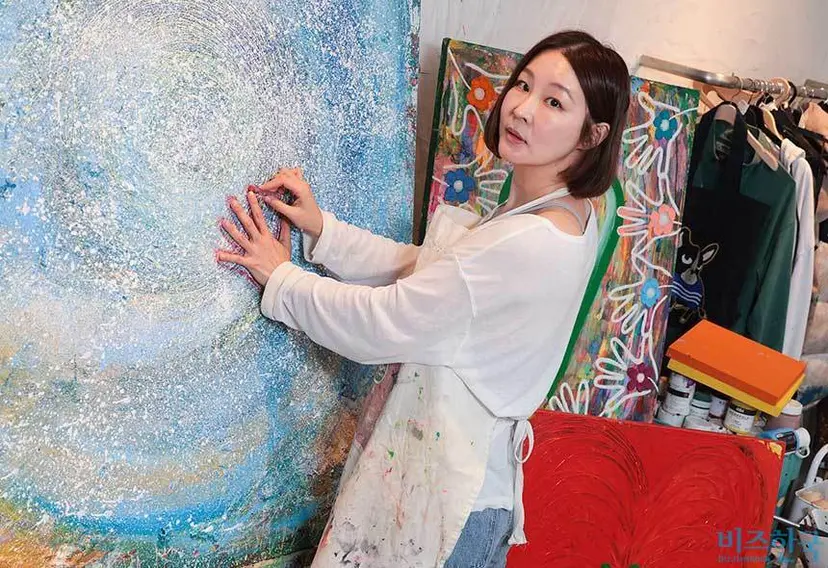
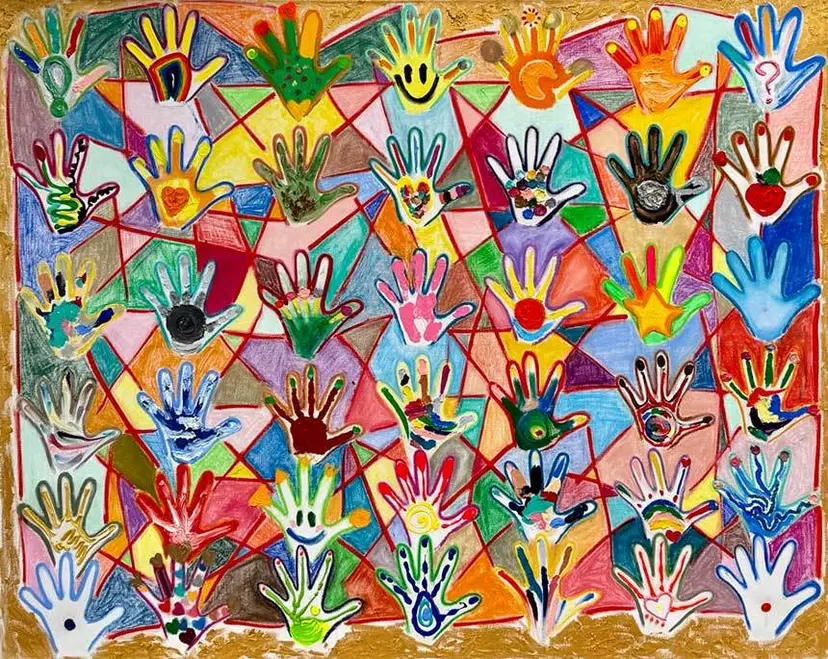
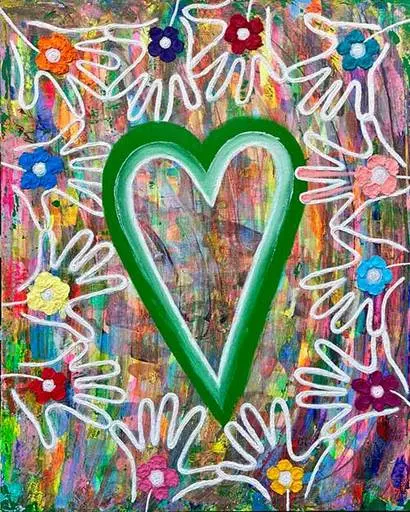
The artist, active under the pseudonym 'Kosy,' also uses hands as a motif to work on the themes of human psychology and the connection between people. He treats hands from a completely different angle than how they have been represented in painting until now. He shows stories through his own unique method, using not the shape of the hands, but their silhouettes. The artist composes the image by placing his own left hand on the canvas and tracing its outline, then expresses momentary emotional states through color and touch.
The reason for using this method is clear: "Hands are the most useful tool on the human body for communicating with others. This signifies the connection in human relationships, and I believe that we can exchange hearts and minds through our hands."