

[비즈한국] Concerns are growing that the domestic pharmaceutical and bio industry will suffer from its worst-ever employment crisis. The government's push to lower generic drug prices threatens to cause up to 15,000 job losses, while the uncertainty surrounding U.S. tariff policies is increasing the likelihood of production facilities relocating abroad. The industry is trapped in a double bind: deteriorating profitability from within and trade pressure from without.
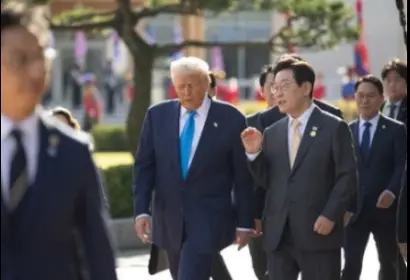
U.S. President Donald Trump announced on the 27th (Korean time) via the social network Truth Social that "the South Korean National Assembly is not fulfilling trade agreements," adding that he would immediately increase tariffs on South Korean automobiles, timber, and 'pharmaceuticals' from the current 15% to 25%. Given that the message was issued without any official notification or explanation of details from the U.S. government, the prevailing view in the business world is that this is a political tactic to pressure South Korea to comply rather than a declaration to scrap the trade agreement.
The pharma-bio industry is analyzing the true intent of President Trump's remarks while cautiously observing the potential impact on the domestic sector. The Korea Biotechnology Industry Organization's Bio-Economy Research Center noted, "Pharmaceuticals were not included in the items where tariff rates were reduced from 25% to 15% in last year's bilateral announcements, so they remain tariff-free for now," adding, "It is unlikely that a 25% tariff rate will be immediately applied to pharmaceuticals when no tariffs have been announced under Section 232 of the U.S. Trade Expansion Act."
Section 232 of the U.S. Trade Expansion Act allows the President to impose high tariffs if specific imports are deemed a threat to national security. Based on this provision, President Trump has been applying high tariffs on steel, aluminum, and automobiles against countries around the world.
There is also speculation that if tariff uncertainty on pharmaceuticals persists, the trend of large bio-companies leaving South Korea could solidify. Having production facilities within the U.S. not only avoids tariff barriers but also allows companies to benefit from "America First" policies. Major groups such as Samsung, Hyundai Motor005380, and LG003550 have already been aggressively securing large-scale local production facilities in the U.S.
Domestic bio-companies are also moving quickly to secure overseas production bases. Celltrion068270 invested 460 billion won late last year to acquire a U.S. manufacturing plant from the global pharmaceutical company Eli Lilly, and Samsung Biologics207940 announced the acquisition of antibody drug production facilities from the UK-based global pharmaceutical company GSK for $280 million (413.6 billion won). SK Biopharmaceuticals is also reviewing the U.S. territory of Puerto Rico as a production base for its epilepsy treatment 'Xcopri (ingredient cenobamate)' as of last June.
Paradoxically, the relocation of production bases by pharma-bio companies to resolve tariff risks fuels fears of hollowing out domestic manufacturing. Because the domestic employment index is already poor, the outflow of quality jobs abroad could further worsen the domestic job market.
The situation for domestic small and medium-sized pharma-bio companies with low export dependency is also not easy. Small and mid-sized pharmaceutical firms are suffering from the government's push for generic drug price cuts. In November last year, the government announced a plan to lower the price ceiling for generic drugs from the current 53.55% of the original drug price to 40% to save health insurance funds. They also plan to abolish the premium system that applied 59.5% of the original drug price for one year to the first generic launched, and reduce the number of generics that can receive the price ceiling from the current 20 to 10 for the same ingredient.
With average profit margins at only 4.8%, there is a deep sense of crisis that if generic prices are cut further, survival itself could become difficult, let alone securing the capacity for reinvestment in new drug development.
Jo Yong-jun, vice-chairman of the Emergency Committee for Pharmaceutical Price System Reform (Chairman of the Korea Pharmaceutical Cooperative, Chairman of Dong-A ST), stated at a meeting of the 'Emergency Committee for Pharmaceutical Price System Reform' held at the Korea Pharmaceutical Cooperative conference room in Hyangnam Pharmaceutical Complex, Hwaseong-si, Gyeonggi-do, on the 22nd, "For small and medium-sized pharmaceutical companies, generic revenue is the source of funds for R&D (research and development) for new drugs as well as reinvestment to maintain GMP production facilities. If this cash cow is cut off, not only will innovation become impossible, but even factory operations will become uncertain.”
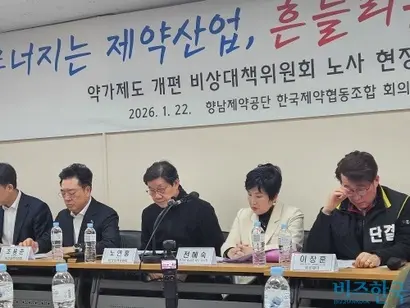
The pharmaceutical industry believes that management crises will inevitably lead to a worsening of the employment environment. The industry predicts that if the prices of some 21,000 drugs are lowered, it will cause a loss of up to 3.6 trillion won annually and the loss of approximately 14,800 jobs. With the number of people employed in the pharmaceutical industry estimated at about 120,000, more than 10% of the workforce is at risk of being cast out onto the streets.
Noh Yeon-hong, Chairman of the Emergency Committee (Chairman of the Korea Pharmaceutical and Bio-Pharma Manufacturers Association), warned, "Concerns are raised that the push for rapid drug price cut policies could cause unintended side effects such as shrinking R&D investment, instability in the supply of essential medicines, and large-scale job cuts." He emphasized, "Sufficient communication with the field and impact analysis must precede the speed, method, and scope of policy, and it should be redesigned in a direction that can balance the growth of the national health industry and health insurance finances."