

[비즈한국] The market for gastroesophageal reflux disease (GERD) treatments is witnessing a "gold rush" among domestic pharmaceutical companies. Competition is intensifying as a series of new P-CAB (Potassium-Competitive Acid Blocker) drugs, which boast convenience and rapid efficacy, are launched and expand the market. In particular, as they leverage success in the domestic market to accelerate global expansion, there is growing anticipation that K-drugs will strike a new "gold mine" in the global digestive medicine market.
According to the pharmaceutical industry on the 23rd, the domestic market for peptic ulcer drugs is valued at approximately 1.4 trillion KRW. The market is growing by 8-9% annually as the number of patients surges due to Westernized dietary habits and stress.
In particular, the market share of P-CAB (Potassium-Competitive Acid Blocker) class new drugs is increasing. All P-CAB drugs launched in Korea were developed by domestic pharmaceutical companies. Since the debut of HK inno.N's K-CAB in March 2019, the share of P-CAB drugs in the peptic ulcer medicine market rose to 25.6% as of the third quarter of last year.
Standard treatments prior to the emergence of P-CAB, which are PPI (Proton Pump Inhibitor) class drugs, are unstable in gastric acid and must be taken before meals, and have the limitation of taking 3 to 5 days to manifest their effects. In contrast, P-CAB drugs are gaining attention because they can be taken regardless of meals and show immediate efficacy. They are also credited with significantly improving the quality of life for patients by drastically improving the "nocturnal acid reflux" phenomenon, where acid reflux at night wakes patients from their sleep.
Gastroesophageal reflux disease is a chronic condition in which stomach contents flow back into the esophagus, stimulating the lining and causing pain and inflammation. Major symptoms include a burning sensation behind the chest, regurgitation of acidic fluid, and a foreign body sensation in the throat. If symptoms worsen, it can lead to esophageal stricture or esophageal adenocarcinoma. Professor Lee Jung-hoon of the Department of Gastroenterology at Asan Medical Center advised, "If you smoke in your daily life, you must quit, and you should avoid beverages that trigger reflux symptoms such as coffee, cola, orange juice, and tomato juice. You should also reduce intake of greasy foods that remain in the stomach for a long time, keep your upper body slightly elevated while sleeping, refrain from wearing tight clothing, and avoid lying down immediately after meals."
The medical community's evaluation of P-CAB drugs is encouraging. Dr. Philip O. Katz of Weill Cornell Medical College noted, "The emergence of P-CAB, which provides faster onset and more sustained acid control compared to PPIs, is a significant evolution in acid suppression therapy," and expressed expectations that "it will be a great help in bridging the treatment gap for patients whose symptoms persist with existing PPI therapy."
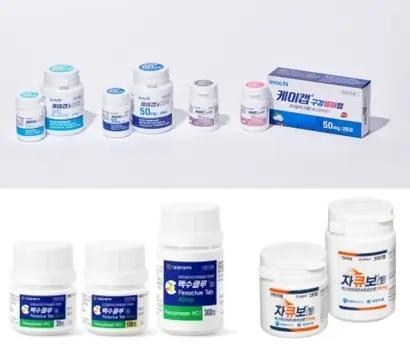
Within the last five years, three P-CAB class GERD treatments have been released as domestic new drugs. Starting with the 30th new drug, HK inno.N's K-CAB (ingredient: tegoprazan), launched in March 2019, the 34th new drug, Daewoong Pharmaceutical's Fexuclue (ingredient: fexuprazan), was released in July 2022, and the 37th new drug, Onconic Therapeutics' Zaqvo (ingredient: zastaprazan), was released in October 2024. K-CAB is estimated to have exceeded 200 billion KRW in sales last year, and Fexuclue is nearing the 100 billion KRW mark. Jeil Pharmaceutical271980, which is in charge of domestic distribution for Zaqvo, is confident in reaching 70 billion KRW in sales last year, just one year after its launch, and plans to aggressively expand its market share by setting a sales target of 170 billion KRW this year.
These new drugs have also begun targeting overseas markets based on their domestic success. K-CAB has been launched in 18 countries starting with China in April 2022, and contracts have been signed with partners to enter a total of 53 countries. K-CAB is also on the verge of entering the US market. HK inno.N's US partner, Braintree, submitted a New Drug Application (NDA) for K-CAB to the US Food and Drug Administration (FDA) on the 9th (local time). The only P-CAB class drug launched in the US is Takeda's Voquezna (ingredient: vonoprazan), which received FDA approval in November 2023. Sales of Voquezna are expected to reach 3 billion USD (4.4034 trillion KRW) in the future. It grew by over 216%, from 55.3 million USD (81.2 billion KRW) in 2024 to 175 million USD (256.8 billion KRW) last year. There is anticipation that if K-CAB receives FDA approval, it will grow into a global blockbuster drug (annual sales of over 1 billion USD). Additionally, Fexuclue has entered about 30 countries including India, and Zaqvo has signed contracts for entry into about 21 countries, including China.
Other late domestic runners are also accelerating the commercialization of P-CAB drugs. Ildong Pharmaceutical249420 and Daewon Pharmaceutical003220 are conducting Phase 3 clinical trials for the P-CAB candidate "DW-4421 (ingredient: fadowprazan)." Daewon Pharmaceutical is employing a strategy to expand indications by simultaneously conducting clinical trials for both erosive and non-erosive GERD.