

[비즈한국] Although guidelines restricting the new acquisition of real estate were established for public officials following the so-called 'LH Land Speculation Scandal' in 2021, it has been confirmed that employees of the Korea Land and Housing Corporation (LH) and their immediate family members have repeatedly violated these guidelines by purchasing apartments in LH development project areas. Disciplinary actions for these violations were limited to the lowest level, a 'reprimand.' LH explained the background for the lenient disciplinary action by stating that the cases were not instances of speculation using insider information, but rather the purchase of apartments that had remained unsold for a long period.

According to documents obtained by Bizhankook from the office of Representative Moon Jin-seok of the National Assembly's Land, Infrastructure and Transport Committee, LH detected violations of its internal real estate acquisition restriction guidelines in 2024 and 2025, respectively. Mr. A, an expert commissioner (Grade 2) at the LH Seoul Regional Headquarters, purchased an apartment in the Seongnam Jung-1 district in Seongnam, Gyeonggi Province—an LH redevelopment area—in September 2023. Two children of Mr. B, an expert commissioner (Grade 3) at the Gyeonggi Northern Regional Headquarters, purchased apartments in the Okjeong District in Yangju, Gyeonggi Province—an LH land development area—in July and August 2024, respectively.
These violations were discovered during subsequent internal audits. Mr. A acquired an unsold apartment through a private contract from the 'reserved properties' requested for sale by the residential council of the housing redevelopment project. Mr. B's two adult children, who lived independently, acquired apartments that had been unsold for a long period after the initial occupancy recruitment announcement in July 2022, through private contracts after completion. The corporation determined that neither case fell under the exceptions allowed by the guidelines and subsequently initiated disciplinary action.
The level of discipline was limited to a 'reprimand,' the lowest level available. According to LH personnel regulations, disciplinary actions are ranked by severity: reprimand, salary reduction, suspension, demotion, dismissal, and expulsion. A reprimand is a formal written warning, which results in a six-month freeze on promotions. According to the disciplinary standards for violating LH's real estate acquisition restriction guidelines, a 'salary reduction to reprimand' is given for minor negligence or light misconduct in work-related fields, while a 'reprimand' is given for improper acts such as using another person's name.
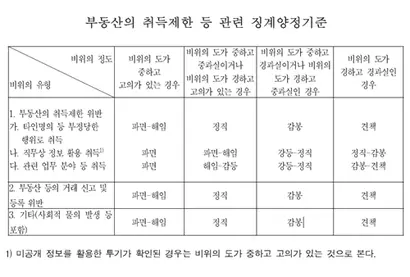
LH established guidelines for the restriction and reporting of new real estate acquisitions in February 2022. Under these guidelines, as of March of that year, all LH employees, their spouses, and immediate family members are prohibited from acquiring: △Land and buildings that LH is set to acquire for project implementation; and △Land and buildings that LH is selling or supplying. The restriction period lasts from the date a project is officially announced until ownership is transferred to the buyer. The LH President may take necessary measures, including disciplinary action, against employees who violate these guidelines.
These guidelines were established following allegations in 2021 that LH employees had used insider information to speculate on real estate in the 3rd new towns. According to LH, 31 employees were indicted for the alleged speculation at the time, and 18 have been convicted to date. It is reported that four of those convicted were found guilty of speculating using insider information, while 14 were convicted of charges including violations of the Farmland Act. Eight others were acquitted, and five are currently undergoing trial.
An LH official explained, "The LH real estate acquisition restriction guidelines were created after past allegations of speculation using insider information. The recent violation cases were all punished with reprimands because they were cases of purchasing unsold inventory, not speculation using insider information."