

[비즈한국] The '2025 Annual Climate Characteristics' report, released by the Korea Meteorological Administration on the 6th, delivers a chilling warning. Last year was the second-hottest year on record, following 2024, and sea surface temperatures also hit their second-highest level. With record-breaking downpours of over 100mm per hour occurring at 15 locations, extreme weather has now become a constant threat. While climate technology has historically focused on 'Mitigation'—reducing greenhouse gas emissions—there is now increasing attention on 'Adaptation' technology, which enables survival in a climate that has already changed.
'Adaptation' Becomes as Important as Greenhouse Gas 'Mitigation'
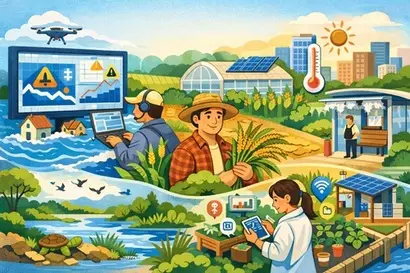
Climate change response is divided into two main pillars. If 'Climate Mitigation Technology' involves reducing greenhouse gas emissions to slow the pace of climate change, such as solar power generation or electric vehicles, then 'Climate Adaptation Technology' refers to technologies that minimize the negative impacts of climate change that have already occurred or are expected, and even utilize them as opportunities.
While past climate technology focused on the grand discourse of carbon neutrality, climate adaptation technology is much closer to our daily lives. This includes strengthening ecosystem resilience to protect the nature, people, and infrastructure affected by climate change, rebuilding infectious disease prevention systems to match the subtropical climate, and building intelligent infrastructure that can withstand floods and heatwaves.
From an economic perspective, climate technology is a massive blue ocean. In its 2025 'Investing in the green economy' report, the London Stock Exchange Group (LSEG) stated that the market size for climate adaptation technology exceeded $1 trillion (approximately 1.47 quadrillion KRW) as of 2024. It analyzed that this sector accounts for 20% of total green economy revenue in 2024, with over 2,100 companies active in the field of climate adaptation technology.
Investment is also increasing. According to the same report, public sector investment in climate adaptation technology has been expanding rapidly, recording an average annual growth rate of 21% from 2018 to 2022.
From AI Flood Forecasting to Heat-Resistant Crops: The Field of Adaptation Technology
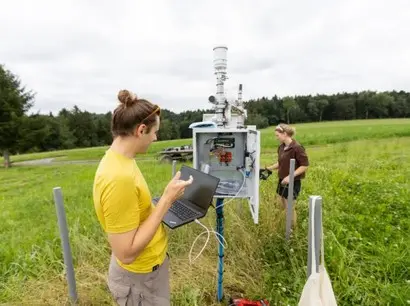
Climate adaptation technology is already penetrating every corner of our daily lives. The most prominent area is disaster prediction using AI and big data. The recently introduced AI flood forecasting system learns vast amounts of data in real time, significantly expanding flood alert points and securing critical reaction time. Since 2024, the Ministry of Climate, Energy and Environment has used AI to expand forecasting locations from 75 central points on major rivers to 223, including tributaries and streams.
Climate adaptation startup 'DI Lab' is gaining attention for its AI-based climate anomaly detection and prediction solution called 'DI CAST'. By utilizing AI algorithms and IoT sensors, it analyzes terrain and environmental data even in areas lacking traditional observation equipment to predict short-term weather events such as localized heavy rain and heatwaves.
The food security sector is also a key domain for climate adaptation technology. The Rural Development Administration is developing 'heat-resistant rice varieties.' As rising temperatures make the cultivation of existing crops difficult, they are developing crops with genes resistant to high heat, drought, and salinity to maintain productivity in changed soil environments.
Climate adaptation technology is also being actively introduced in smart farms. Swiss smart farm startup 'Weatherbound' analyzes real-time soil moisture, climate data, and weather forecasts to operate irrigation systems, helping farms respond to climate disasters such as summer droughts.
The Domestic Climate Adaptation Industry Still Lags Behind
Behind these rosy prospects, there are significant challenges to address. The domestic climate adaptation industry is still skewed toward public sector-led R&D, and private sector participation and interest are significantly lower compared to the carbon reduction sector.
The National Assembly Futures Institute, in its report 'Technology Development Strategy and Implementation System for Improving Climate Change Adaptation,' pointed out that climate adaptation technology is limited to specific areas such as local government disaster response or heatwave measures. Consequently, the private ecosystem that links climate adaptation technology to business models to generate profit remains in its infancy. According to the report, between 2013 and 2022, Korea's share of top-priority patent applications for climate adaptation technology with market value was a mere 0.6%.
This trend is also visible in the 2026 climate, environment, and energy R&D budget announced by the Ministry of Science and ICT on the 8th. While the total R&D budget for this sector was confirmed at 151.1 billion KRW, a 75.2% increase from last year, the investment proportion for climate adaptation was small. The only project corresponding to climate adaptation technology was the 'Development of Soil-based Climate Resilience Diagnosis and Enhancement Technology,' with a budget of only about 1.6 billion KRW.
Coupled with this, there is criticism that the climate adaptation industry is not being properly commercialized. Kim Eun-ah, a research fellow at the National Assembly Futures Institute, noted, "Climate technology seems to have low importance in areas other than energy," adding, "There are only a few commercialized models where climate adaptation technology using AI has been absorbed into the AI industry."