

[비즈한국] The full picture of the so-called 'Kaesong Drone Infiltration Incident' that occurred on January 10th is gradually coming to light. As the joint investigation task force closes in, the suspects are attempting to justify their actions through media interviews. The remaining steps will likely involve identifying accomplices and uncovering the specific process behind their criminal plot.
However, there is a serious error in the perspective of our society and media regarding the current situation. By fixating solely on the suspects' personal backgrounds or political leanings, they are missing the broader security implications of this incident. This is not merely a rash act by extreme right-wing youths. It is an event that has laid bare the 'holes' in South Korea's national security, proving that civilians can incite military tensions between nations and trigger crises using only commercial technology and capital.
On January 20, at a cabinet meeting, President Lee Jae-myung reprimanded Defense Minister Ahn Gyu-baek, asking, "Are you unable to check drones crossing over to the North?" It is a stinging critique. The military, police, and the Ministry of National Defense have shown a total failure in this situation across three dimensions: technology, policy, and judgment.
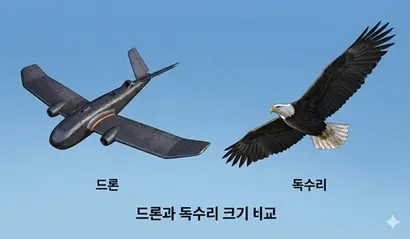
First, it highlights the limitations of detection and identification technology. The 'Skywalker Titan,' known to have crashed in Kaesong and Yeoju, is a small fixed-wing drone with a wingspan of 2.16m and a length of 1.2m. Its size and weight are significantly smaller than the military drones operated by the Drone Operations Command. A greater problem is that its cruising speed is about 60km/h, which is similar to the flight speed of large birds.
The Local Air Defense Radar (TRS-880K) currently deployed in the front lines is an excellent detection asset, but it has inherent limitations in distinguishing between small drones with extremely tiny Radar Cross Sections (RCS) and birds of prey. In particular, detection algorithms for 'pass-through' targets—those moving from friendly territory toward the North rather than approaching from the front—are relatively weak. To overcome this, it is essential to urgently deploy next-generation detection radars using 'Micro-Doppler' technology, which analyzes frequency shifts of rotating propellers, along with integrated electro-optical (EO/IR) sensor systems.
Second, it reflects the failure of a distorted drone policy that prioritized offense over defense. Following the North Korean drone airspace violation in 2022, the military declared its will to respond by establishing the Drone Operations Command. However, the interest of the government and the military was focused on 'attack' rather than 'anti-drone' defense. In fact, the 'South Korea Anti-Drone Expo' held last November showed this reality clearly. At the time, the Ministry of National Defense poured massive interest into strengthening offensive capabilities, such as 'training 500,000 drone warriors,' while the importance of building defense and interception systems against enemy drone threats received relatively little attention.
Due to this policy stance, domestic small and medium-sized enterprises developing anti-drone systems have suffered from chronic funding shortages and a lack of demonstration opportunities. Expanding offensive capabilities without defense systems is no different from 'going to the battlefield with only a spear and no armor.' The government must now recognize that the anti-drone industry is a core component of national defense protecting our territory and people's lives, and must commit strategic interest and bold investment.
Third, there is an absence of security investigation and counter-espionage capabilities. This incident is even more painful because it could have been prevented. According to my reporting, when a drone crashed in Yeoju last November, the military and joint investigation team had already identified the suspects but concluded the case with 'no suspected anti-state involvement.' This is a clear error in judgment that failed to read changing security threats.
While the 'anti-subversion' mission of the former Defense Security Command focused on preventing coups, the modern concept of anti-subversion must include 'Gray Zone' provocations occurring in the civilian sphere. As seen in the Kaesong drone incident, the act of a civilian inciting military tension or plotting terrorism using drones is in itself a threat to the state. The counter-espionage authorities must thoroughly investigate the allegations of poor handling of the November incident and reorganize their investigation capabilities to respond to new types of security threats that exploit civilian technology.
The development of drone technology will not stop. Tomorrow, North Korean drugs could cross the border by drone, or terrorist weapons disguised as civilian drones could strike key national facilities. 'Locking the stable door after the horse has bolted' is a lesson that should only happen this once. Using this failure as a mirror, the government and the military must transform into a true 'drone powerhouse' that balances offense and defense.