

[비즈한국] Artificial Intelligence (AI) has already deeply permeated all aspects of daily life, but its usage remains confined to PCs and smartphones. The structure involves either inputting text or calling out via voice, followed by checking results on a screen. While this method has played a decisive role in the spread of general-purpose AI, critics point out that it has limitations from the perspective of "constant assistance." With OpenAI recently mentioning hardware devices specialized for AI, attention is focused on whether the stage for AI utility will expand to wearable devices.
OpenAI Mentions 'Device'... A Signal for Shifting the AI Utility Stage
According to the US online media outlet Axios, Chris Lehane, Chief Strategy Officer at OpenAI, stated at the 'Axios House Davos' event held in Davos, Switzerland, on the 19th (local time) that "one of the projects the company is most looking forward to this year is a device." However, he avoided a concrete answer regarding whether this device would be unveiled or sold within this year, only mentioning that OpenAI is reviewing hardware with the latter half of 2026 in mind.
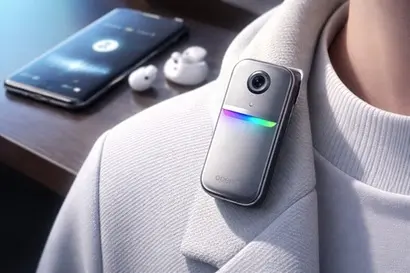
This is not the first time OpenAI has mentioned hardware. In May of last year, OpenAI officially revealed the possibility of device development by acquiring 'io,' a hardware startup founded by Jony Ive, the designer who oversaw Apple's iPhone design. However, given that this acquisition does not necessarily imply immediate development or a release plan for a specific product, what has been confirmed so far is closer to the level of "securing hardware capabilities."
Subsequent reports from foreign media suggest that OpenAI is experimentally reviewing a small wearable device without a screen, but the specific form, features, and commercialization schedule have not been disclosed. Earlier this month, the US IT media outlet 'The Information' reported that OpenAI is researching and developing a device through which users can interact with AI via voice. However, this report also only mentions the possibility of a testing phase and is not based on a completed product.
This trend is interpreted as a result of being conscious of the limitations of the smartphone-centric AI usage structure. While smartphones have strengths in terms of accessibility and versatility, they have structural constraints when it comes to AI constantly intervening in daily life, as users must take out the device and check the screen. Wearable devices that minimize or remove screens are mentioned as alternatives that can reduce these constraints, but how to actually design the user experience remains an unverified area.
Wearable AI Experiments Spreading... Many Challenges Remain Until Commercialization
Apart from OpenAI's moves, various experiments surrounding wearable AI are underway in the global IT industry. Some necklace-type or clip-type devices are promoting features that recognize and summarize user conversations or use them for scheduling and memo management. However, these products are still in the early market stage, and whether they will achieve widespread adoption remains unverified. Amazon has also been reviewing the possibility of combining voice-based AI technology with wearable devices, but has not officially announced any plans for consumer product launches.
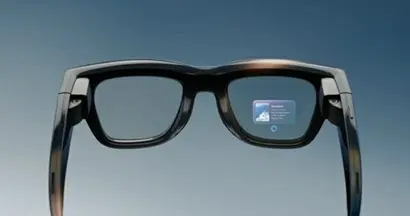
'AI smart glasses' that utilize visual information are also one of the key experimental fields. It works by combining cameras and AI to recognize the surrounding environment and provide necessary information. Meta has already launched smart glasses that incorporate AI features, but it is difficult to consider them to have reached the stage of mass adoption. Other companies in China and the US are continuing similar attempts, but market reactions are still at a limited level.
In the healthcare field, wearable AI is being commercialized relatively quickly. Smartwatches and bands that collect and analyze biometric data such as heart rate, sleep, and stress indicators using AI have already entered the popularization stage. However, this is also at the level of "life management assistance" rather than "medical judgment," and the role of AI is limited to data interpretation and providing simple advice.
The industry views the interest in wearable AI not as a mere technological fad, but as an extension of the platform competition preparing for the post-smartphone era. The analysis is that as the smartphone market enters a mature phase, big tech companies are seeking new hardware contact points centered on AI. Sam Altman, CEO of OpenAI, also mentioned at an event last year that "the company expects to unveil a device it is developing within two years," but this was not a statement that definitively revealed a specific schedule or product specifications.
There are also clear challenges to overcome before wearable AI can spread in earnest. Issues such as battery life, privacy protection, and social acceptance of voice and video data collected constantly have yet to be resolved. The criteria for when and how AI should intervene also remain ambiguous.
OpenAI's mention of a "device" has served as an opportunity to bring these discussions to the surface again. While specific product forms and launch schedules remain only limitedly disclosed, it is a clear fact that major big tech companies are commonly reviewing the possibility of expanding the way AI is used from software-centric to hardware. Although wearable AI is still closer to the experimental stage, recent movements allow us to gauge how AI can permeate daily life in the next stage.