

[비즈한국] Hyundai E&C000720 and Kolon Industries120110 have announced plans for direct Power Purchase Agreements (PPAs) for renewable energy, signaling a shift in the power procurement methods of the domestic industry. With the securing of large-scale solar power over the long term and the expansion of on-site PPAs utilizing idle space in factories, attention is focused on whether PPAs will become a 'realistic solution' for achieving carbon neutrality and the RE100 initiative. However, since barriers to implementation, such as the burden of institutional costs and the rigidity of the market structure, remain high, demands for overall improvements in policy and market design are expected to intensify.
'PPA' for Carbon Neutrality Spreads Throughout Industry, Including Hyundai E&C and Kolon
Hyundai E&C has reached an agreement with solar power construction firm TopSolar for a 1.5GW renewable energy power supply. This is the largest direct power transaction between two individual companies in Korea, equivalent to the capacity of one large nuclear power plant. Hyundai E&C will receive solar power sequentially until the end of 2028 and secure the stability of its power supply through a long-term contract of over 20 years. The company plans to build a virtuous cycle for private-led PPAs through cooperation that extends beyond power trading to include EPC (Engineering, Procurement, and Construction) and O&M (Operation and Maintenance).
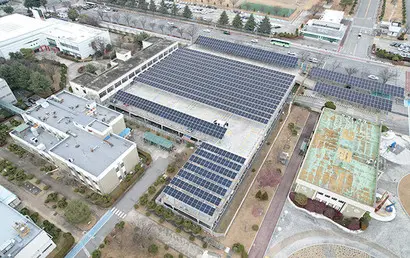
On the same day, Kolon Industries completed a 2.4MW on-site PPA solar power plant at its Gumi plant. By utilizing idle spaces such as factory parking lots and rooftops, the company expects to produce approximately 3.18 million kWh of renewable energy annually and achieve a greenhouse gas reduction effect of about 1,459 tons. A notable feature is the integration of a Virtual Power Plant (VPP) model that operates distributed energy resources collectively to increase efficiency.
Despite the achievements of these leading companies, the overall environment for PPAs in Korea remains challenging. According to policy suggestions released by the Federation of Korean Industries (FKI), the number of companies facing difficulties in procuring renewable energy in Korea, based on the global RE100 report, is significantly higher than in other major countries, and the number of firms citing barriers to implementation is rapidly increasing.
The biggest obstacle is cost. When procuring power through a PPA, incidental costs such as transmission and distribution network usage fees and the Power Industry Infrastructure Fund are added on top of the power price, increasing the total burden by 18-27% of the generation cost. Furthermore, because direct PPA contracts are limited to high-voltage users with a capacity of 300kW or more, critics point out that it is difficult for SMEs and small-scale consumers to access the system itself.
Industry and Experts Propose Policy Support and Restructuring of the Power Market
The industry agrees that practical institutional improvements are necessary to maintain global competitiveness. The FKI has proposed: temporary exemptions for PPA incidental costs, allowing small-scale electricity users to participate, and introducing an N:N contract method where multiple power plants and consumers can trade freely.
Experts believe that the expansion of PPAs will inevitably lead to a structural reorganization of the power market. The National Assembly Futures Institute analyzed that the single-buyer structure centered on KEPCO is creating a dual market consisting of a 'regulated type' (KEPCO) and a 'non-regulated type' (PPA). The concern is that if large-scale, high-quality consumers such as data centers exit through PPAs, KEPCO will be left with only low-profitability customers, potentially weakening the sustainability of the system.
Suggested solutions include the establishment of an independent regulatory body to oversee rate setting and market monitoring, the accounting separation of transmission/distribution and sales divisions, and a roadmap for the gradual opening of the retail market. The argument is that a cost-based pricing system free from political variables, similar to cases in Japan and the EU, must be established.
While PPAs are expanding the choices for domestic companies to procure renewable energy, they also serve as a mechanism that reveals the limitations of the current power market structure. However, there are assessments that whether the spread of PPAs will lead directly to the enhancement of overall power market efficiency depends on institutional design and policy adjustments. As there are many unresolved tasks, such as cost burdens, the dual market structure, and harmony with existing power systems, experts point out the need for a phased institutional improvement while closely monitoring the policy effects and market impacts surrounding PPAs.