

[비즈한국] Homeplus, having run out of operating funds, has managed to take a momentary breath. This follows MBK Partners' decision to bear 100 billion won in debtor-in-possession (DIP) financing to revitalize the company. However, the tension on the ground remains palpable. Amid observations that this support acts as a 'priming water' to entice participation from major creditors, the actual timing of the disbursement remains shrouded in uncertainty. Even as the major shareholder promises a capital injection to buy time, the situation in stores continues to deteriorate.
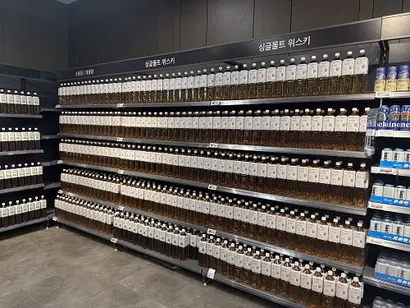
Whiskey shelves filled only with barley tea
On the 16th, MBK Partners announced it would inject 100 billion won in emergency operating funds to normalize Homeplus. In a statement released that day, MBK explained, "We promised to support up to 200 billion won upon the success of an M&A, but considering the urgent situation where even salary payments are being delayed, we intend to participate in 100 billion won of DIP financing even before the M&A is finalized."
MBK's decision to provide an emergency transfusion comes as the liquidity crisis at Homeplus has reached a critical level. Issues with unpaid taxes and various utility bills have shown no signs of resolution for months, and starting last month, even regular salary payments to employees became difficult. Last December, Homeplus resorted to 'split payments,' dividing monthly salaries into two installments due to a lack of liquidity. Within a month, the situation worsened. Homeplus recently informed staff through an internal notice that it would be difficult to pay January salaries on time.
As the management situation worsened, store operations also hit a limit. On the 14th, Homeplus decided to suspend operations at 7 stores. Through a message to employees, Homeplus stated, "The financial situation, which has reached a breaking point, has not improved," and announced the suspension of seven additional branches: Munhwa, Busan Gamman, Ulsan Nam-gu, Jeonju Wansan, Hwaseong Dongtan, Cheonan, and Jochiwon.
In addition to these seven, Homeplus has rapidly reduced its store count over the past two months. On December 28th of last year, it suspended operations at five locations including Gayang, Jangnim, Ilsan, Woncheon, and Ulsan Buk-gu, and had already finalized plans to close five more by the end of January: Gyesan, Siheung, Ansan Gojan, Cheonan Sinbang, and Dongchon. In just two months, a total of 17 stores have been slated for suspension or closure across three rounds.
Amid the worst crisis, employees feel a sense of relief at the news of MBK's funding, while emphasizing that fundamental measures to resolve the situation are urgent. A Homeplus union official stressed, "It is fortunate that MBK is making a self-rescue effort of 100 billion won, but it is an insufficient amount to resolve the situation. Instead of relying on external financing for the 200 billion won promised, MBK should inject it directly. If they have a genuine will to save Homeplus, they need to inject it now when operating funds are desperately needed."
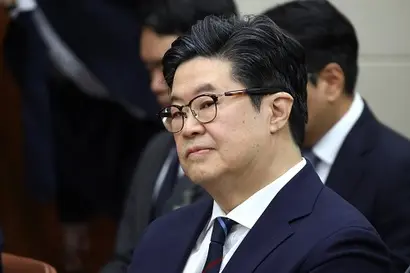
Anxiety grows: "If other creditors don't provide funds, will they retract the promise?"
Even with expectations for MBK's self-rescue efforts, anxiety in the field has not easily dissipated. This is because there is a prevailing view that this capital injection is a 'conditional card' intended to elicit additional support from major creditors such as the Korea Development Bank and Meritz Securities.
A Homeplus union official stated, "The practical background of this support is that MBK will provide 100 billion won if KDB and Meritz also chip in to raise a total of 300 billion won in operating funds. It seems they made this decision preemptively and announced it to the media to induce the creditors to act together. Therefore, there is great anxiety that if other creditors decide not to participate, MBK could retract its promise."
Supporting these concerns, it is expected to take considerable time before the funds actually reach the field. A Homeplus official remarked, "MBK has only expressed its intention to participate in the 100 billion won payment; it is not a direct cash injection. The timing of the disbursement has not been finalized."
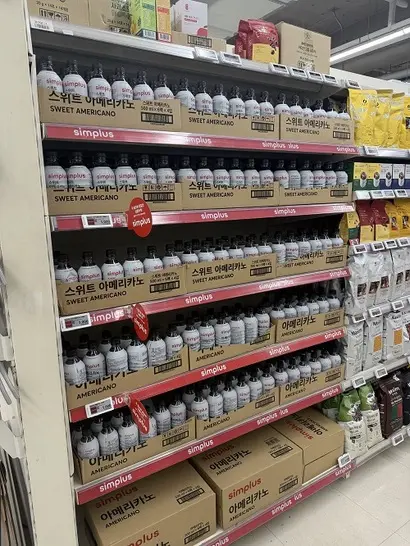
As the injection of funds is delayed day by day, the biggest hit is felt at the operational level. Homeplus stores are experiencing 'empty shelves' one after another as product supply is cut off due to unpaid supplier invoices. Visiting a Homeplus in Seoul on the 19th, many shelves were filled only with the private brand 'Simpleus' products. With normal brand-name goods in short supply, they appeared to be placing more easily accessible PB products at the forefront to hide the empty shelves.
In the whiskey corner, all liquor products were missing, replaced by rows of PB brand barley tea and corn silk tea bottles. Wine accessory displays were packed with plum tea and aloe drinks. The event corners at the store entrance were no different, with only PB inventory stacked in places where famous brand special offers should have been.
One employee said, "Because we can't pay for the goods, the store's stock is very thin. If the shelves become completely empty, it causes problems, so we are placing industrial goods where fresh products should be. We are sporadically listing store inventory, but since the products customers are looking for are missing, they just walk away after visiting."
Disappointment is also lingering among employees who had hoped for a normalization of salaries. Even if 100 billion won is injected, it is highly likely to be used primarily for essential operating costs to prevent the crisis of store shutdowns rather than for labor costs. Since settling unpaid goods invoices to restock empty shelves and paying overdue utility bills like electricity are immediate priorities, analysts say it is far from reaching labor costs, which are at the bottom of the funding priority list. Homeplus stated, "As of now, we cannot finalize the salary payment schedule."
As Homeplus is pushed to the limit, the political circle is appearing to move toward creating countermeasures. The Homeplus issue was mentioned as a major pending issue at the luncheon meeting held by President Lee Jae-myung and the leaders of the ruling and opposition parties at the Sangchunjae of the Blue House on the 16th. On this day, the President and party leaders agreed that bipartisan cooperation is necessary for the revival of Homeplus.
The union emphasized, "Now there is absolutely no answer other than the government stepping in. The government should take the lead in carrying out credible restructuring and form a pan-government task force to begin discussions so that a sustainable M&A can take place."