

[비즈한국] In the real estate market, 'taxes' often appear to be the final card played, but in reality, they have always been the signal that shakes sentiment first. When prices rise, regulations are introduced; when regulations fail, loans are tightened; and then, the authorities touch the taxes.
This is why the debate over increasing the burden even on those who own 'only one home' is gaining traction following the era of heavy taxation on multi-home owners. The more the market concentrates on single-home ownership, the more policy seeks to break that trend. At that moment, the most convenient tools—property taxes and capital gains taxes, particularly the 'last line of defense' known as the special deduction for long-term ownership—become the targets.
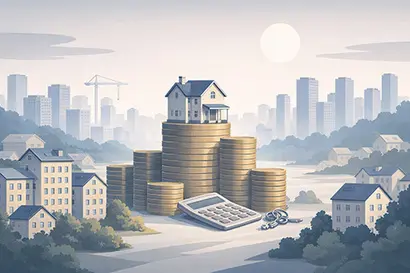
Until now, single-home owners were considered a relatively protected group. This was because the perception that one's home is 'life' rather than 'speculation' was strong. However, the reality has changed. A single home in a prime location in Seoul is no longer just a living necessity for the middle class; it has become a massive asset and a social symbol. From the government's perspective, if prices do not fall easily even after heavily suppressing multi-home owners, the next target is inevitably the high-priced single home. This is where the term 'fair taxation' gains power.
The problem is that when tax policy moves the market, the impact does not end with a simple increase in the tax burden. Increasing property taxes might seem like it would force properties onto the market as holding costs rise, but simultaneously raising capital gains taxes or reducing the special deduction for long-term ownership increases the burden when selling, which actually freezes supply. If you open one door while closing the other, the market stops moving. As transactions decrease, prices may appear to stabilize, but in reality, it is not the prices that are stable, but the market's functions that have been paralyzed. The moment actual demand, which needs to move, comes to a halt, the housing market becomes even more unstable.
The discussion on reducing the special deduction for long-term ownership, in particular, could have a very sensitive impact on the market. For those who have held property for a long time and lived in it, this deduction was a kind of social promise that 'time will solve things.' It was a mechanism to lower the exit cost for those who held homes for a long time, actually resided in them, and chose residential stability over short-term profits. What happens if that mechanism is weakened? Rather than the tax hike itself, the message that 'the rules of trust granted by the state have changed' spreads through the market first. People choose anxiety over calculation. And anxiety brings transactions to a halt.
The first area to waver is the 'trade-up' market. The current housing market is structured so that transactions are maintained as actual residents move toward 'slightly better housing.' The market stays alive only when there are people moving for life reasons such as education, jobs, changing family structures, and retirement preparation. However, if the special deduction for long-term ownership is reduced and the capital gains tax burden increases, moving becomes a cost.
Ultimately, many people decide to 'just hold on.' As this holding trend grows, the market becomes quiet, but this quietness is stagnation, not stability. Transactions become thin, and prices are driven by a few unusual deals. The market doesn't become healthier; it develops a constitution that fluctuates wildly even from smaller shocks.
Further turmoil is expected if the strengthening of property taxes becomes a reality. Property taxes are money that must be paid annually even if the home is not sold. Households with sufficient cash flow may hold on, but retirees, households with reduced income, or those with significant assets but insufficient cash may feel immense pressure. This burden eventually affects the rental market as well. As costs rise, there is a move to pass them on, which can lead to upward pressure on monthly rent in areas where the market can bear it. The possibility that a policy intended to curb housing prices could result in driving up living costs cannot be ruled out.
Another important characteristic is that policy can simultaneously move by 'tightening Seoul and loosening the provinces.' There is a flow toward expanding or extending tax incentives for unsold properties outside the capital region, while signals coexist that more burden will be placed on high-priced single homes in prime Seoul locations. Ultimately, taxes do not change regional demand, but the incentives created by taxes can distort the market.
Demand that follows tax benefits lacks sustainability. There is a high probability that it will pull out as soon as the incentives disappear, which could further increase volatility in regional markets. There is a possibility that abnormal polarization, where one side freezes while the other fluctuates, will be reinforced.
If the goal of the policy is 'price stability,' it cannot succeed by blocking the market's blood vessels. Taxes are clearly an important tool, but if the tool precedes the objective, the market stops responding. The method of shaking property and capital gains taxes simultaneously is highly likely to return as a paradox that kills transactions even while appearing to increase supply. In particular, abruptly tampering with the special deduction for long-term ownership is not merely a tax increase, but a 'rewriting of the rules,' and at that moment, the market stops trusting those rules.
Above all, what the government must not forget is that a single home is not a line in a statistic, but a place of life. The logic that the asset effect of high-priced housing needs to be managed has merit. However, if that process results in blocking the mobility of actual residents, evaporating transactions, and stimulating rent increases, the policy has not 'succeeded in curbing housing prices' but has merely 'stopped market functions.'
Real estate is not a market that exists only by price. There must be movement, there must be sales, and there must be a balance between jeonse (long-term deposit rentals) and monthly rent. Taxes are a tool to delicately adjust that balance, not a hammer to break it.
The tax changes of 2026 are not a declaration that the 'era of one home' has ended, but a test bed for the question, 'How can we balance fairness and stability in the era of one home?' The answer is simple. Taxes can be raised. However, it must be done in a way that makes the market predictable, ensures that movement for actual residence is not blocked, and avoids the folly of simultaneously increasing the costs of both 'holding' and 'moving.' What the Korean real estate market needs now is not the intensity of taxes, but the consistency and predictability of policy. If that collapses, the market will once again charge the people the cost of anxiety.
Just because the real estate market is unstable does not mean it can be solved by taxes alone. If you only pull the 'tax lever' without directly addressing structural factors such as supply, finance, jobs, education, and mobility, the market will see its transactional blood vessels clogged before prices are affected.
The discussion on tax changes in 2026 is a signal that the Korean housing market has entered its next phase. Beyond the era of multi-home regulations, the 'focus on one home,' including high-priced single homes, can now become the target of policy.
If the policy truly desires housing price stability, taxes are only a means, not the goal. And what the market truly fears is not the size of the tax, but unpredictability. It is not the fear that 'taxes on even one home will rise,' but the trust that 'one's life can move even with one home' that saves the market.
Kim Hak-ryul, known by his pen name 'Pashong,' head of the Smart Tube Real Estate Research Institute, served as the team leader of the Real Estate Research Division at Gallup Korea. He operates and hosts the Naver blog 'Pashong's World Exploration' and the YouTube channel 'Stu TV.' His books include 'Rewriting the Korean Real Estate User Guide (2025),' 'The Power of Gyeonggi Real Estate (2024),' 'The Absolute Principles of Seoul Real Estate (2023),' 'The Future of Incheon Real Estate (2022),' 'Kim Hak-ryul's Absolute Principles of Real Estate Investment (2022),' 'Future Map of Korean Real Estate (2021),' and 'From Now On, Only Places That Will Rise Will Rise (2020).'