

[비즈한국] I never thought I’d live to see Hyun Bin selling crystal meth. And yet, I never thought I’d be so drawn to that version of him. For the simple fact that it offers a side of Hyun Bin we’ve never encountered before, Disney+'s 'Made in Korea', which has concluded its first season, gives viewers enough reason to tune in. Furthermore, it marks the first television drama directed by Woo Min-ho, who helmed 'Inside Men', 'The Man Standing Next', and 'Harbin'. The downside is clear: the only thing available right now is the 6-episode first season. The release date for Season 2, reportedly slated for the latter half of the year, has not yet been confirmed.
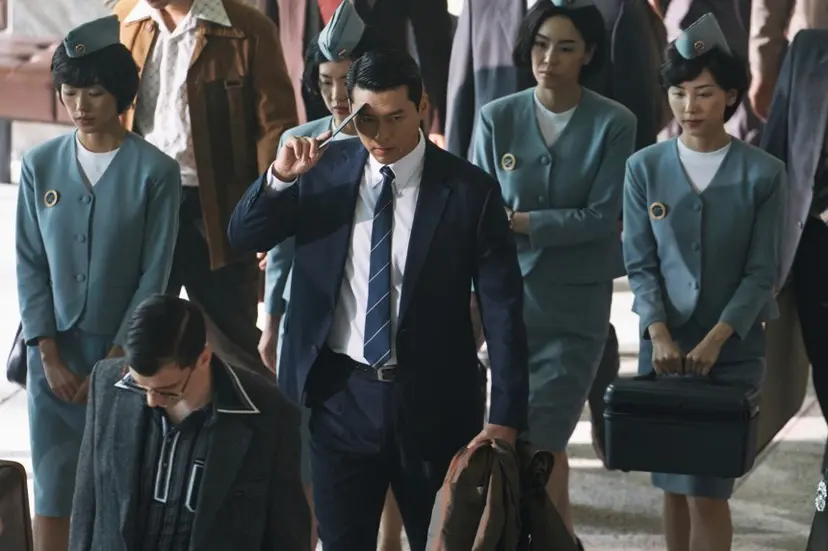
'Made in Korea' is set against the backdrop of the turbulent 1970s and follows Baek Ki-tae (Hyun Bin), an intelligence section chief at the Busan branch of the Korean Central Intelligence Agency (KCIA) who embarks on dangerous business ventures in pursuit of wealth and power. The business he chooses is drug trafficking. He sells Korean-manufactured crystal meth (philopon) to Japan, even drawing his sister So-young (Cha Hee), a former bank employee, into the scheme. When So-young voices concern that he is ruining the country, he spins a strange sophistry that 'it’s patriotic, as it earns foreign currency and serves as a driving force for exports.' And surprisingly, the sophistry works. It works because it was an era where such sophistry—or rather, the logic of power—prevailed.
Naturally, there is someone determined to stop Baek Ki-tae. Prosecutor Jang Geon-young (Jung Woo-sung), whose father was a murderer who killed his mother while under the influence of drugs. This harrowing backstory drives Jang to grow into a prosecutor with an obsessive will to eradicate drug crime. Once the drug trafficking of Baek Ki-tae is caught in the crosshairs of Jang Geon-young—a perennial, single-minded prosecutor who cares nothing for promotion or career success—a clash is inevitable. Even though his opponent is the KCIA, an omnipotent entity at the time that could 'bring down a flying bird,' Jang Geon-young does not care.
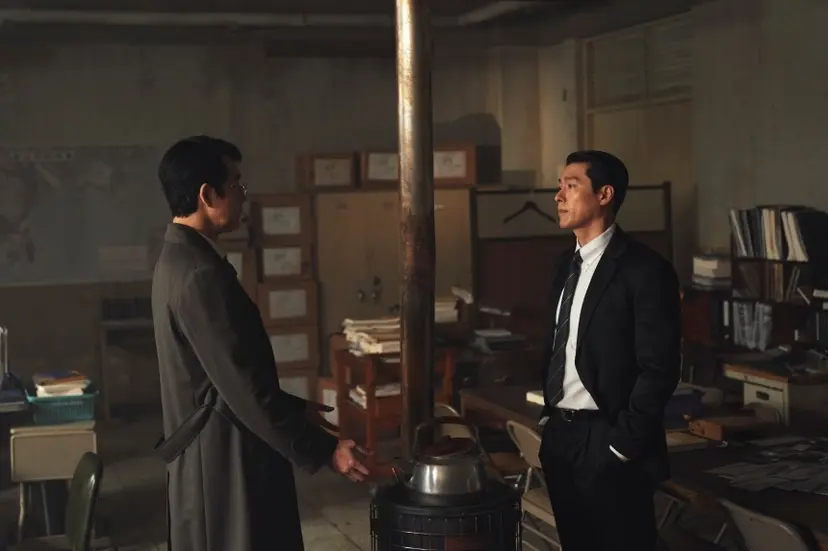
As Baek Ki-tae and Jang Geon-young—and by extension, the KCIA and the Prosecutor's Office—come into conflict, the story intertwines with the political history of the 1970s to build tension. Furthermore, the ironic desire of Baek Ki-tae, who dreams of success through drug trafficking while serving as a KCIA agent, clashes at times with the desires of those connected to the illicit slush funds that sustained the corrupt dictatorship. While the drama focuses on the ambitions of the KCIA line—including Cheon Seok-joong (Jung Sung-il), the Chief of the Presidential Security Service whom Baek tries to leverage; Hwang Gook-pyung (Park Yong-woo), the Busan KCIA director who is Baek's superior; and Pyo Hak-soo (No Jae-won), a fellow intelligence chief and Cheon's man—their desires are hardly the only ones at play.
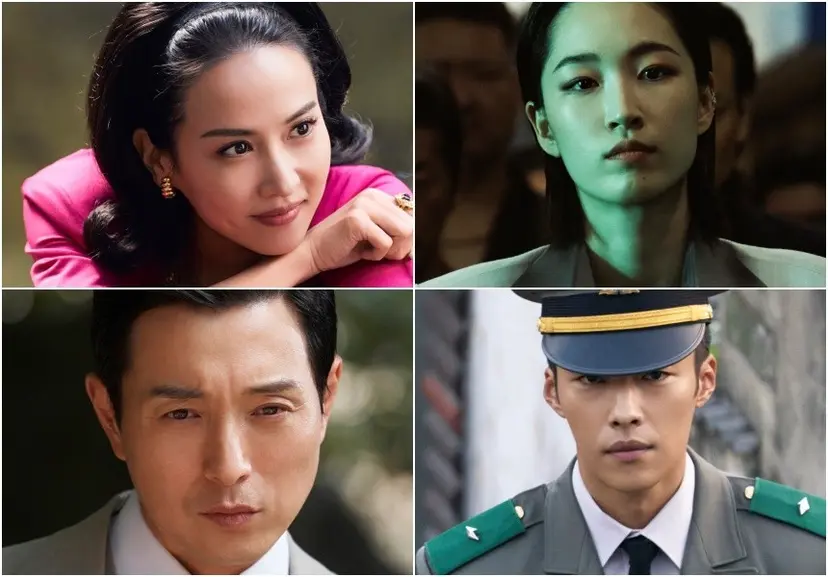
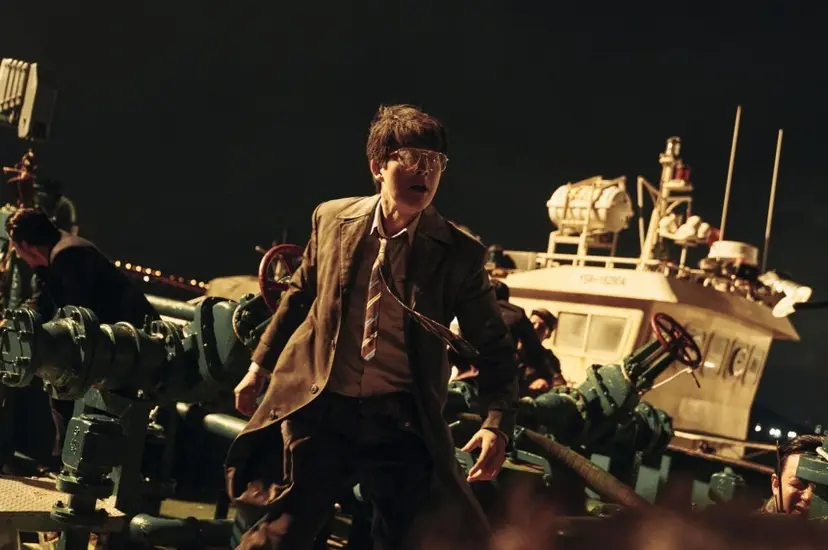
The complex desires of those surrounding Baek and Jang are intricately woven together: Ikeda Yuji (Won Ji-an), who plots to surpass his Yakuza chief and foster father Ikeda Osamu (Ryo Iwamatsu) while conspiring with Baek; Baek Ki-hyun (Woo Do-hwan), who is torn by love and hatred for his older brother and seeks a different path to power, yet harbors his own ambition; Kang Dae-il (Kang Gil-woo), a gang lieutenant who dreams of becoming the boss of the Manjae faction; and the moth-to-a-flame dangerous desire of Bae Geum-ji (Jo Yeo-jeong), a former high-end hostess who pulls the strings of the powerful by holding their secrets.
Of course, the drama primarily revolves around the conflict between Baek Ki-tae and Jang Geon-young—that is, between Hyun Bin and Jung Woo-sung. However, the axis clearly tilts toward Hyun Bin. With a physique bulked up by 13kg and sharp suit fits, Hyun Bin commands an overbearing presence as a KCIA agent, securing a firm impact from his visuals alone. Not to mention his gaze and expressions, which we haven't seen before. While he previously played characters driven by pure, straightforward love in syndrome-level hits like 'My Lovely Sam Soon', 'Secret Garden', and 'Crash Landing on You', he surprises here by portraying a cold and ruthless figure driven solely by his own desires. One of the highlights of this work is how he makes even a villain understandable through a performance densely layered with precisely calculated gazes, expressions, and breathing, portraying Baek Ki-tae as a man who moves forward while coldly controlling his burning desires.
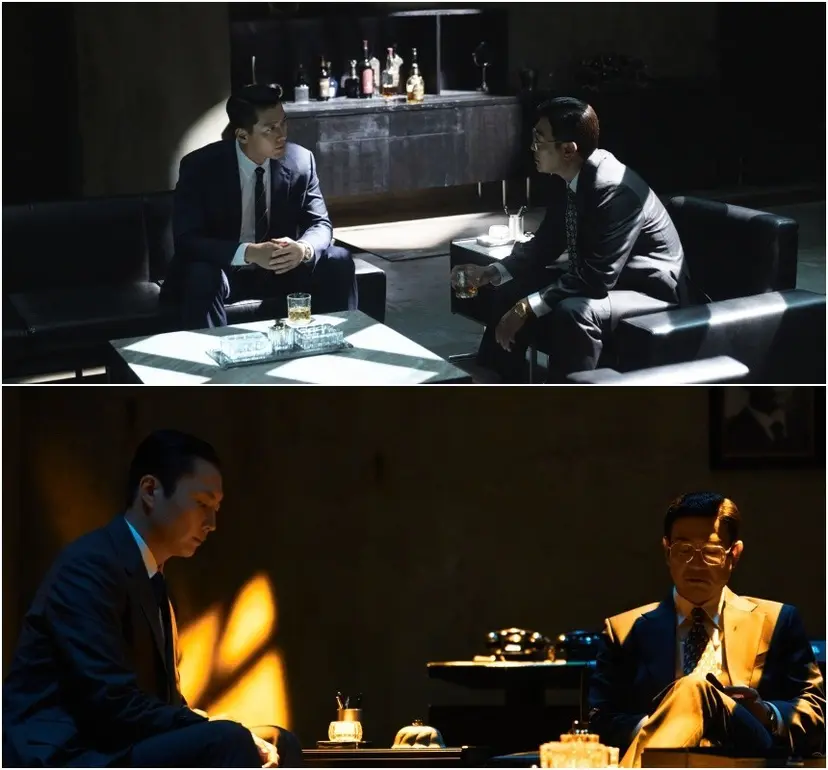
The character of Jang Geon-young, who stands in opposition to Baek, is somewhat disappointing. Despite having an impressive backstory, he is portrayed as a rather one-dimensional character who simply shouts for justice. Furthermore, although it may have been the director's intended acting direction, as many viewers have pointed out, his somewhat exaggerated tone stands out and fails to harmonize with Baek Ki-tae and the other characters. Personally, I am a longtime fan of Jung Woo-sung and know there are types of acting he excels at, but his character in this work (at least in Season 1) leaves something to be desired. However, this disappointment is minimal in the grand scheme of 'Made in Korea.' The performances of actors with strong screen presence like Park Yong-woo, Jung Sung-il, and No Jae-won elevate the production's quality, and specifically, Jo Yeo-jeong's performance in the episode titled 'The Age of Prohibition' is so skillful that she seems to be chewing up the scenes she is in.
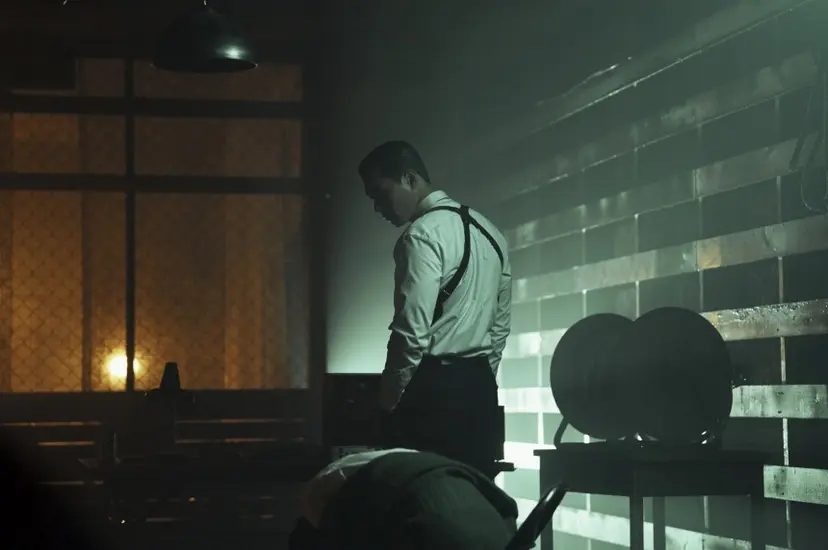
While Disney+'s episodic release method and the somewhat slow pacing—given how much story is left to tell—are frustrating, the film-like quality compensates for it, which is another reason why 'Made in Korea' remains a must-watch. Meticulously directed lighting that emphasizes the contrast between light and dark, art design and costumes that vividly recreate the 1970s, and a soundtrack that highlights the characters and amplifies their emotional lines all harmonize to complete a high-end noir.
In Season 2, it appears that the stories of characters like Ikeda Yuji and Baek Ki-hyun, which weren't fully explored in Season 1, will be developed in greater depth alongside the counterattack from those pushed to the edge. Again, the unfortunate part is that there are only six episodes of Season 1 to ruminate on until Season 2 arrives. I suppose I will just have to slowly savor and ponder it until the unknown release date.
Rating ★★★☆
Kudos to Hyun Bin for becoming the new face of Korean noir (held back half a star as room for Season 2).
Who is the writer Jeong Su-jin?
I have covered and written about film, travel, and pop culture while working at various magazines. I don't want to fall behind on trends, but I've become an old-school person who watches the latest dramas and only predicts the obvious clichés for the next scene. I am currently drifting through the vast OTT world, trying to regain my lost sense of trends, and my current wish is for an integrated OTT subscription plan.