

[비즈한국] The National Health Insurance Service (NHIS) has lost its appeal in a 53.3 billion KRW damages lawsuit against three tobacco companies, including KT&G, regarding insurance payouts for lung and laryngeal cancer patients, marking its second defeat following the first trial. The court did not recognize the NHIS's standing to sue, the claims for damages under the Product Liability Act, or the individual causal relationship between smoking and lung cancer.
However, some in the legal community suggest that the Supreme Court's recent trend of easing the burden of proof on victims in cases such as the 'humidifier disinfectant' scandal or the 'Samsung Electronics005930 semiconductor leukemia' case means the possibility of a reversed decision in the Supreme Court cannot be ruled out.
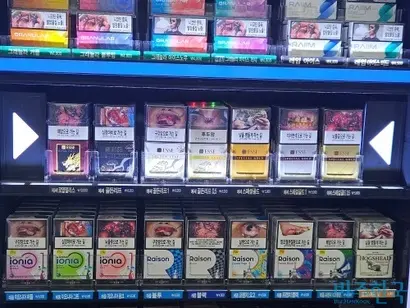
The Seoul High Court dismissed the NHIS's appeal on the afternoon of the 15th, ruling in favor of the defendants and upholding the first trial's dismissal. The court stated, "The plaintiff's expenditure of insurance benefits in this case is an fulfillment of its duties as an insurer as stipulated by the National Health Insurance Act, and it is difficult to see that the plaintiff suffered harm in executing funds collected under the Act," adding, "It is difficult to find illegality in the first trial's decision to deny the plaintiff's direct right to claim damages."
The court also rejected the NHIS's secondary claim for damages under the Product Liability Act. The Product Liability Act allows for claims for damages in cases of: 'manufacturing defects' where products deviate from design specifications due to process errors; 'design defects' where a product is inherently dangerous despite being made according to design; and 'warning defects' where a company fails to sufficiently warn consumers of risks or usage methods.
Regarding manufacturing defects, the court rejected the NHIS's argument, which cited the Agent Orange case to demand a high duty of risk prevention from the defendants, stating, "Given the differences in the avoidability of risks in usage and the functions of additives in the manufacturing process, it is difficult to accept the argument that a high duty of risk prevention should be imposed on cigarettes."
Citing data from the WHO and the American Cancer Society, the court also rejected both design and warning defect claims, noting that there is insufficient evidence that additive-free cigarettes are safer and pointing out that the harmfulness and addictiveness of cigarettes have been warned against since the 1960s.
The court also ruled that it could not recognize a causal relationship between smoking and lung cancer. It cited past Supreme Court rulings noting that even if the fact of smoking and lung cancer occurrence is proven, one must additionally examine individual factors such as the timing and duration of smoking, the onset of the cancer, pre-existing health status, lifestyle, changes in disease state, and family medical history. The court stated, "The original court determined that even if an epidemiological (statistical) correlation between smoking and lung cancer is recognized, it cannot be considered proven that individual causality exists to the extent of probability. As the traditional view holds that epidemiological study results do not provide accurate information on the individual causes of a specific person's disease, the court found it difficult to apply the principle of causal inference beyond academic limits."
However, the court noted that "it is appropriate to judge individual causality by giving significant weight to the facts that epidemiological correlations are recognized and that the subjects in this case, some with 30 or 20 pack-year smoking histories, were diagnosed with small cell lung cancer, squamous cell lung cancer, or squamous cell laryngeal cancer," leaving room for a different outcome depending on the NHIS's future efforts to provide evidence.
The legal community believes it is too early to predict the outcome at the Supreme Court, especially as the high court has recently issued rulings that alleviate the burden of proof on victims, most notably in the 'Samsung Electronics semiconductor leukemia lawsuit' and the 'humidifier disinfectant lawsuit.'
In the industrial accident recognition lawsuit involving Samsung Electronics semiconductor workers, the Supreme Court ruled, "Even if the cause of the disease is not clearly proven medically or scientifically, if a significant causal relationship between work and disease can be inferred considering all circumstances, it should be recognized."
Similarly, in the humidifier disinfectant case, the Supreme Court determined that unlike criminal courts—which demand strict proof beyond reasonable doubt—in civil trials for damages, causal relationships can be presumed if an epidemiological correlation is recognized to the extent accepted by common social standards.

The NHIS immediately announced its intent to appeal. NHIS Chairman Ki-seok Jeong met with reporters after the ruling, stating, "While tobacco companies reap massive profits, 40,000 people develop lung cancer and 20,000 die from it every year. The court is being tentative about the harmfulness of cigarettes, and if the state does not protect its citizens, the rights to health and basic social rights guaranteed by the Constitution will collapse." He added, "We are planning to appeal and will join forces with medical and legal experts to persuade the court."
The NHIS filed the damages lawsuit against the three tobacco companies in April 2014. It claims to have suffered damages from paying approximately 53.3 billion KRW in insurance benefits for medical expenses between 2003 and 2012 for 3,465 people diagnosed with lung or laryngeal cancer between 2001 and 2010.