

[비즈한국] For a long time, audition programs have been subject to an unwritten rule known as the 'I Am a Singer' dilemma. 'I Am a Singer' first aired in 2011 as a segment of 'Sunday Sunday Night,' but due to positive feedback, it was spun off into an independent program. It was initially very popular because famous singers competed against each other in various missions. It was even remade in China, where it drew an explosive response.
However, the ratings declined as the episodes progressed. The situation in China became similar to that in Korea. What was the reason? It's simple: the structure causes fans to drop out. Because singers who already have fandoms appear, it receives great interest in the beginning, but as the rounds continue, talented singers are eliminated. Yet, the criteria for elimination are ambiguous and hard to guarantee objectivity. Moreover, it was questionable how anyone could eliminate an artist's song.

This dilemma also repeated itself on the well-received JTBC show 'Sing Again 4: Unknown Singer Competition.' The program was praised for its intent to provide performance opportunities to lesser-known singers. In a landscape dominated by idol music, it showcased unique and diverse musicians. Participants are identified by numbers rather than names, but in the digital mobile era, viewers still manage to figure out the singers' identities and fans follow them. However, with every round, those who supported the eliminated singers leave. As the season progresses, the overall number of viewers decreases because the likelihood of their favorite singer advancing diminishes. This is even more likely given that the viewers are often those with very refined and high-level musical tastes.
In particular, events occurred that could have brought disappointment to those struggling to build a career in music in Korea. In season 4, while the final victory went to No. 65 Lee Oh-wook, the judges unanimously chose No. 59 Dorado, a Filipino contestant and a 2015 'Asia's Got Talent' finalist. This rendered the original intent of 'Sing Again' hollow. While choosing Dorado might be seen as desirable from a multicultural perspective, it could also be viewed as a gesture that ignores the reality of Korean musicians. At a time when idol music has pushed domestic musicians into a tunnel of exclusion and alienation, the victory of a contestant from a multicultural background could potentially cause further despair for local musicians.
From the beginning, 'Sing Again' was established on the collapse of live music performances in Korea. Musicians are desperate for opportunities to sing. Broadcasting stations dictate music performances, and idol music sits at the center of it. While idol music may have expanded globally, musical diversity has vanished domestically, and the live performance culture has been decimated. The fact that Hakchon, where Kim Kwang-seok held 1,000 performances, closed its doors illustrates this clearly. Our musical foundation can be considered solid only when a performance culture where singers and fans can meet in person is robust. The Beatles, who performed based in Liverpool, England, are a prime example. The Cavern Club, their performance venue, remains a music venue even today as a landmark.
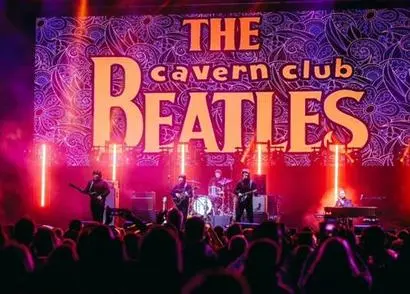
As the Hallyu (Korean Wave) boom spread worldwide, claims were raised that Korea needs to build 50,000-seat stadium-class venues, beyond just arenas. With major entertainment agencies, politicians, and even the government stepping in, local governments are already engaging in intense competition to host them. However, there are not many domestic singers who can fill a stadium-class venue. Perhaps only artists under major agencies like BTS, Seventeen, Stray Kids, or BLACKPINK could do so.
Idol music is not the entirety of K-pop. For countless musicians, even a small live theater with a few hundred seats is a missed luxury. There is a lack of foundations for music lovers to easily watch live performances. Realistically, rent is too expensive, but if existing idle spaces were utilized, one could see performances like those in 'Sing Again' anywhere. It is fully possible to achieve this by utilizing the 600 billion won 'K-Content Fund' created by the government to foster K-content companies and revitalize the cultural industry ecosystem.
It is more important to provide stages where our musicians can perform at any time, rather than having them compete against each other on broadcast programs because they have nowhere else to perform. We need to create concert landmarks where various musicians can perform 365 days a year. This could also be linked to broadcast programs.
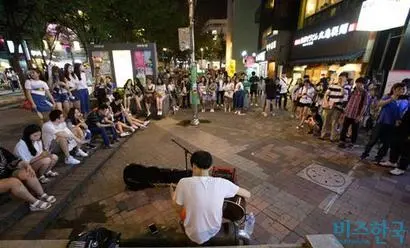
K-pop has now reached a musical limit. As its reach expands, it is being demanded to provide musical diversity and depth. It is time to create a model that revitalizes local economies, like the Beatles, by establishing and deepening 'K-pop-ness' and creating story-driven content that engages with fans on a regular basis. We need to test public support by immediately reviving Hakchon as a concert venue. Prioritizing the preservation of spaces with history and stories will yield greater policy effects.
※ The views of external contributors may not reflect the editorial direction of this publication.
The contributor, Kim Heon-sik, has been walking through or navigating the forest of popular culture phenomena since his 20s with the expectation that there is a way to make the world a better place through culture. He continues on the same path with the same belief in the 21st century, where artificial intelligence and quantum computers are active.