

[비즈한국] SK Hynix000660 is accelerating its efforts to expand High Bandwidth Memory (HBM) production capacity. As the spread of artificial intelligence (AI) leads to a surge in HBM demand, the company is proactively securing thermal compression (TC) bonders—critical back-end processing equipment—to establish a mass production system for next-generation products. Industry insiders view this investment not merely as a replacement of equipment, but as a strategic facility expansion aimed at increasing HBM output.
SK Hynix announced on the 14th that it has signed contracts worth 9.65 billion won to procure TC bonders for HBM from Hanmi Semiconductor042700. The contract period runs until April 1st. According to industry sources, Hanwha Semitech has also reportedly received orders for a similar volume of TC bonders. Given that the average price per TC bonder is approximately 3 billion won, it is estimated that this order involves the procurement of about three units from each company, totaling around six units.
A TC bonder is equipment that uses high temperature and pressure to vertically stack DRAM on top of wafer substrates. It plays a key role in the HBM manufacturing process, where multiple DRAM chips are stacked, and the availability of this equipment directly determines production capacity (CAPA). An industry official stated, "HBM is more prone to bottlenecks in the back-end process than in the wafer process, and the TC bonder is at the center of that. Securing TC bonders is directly linked to HBM expansion plans."
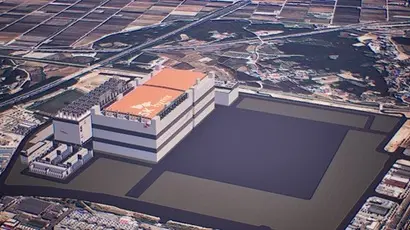
The newly ordered TC bonders are reportedly destined for the Cheongju plant in North Chungcheong Province. SK Hynix is known to be building a production system in anticipation of mass-producing the next-generation HBM4 (6th generation) product. HBM4 is expected to be widely used as memory for next-generation AI accelerators, as it offers improved data processing speeds and power efficiency compared to previous generations.
SK Hynix has already expanded supply in the AI memory market by commercializing products up to the 12-layer HBM3E (5th generation). However, with the pace of AI demand growth accelerating, supply requests from major clients are also on the rise. Consequently, experts believe that additional equipment procurement and capacity expansion have become unavoidable.
Changes in supply chain strategy are also emerging. While SK Hynix has historically operated its HBM lines primarily with TC bonders from Hanmi Semiconductor, it has recently selected Hanwha Semitech as a new partner, diversifying its equipment procurement structure. This simultaneous order is interpreted as a measure to reduce dependency on specific suppliers and ensure stability in equipment supply.
Samsung Electronics005930 is also actively working on HBM4 technology development and production preparations. It is reported that Samsung has internally completed HBM4 development and passed the production preparation approval stage, and is currently undergoing tests with major clients such as NVIDIA. Some observers even suggest that Samsung is reviewing plans to expand its HBM production capacity by approximately 50% by 2026.
As SK Hynix and Samsung Electronics engage in a fierce battle of nerves over the timing of HBM4 mass production, the industry anticipates that both companies are setting their targets for early 2026. While SK Hynix is refining its production system through investments in equipment like TC bonders, Samsung Electronics appears to be preparing for market entry by finalizing its own HBM4 development and systematically completing client verification processes.