

[비즈한국] An interesting change has recently emerged in the global camera market. As the competition for ultra-high resolution and performance reaches its limits, manufacturers are instead reviving the emotions and operating methods of the past. It is a movement that intentionally adds analog imperfection and physical texture to digital cameras that are already technically 'perfected'. This is a 'New-tro' (New + Retro) strategy aimed at consumers who feel fatigue amid technological overkill, with recent new camera products prioritizing experience and emotion over pure performance.
Delicately 'Recreating' the Past Based on Modern Technology
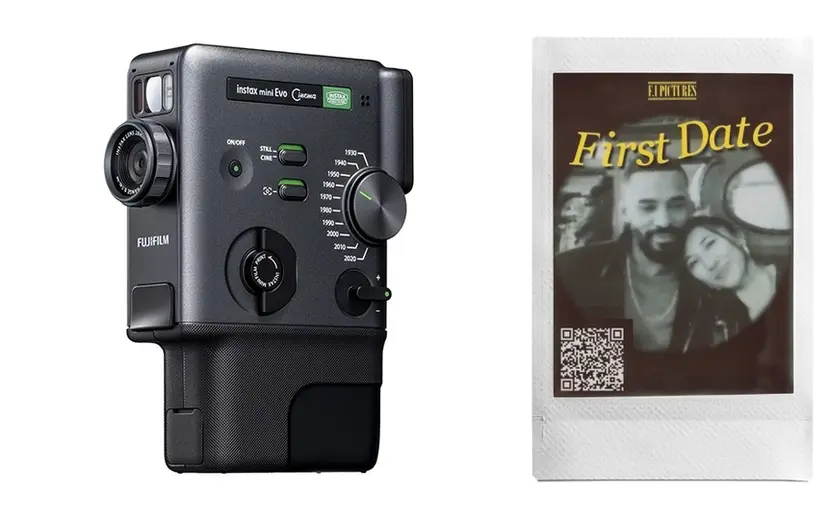
On the 7th, Fujifilm announced the 'instax mini Evo Cinema,' a new model in its 'Evo series' of instant cameras. The instax mini Evo Cinema is a hybrid instant camera capable of shooting both photos and videos. For videos, it converts the captured data into a QR code, which can then be printed along with a still frame from the footage. Its design also focuses on analog tactility, adopting a vertical grip inspired by Fujifilm’s 1965 'Fujica Single-8' 8mm camera.
The 'Eras Dial' feature, in particular, is drawing attention. It provides a total of 10 era-specific effects ranging from the 1930s to the 2020s, such as '1960,' which mimics the feel of a 1960s 8mm film camera, and '1970,' which captures the texture of a 1970s color CRT TV. Each effect can be adjusted in 10 increments, allowing for a total of 100 different era-specific expressions. Turning the dial to set a decade implements the photo effect symbolic of that period.
Kim Min-sik (28), a photography major, said, "From a consumer's perspective, the key is realizing the look you want through the tactile experience of a dial," adding, "Adding physical hardware properties makes me want to own it."
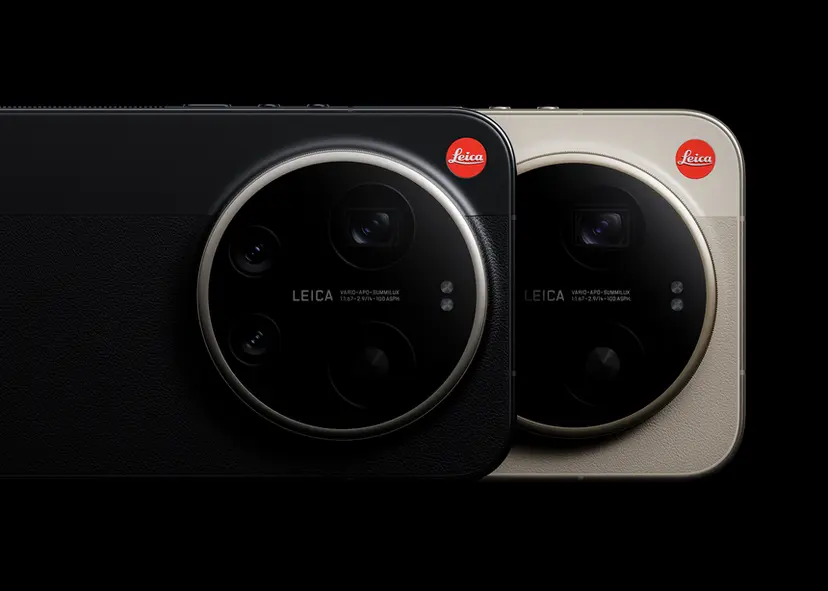
The 'Xiaomi 17 Ultra by Leica,' unveiled by Xiaomi on December 25th of last year, drew attention through its collaboration with the prestigious German camera manufacturer Leica. Even though the product is equipped with a Snapdragon 8 Elite Gen 5 chipset and a 200-megapixel telephoto camera, Xiaomi placed the 'emotion of the Leica M series cameras' and the 'design and tactile feel of physical dials' at the forefront of its marketing.
The Xiaomi 17 Ultra by Leica features a 'Leica Essential' mode that recreates the image quality of two famous Leica cameras, the M3 and M9. The M3 style digitally models the colors, tones, and graininess of authentic black-and-white film from the 1950s, when the camera was released. The M9 style also uses a style-transfer model trained on hundreds of thousands of photos taken with the M9 to replicate the camera of that time. The lens focus dial, which uses 20 ball bearings, was also emphasized, clearly signaling that the Xiaomi 17 Ultra by Leica is targeting analog sensibilities.
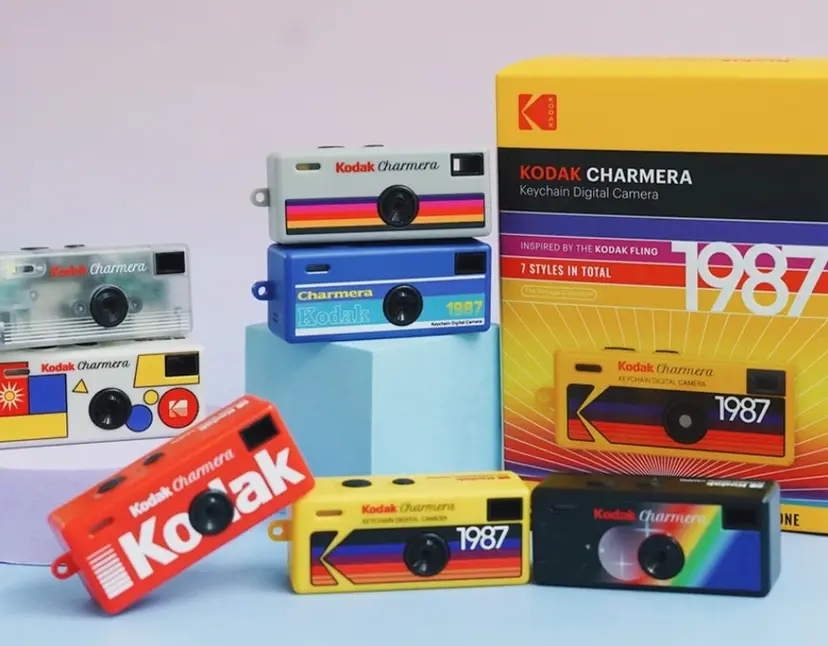
The most extreme case is Kodak's 'Charmera.' This ultra-compact camera, with a low specification of 1.6 megapixels—a level seen 20 years ago—sold out immediately after its release last September. Designed as a keychain to be hung on bags, this tiny camera perfectly triggered the Y2K sensibilities of the MZ generation.
It redefined the rough graininess of low-resolution images not as a 'flaw,' but as a 'characteristic.' By designing the device itself as a keychain to hang on a bag, it stimulated the desire for possession. This is cited as a successful example of counter-intuitive strategy in the saturated camera market, where competition for high performance and high prices is fierce; instead, by intentionally lowering performance and maximizing design and emotion, it created a blue ocean.
Lee Gwang-hee (28), who purchased a Charmera, said, "The image quality is soft and hazy, so even when I take a photo now, it looks like a picture from my childhood," adding, "It gives me a strange sense of comfort that it's 'okay to be a bit slow'."
'New-tro' as a Remedy for Digital Fatigue
Experts analyze that this camera 'New-tro' trend acts as an alternative to alleviate the 'digital fatigue' experienced by modern people. Digital fatigue refers to a state of psychological exhaustion accumulated in an environment where, as advanced technology rapidly evolves, one must constantly learn new functions and interfaces. Cameras have also become representative devices where users feel more fatigue from the process—due to automated corrections, AI-assisted shooting, and complex menu structures—than from the results.
When this fatigue reaches a certain level, consumers value the simplicity of operation and sensory satisfaction over more features. Experts interpret this as a return to 'low technology' that focuses on the essential human experience of use. The explanation is that the analog experience of turning a dial and pressing a shutter gives meaning to the act itself, acting as a kind of psychological sanctuary in a digital environment.
Ko Jin-yong, a professor of Digital Marketing at Inha University, said, "As technology evolves too quickly, consumers are actually losing their sense of control," adding, "The more this happens, the more people find stability in operation methods or emotional archetypes they are already familiar with from the past." He further analyzed, "New-tro cameras don't just mimic the past; by layering analog sensitivity on top of digital technology, they restore the user's feeling of 'handling' the technology, and that point is strongly stimulating the sentiments of current consumers."