

[비즈한국] The National Assembly and the pharmaceutical industry engaged in a tense tug-of-war over the government's proposed 'generic drug pricing system reform.' While the National Assembly argued that domestic pharmaceutical companies have become complacent by relying on high generic prices and that intensive restructuring is necessary to leap forward as a global powerhouse in new drugs, the industry countered that rapid price cuts would undermine their ability to invest in R&D, which is the engine for future growth.
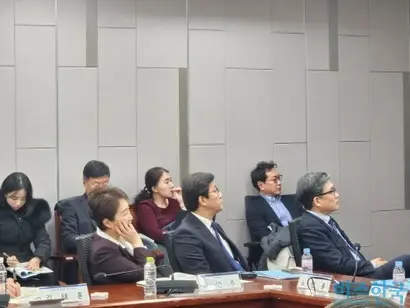
At the 'Drug Pricing Policy Forum for Leaping into a New Drug Powerhouse' held at the First Seminar Room of the National Assembly Member's Office Building in Yeongdeungpo-gu, Seoul, on the 14th, Rep. Kim Yoon of the Democratic Party of Korea (proportional representative), a member of the Health and Welfare Committee, and Roh Yeon-hong, Chairman of the Korea Pharmaceutical and Bio-Pharma Manufacturers Association (KPBMA), expressed conflicting views during their congratulatory remarks, creating a palpable sense of tension.
'National Assembly' Kim Yoon: "3.5 Trillion Won Generic Bubble... A Burden Entirely on the Public"
Rep. Kim Yoon, who hosted the forum, cited the creation of a virtuous ecosystem for new drug development as the background for the government's push for drug price cuts. Rep. Kim explained, "The government's national agenda is not simply about cutting drug prices to save on national health insurance finances, but about building an innovation ecosystem for the pharmaceutical and bio industry," adding, "Normalizing the pricing structure will enable large-scale investment in innovation and R&D within the pharmaceutical industry."
Rep. Kim also pointed out problems with the growth model of the domestic pharmaceutical industry. He criticized, "South Korea's generic drug prices are about 1.7 times higher than those in eight developed countries, leading to a generic drug price bubble of approximately 3.5 trillion won. This means the public is spending an extra 3.5 trillion won every year through health insurance premiums and out-of-pocket expenses." He further raised his voice, stating, "It would have been better if this money had been used for industrial development over the past 20 years, but it has instead led to a proliferation of companies that rely solely on the price difference of generic drugs, which allows for easy profits through small-scale sales."
'Pharmaceutical Industry' Roh Yeon-hong: "Rapid Drug Price Cuts Will Shake the Industrial Foundation"
Roh Yeon-hong, Chairman of the KPBMA, representing the pharmaceutical industry, responded with concerns and a cautious stance. He warned that the government's trend of cutting drug prices at a time when results are gradually becoming visible could shake the very foundation of the domestic pharmaceutical industry.
Chairman Roh stated, "The domestic pharmaceutical and bio industry has developed 41 domestically produced new drugs despite adverse environments, and the number of pipelines, which can be seen as an indicator of future growth, has reached 3,233, the third-highest level in the world." He added, "With technology export performance exceeding 20 trillion won last year, we are at the threshold of a new leap forward as we gradually transition toward a center for new drugs and high-value-added industries."
He further emphasized, "There are concerns that pushing for a rapid drug price cut policy could cause unintended side effects such as a contraction in R&D investment, instability in the supply of essential medicines, and large-scale job cuts." He added, "Sufficient communication with the field and an impact analysis must precede the speed, method, and scope of the policy, and it should be redesigned in a way that promotes a balance between the growth of the national health industry and national health insurance finances."
Chairman Roh suggested that instead of confronting each other, the government and the industry should exercise 'Solomon's wisdom' to find an optimal compromise. He said, "The government is contemplating three tasks simultaneously: the sustainability of national health insurance finances, innovation in the pharmaceutical and bio industry, and the stable supply of essential medicines. I believe these can be achieved together through precise balance and policy design." He added, "I trust that if the government, the National Assembly, the industry, and academia put their heads together, we can create a balanced alternative."
In November of last year, the government announced a plan to lower the upper price limit of generic drugs from the current 53.55% of the original drug's price to 40% to reduce national health insurance expenditure. It also decided to abolish the addition system that applied 59.5% of the original drug price for one year to the first generic drugs launched, and to reduce the number of generics under the same ingredient subject to the price cap from 20 to 10.