

[비즈한국] For startups, CES (Consumer Electronics Show) is a gateway to have their technologies and products validated by global buyers and investors and to explore new market channels. This year, the enthusiasm for Korean startups remained high, particularly within the Integrated Korea Pavilion and various local government-led pavilions. With approximately 1,000 Korean companies participating in CES 2026, Korea has maintained its status as a major player at the event, following only the United States and China. Notably, as AI has become a fundamental element across almost all industrial sectors—including healthcare, smart homes, mobility, and robotics—it was difficult to find any Korean exhibits that did not incorporate AI. In terms of aligning with technology trends, they have clearly confirmed their presence.
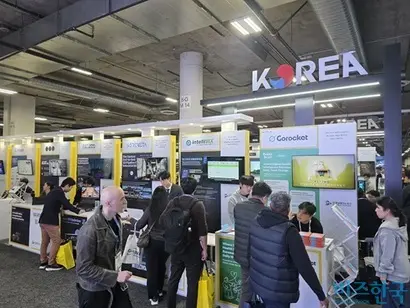
With CES now concluded, the challenge for participating firms is how to bridge the gap between the technologies showcased at the exhibition and actual market performance. While Korea draws attention every year for its record-breaking participation and Innovation Award wins, there is also a cold-eyed assessment regarding the practical utility of attending the exhibition. Critics point out that even if a company validates its technological prowess on the global stage, the proportion of those that achieve tangible business outcomes, such as actual sales or contract awards, falls short of expectations.
Sweeping Innovation Awards Yearly, Yet Follow-up Investment Remains 'Limited'
At this year's CES, Korean companies won 206 out of the total 347 Innovation Awards. Products from small and medium-sized enterprises (SMEs) accounted for 150 (72%) of those listed. Of the 30 Best of Innovation Awards, 15 went to Korean companies, with Korea sweeping all three Best of Innovation Awards in the AI category.
Such achievements demonstrate the technical competence and planning ability of Korean startups. However, whether these overwhelming figures lead to actual global investment or export contracts is a separate issue. Many of the companies that received Innovation Awards are still in the early stages, and quite a few lack sufficient capacity in distribution, sales, and post-launch operations to enter overseas markets.
According to a report published last year by Startup Alliance, among the 116 Korean startups that received CES 2024 Innovation Awards, only 18.1% (21 companies) succeeded in securing follow-up investment within one year of the award. Out of these, only one case involved attracting foreign investment.
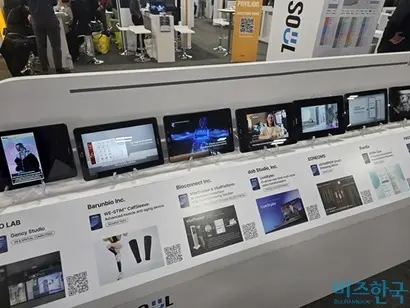
Passing the 'Demo' Phase, But Facing High Thresholds for 'Commercialization'
While CES is a starting point for meeting potential customers, actual sales occur afterward. One of the main barriers startups face is the discrepancy between a demo and the actual operating environment. In follow-up meetings, global buyers who showed interest at the exhibition floor go beyond flashy tech demonstrations and clearly demand to know if the technology can be "stably automated in a real-world environment" and if the "mass production system is reliable." Only when companies have established local distribution networks, finalized partnerships, and developed capabilities for procurement, installation, and operation can these interactions finally lead to contracts and sales. Although Korean companies excel at rapid prototyping and exhibition-style tech demos, they often reveal limitations in these competencies required for the commercialization stage.
As of last year, 85% of companies participating in CES received support from government funds, local government budgets, universities, or large corporations. Lee Ji-young, an expert committee member at Startup Alliance, observed, "If the primary purpose of participating in international exhibitions is to secure potential clients, then it may be too early for most early-stage startups to attend CES. Nevertheless, the reality that government-led startup support programs are heavily concentrated at this stage is what drives many early-stage startups to participate."
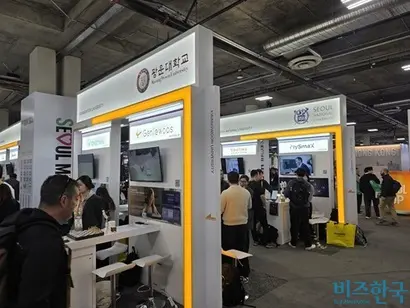
While some view the mere act of participating in overseas exhibitions and winning awards as a performance indicator, others warn against letting such participation end as a domestic marketing tactic. There is an emphasis on the need for companies, the government, and relevant institutions to focus more on strengthening capabilities and supporting business progress rather than becoming obsessed with the scale of participation or award titles.
A CEO of a startup that participated in this CES with a healthcare product confessed, "After the exhibition, when the process moves to purchasing departments for verification or adoption discussions, many fail to overcome hurdles like procurement, legal, or security audits. A significant number of contracts stall halfway. This is a problem that individual startups cannot solve with technology alone."
Actual Business Outcomes and Qualitative Growth are Key
As AI becomes a core element of products and services, there are concerns that the threshold for commercialization has risen even higher. For AI products integrated with physical hardware—ranging from medical and healthcare fields to automation technology and robotics—safety certification and liability issues become prerequisites for business. Even if a product passes a technology demo, it is not uncommon for it to fail due to regulatory and certification hurdles.
Data issues are also a major bottleneck. A representative from a company currently discussing an IoT solution partnership with a U.S. university through this CES stated, "As we move into B2B or public markets, requirements such as data export restrictions, on-premise server construction, and network separation make converting to contracts much more difficult. Issues concerning the collection, storage, and utilization of personal or sensitive information are where the most friction occurs during the transition from a PoC (Proof of Concept) to a commercial contract."
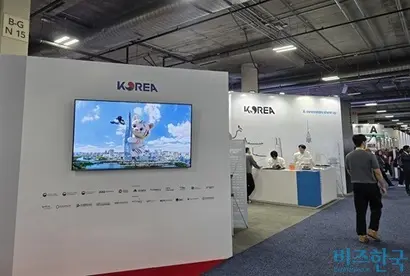
Nevertheless, tangible figures from the site are also evident. According to the Ministry of Trade, Industry and Energy and KOTRA, 2,480 on-site consultations were held at the Integrated Korea Pavilion (with 470 participating companies), resulting in 23 export and technology cooperation MOUs and contracts worth approximately $240 million (350 billion KRW).
The Korea Institute of Startup & Entrepreneurship Development (KISED) K-Startup Integrated Pavilion (81 companies) also achieved 1,446 consultations and 2.6 billion KRW in contract results. Busan City also expects to finalize contracts worth $28.67 million (40 billion KRW) through 443 consultations. Daegu City announced that its joint pavilion (14 companies) recorded on-site contracts worth $428,800 (632 million KRW).
The government and institutions are determined to focus their capabilities on close follow-up management beyond mere exhibition support. KOTRA President Kang Kyung-sung stated, "Having confirmed the world's interest in our innovative companies, including AI, we will do our best to provide follow-up support." Yoo Jong-pil, President of KISED, emphasized, "We will focus our policy capabilities so that consultation results can lead to actual export contracts and sales."
An official from the Ministry of SMEs and Startups stated, "We are operating support programs that grant bonus points or waive documentation evaluations for companies aiming for global expansion when they participate in commercialization support and global entry programs."
An official from KISED added, "We have put effort into achieving real business results by creating networking opportunities with VCs on-site and providing IR pitching training in advance. We plan to continue our support by sharing know-how through review seminars even after the exhibition concludes."