

[비즈한국] The number of Jeonse fraud victims has surpassed 35,000. While the Jeonse Fraud Special Act, implemented in 2023, provides mechanisms such as credit rehabilitation and financial support once a person is recognized as a victim, critics point out that substantial recovery is not being achieved. As the situation worsens, demands for amending the Special Act are growing.
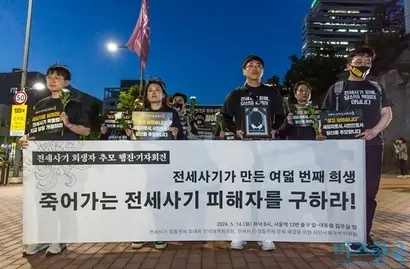
According to the Ministry of Land, Infrastructure and Transport (MOLIT), a total of 664 cases were recognized as Jeonse fraud victims during the month of December last year. To date, the Jeonse Fraud Victim Support Committee has recognized 35,909 cases. The Korea Land and Housing Corporation (LH) stated that as of December last year, it had purchased 4,898 housing units affected by Jeonse fraud.
MOLIT and LH maintain that they are unifying purchase procedures and setting processing deadlines to expedite the purchase of affected properties. They also stated that to provide relief to victims of collective collateral, they have consulted with guarantee institutions to change the timing for interest-free 20-year installment repayments for such properties from the 'time of distribution' to the 'time of successful bid.'
As the number of recognized Jeonse fraud victims increases, so does the number of unrecognized cases. Last October, 503 out of 1,049 cases were recognized; in November, 765 out of 1,624; and in December, 664 out of 1,375. This means that for every recognized case, there is a corresponding rejection or dismissal. According to MOLIT, many cases are rejected due to failure to meet the requirements for being a Jeonse fraud victim.
Currently, to be recognized as a Jeonse fraud victim by MOLIT, one must meet the following four requirements: △Having completed the handover of the house, resident registration, and obtained a fixed date on the lease; △The lease deposit must be 500 million won or less; △Experiencing or expecting damage from the inability to recover the lease deposit refund claim from multiple tenants; △Having reasonable grounds to suspect that the lessor intended to fail to fulfill their obligation to refund the lease deposit. If only some of these requirements are met, only limited support, such as emergency welfare assistance, is available.
Because the requirements for recognition as a Jeonse fraud victim are strict, a 'blind spot' has emerged where victims, despite actual damage, do not receive relief. Consequently, there is talk of needing to amend the Jeonse Fraud Special Act. The government is also considering reinforced support measures.
In 2024, an amendment to the Jeonse Fraud Special Act containing provisions for 'advance repayment and subsequent recovery' was passed under the leadership of the Democratic Party of Korea, but it was subsequently scrapped due to a veto by President Yoon Suk-yeol.
Last December, at a work report to the Ministry of Land, Infrastructure and Transport, President Lee Jae-myung said, "Promises must be kept," and directed the ministry toward a 'pre-repayment, post-recovery' approach. In the same month, Minister of Land, Infrastructure and Transport Kim Yoon-deok stated at the National Assembly's Land, Infrastructure and Transport Committee that he would strive to ensure a minimum guarantee rate of 50% for Jeonse fraud damages. This is because legislation is being pursued to have the state guarantee that victims can recover at least one-third of their damaged deposit.
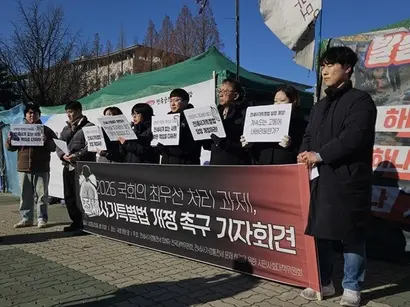
Voices calling for an amendment to the Jeonse Fraud Special Act are growing louder. On the 6th, Jeonse fraud victims and civic groups held a press conference emphasizing the need to amend the Special Act. They demanded supplementation of the current act, including: △Minimum guarantee measures, △Relaxation of requirements for victim recognition, △Introduction of a 'bad bank' for relief of trust fraud victims and multi-unit collective collateral victims, and △Preparation of measures for facility management of affected housing without the landlord's consent.
At the press conference, it was pointed out that support measures are not being developed due to a lack of coordination between government departments. Park Hyo-ju, head of the Housing and Tax Team at People's Solidarity for Participatory Democracy, pointed out, "Although President Lee Jae-myung mentioned at the ministry's work report last December that promises to victims must be kept, and Minister Kim Yoon-deok also stated that they are consulting with the Ministry of Economy and Finance to prepare minimum guarantee measures, the Ministry of Economy and Finance is stalling the amendment of the Special Act."
Last November, Representative Han Chang-min (Social Democratic Party) announced he would propose an amendment to the Jeonse Fraud Special Act, including 'pre-relief and post-recovery' provisions, stating that 6,367 people have failed to recover 1.2103 trillion won in Jeonse deposits.
As criticism grows that MOLIT's support for Jeonse fraud victims is ineffective, local governments are stepping up with their own support measures. Uljin-gun in North Gyeongsang Province decided to provide 1 million won in living safety subsidies to residents recognized as Jeonse fraud victims. Gyeonggi-do is providing support for guarantee insurance premiums for Jeonse deposit return guarantees. Daegu City is also implementing a project to support Jeonse deposit return guarantee premiums. Anyang City in Gyeonggi-do plans to increase its budget for Jeonse fraud victim support and provide reimbursement for actual expenses up to a limit of 1 million won.