

[비즈한국] "I just made these this morning with some hard-to-find pistachio spread! Limited quantity of 10, selling for 8,000 won each on a first-come, first-served basis."
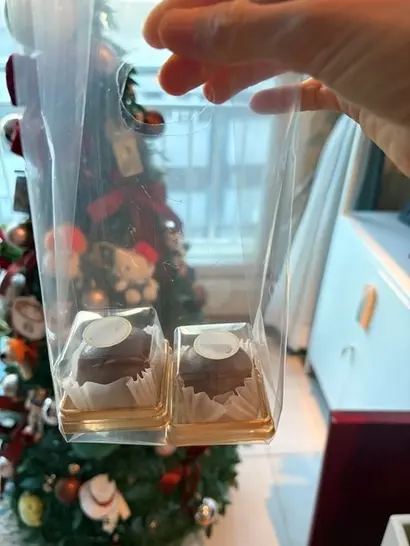
This is a recent sales post found on Karrot, a local-based second-hand trading platform. Riding the wave of the "Dubai Chocolate" craze, the so-called "Dubai Chewy Cookies," made with kataifi and pistachio cream, have been a hot topic on social media. As sell-out streaks continue, posts from individuals offering homemade cookies for sale have sparked controversy. While sellers emphasize freshness and care with phrases like "baked by hand" or "made today," experts point out that this is clearly an illegal act under the law.
Fines of Up to 50 Million Won for Selling Food Without Registration
Under the current Food Sanitation Act, anyone intending to manufacture and sell food must register as an "instant sales manufacturing and processing business" or a "food manufacturing and processing business" with the relevant local government. Operators must have a cooking space separate from their home kitchen, meet legal standards for ventilation, cleaning, and storage facilities, and are required to undergo regular hygiene training and self-quality inspections. Selling food without completing these steps is considered unregistered business activity.
The problem is that some "Dubai Chewy Cookies" traded on online platforms like Karrot are made in ordinary home kitchens that completely lack these requirements. The condition of ingredient storage and hygiene management is opaque, and the possibility of cross-contamination from pets or household items cannot be ruled out. This is why experts are concerned about the risk of food poisoning and other safety accidents.
Legal penalties follow. According to the Food Sanitation Act, operating without registering as an "instant sales manufacturing and processing business"—which would apply to selling homemade cookies—can lead to imprisonment for up to 3 years or a fine of up to 30 million won. If the act is classified as a "food manufacturing and processing business" that requires specific facilities, but is operated without registration, the penalties increase to up to 5 years in prison or a fine of up to 50 million won.

Second-hand Trading of Store-bought Dubai Cookies is Also Risky
Experts point out that not only home-baked goods but also the act of reselling "Dubai Chewy Cookies" that were officially purchased at stores can be problematic in terms of safety and legal liability. Some sellers emphasize that they are "products from famous stores" or "unopened," but food safety is only guaranteed until the product leaves the manufacturer.
There is no way to verify whether proper temperature and hygiene were maintained while an individual stored or transported the product afterwards. Cookies containing pistachio cream or chocolate filling are particularly sensitive to temperature changes, carrying a high risk of spoilage. In summer, even exposure to room temperature or long transport times can increase the risk of bacterial growth.
The biggest issue cited is the lack of clarity regarding liability when an accident occurs. If a health issue like food poisoning arises from food traded second-hand, it is unclear whether the manufacturer, the original buyer, or the reseller should be held responsible. Manufacturers are likely to deny liability because the item left the authorized distribution channel, and it is not easy to hold a reseller legally accountable due to the nature of private transactions.
Experts emphasize, "The more trendy a dessert becomes, the faster illegal sales and re-distribution tend to spread. We need a mindset that food is not just a 'bargain item' but a 'consumer good where safety must be the premise.'" They explain that consumers must exercise special caution to check whether the product is from an officially permitted manufacturer and has gone through normal distribution channels.
Jeong Yang-hoon, a lawyer at Barun Law, explained, "If a problem occurs when reselling food through private transactions, the situation may be difficult to view as a simple second-hand trade. If repeat or profit-seeking motives are recognized, there is room for it to be judged as unauthorized distribution or illegal business. If damages such as food poisoning occur, not only civil liability for damages but also criminal responsibility may arise."
In this regard, an official from the Ministry of Food and Drug Safety emphasized, "To cook and sell food for profit, you must register the relevant business, such as a food service business or an instant sales manufacturing and processing business." They also stated, "We plan to continuously strengthen guidance and inspections regarding products of high consumer interest and the sale of fraudulent or substandard food products."