

[비즈한국] With the merger of the world's largest refiner SINOPEC and the China National Aviation Fuel Group (CNAF) becoming official, a tectonic shift is expected in the Sustainable Aviation Fuel (SAF) market. The merger of the two companies draws significant attention from the global petrochemical and aviation industries, as it represents more than just a corporate combination; it completes vertical integration covering the entire process from raw material refining to aircraft refueling. In particular, with the restructuring of the petrochemical industry accelerating due to intensified carbon neutrality regulations, it is interpreted that China has designated SAF as a future core growth engine and has preemptively moved to dominate the market.
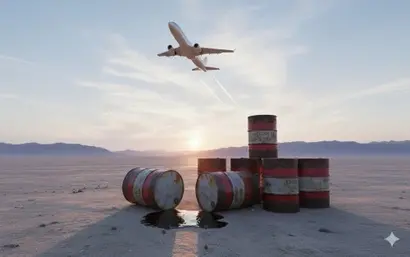
Combining Production and Distribution to Build China's Aviation Fuel Value Chain
According to China's state-run Xinhua News Agency on the 9th, China's State-owned Assets Supervision and Administration Commission of the State Council announced on the 8th that it had approved the merger of SINOPEC and CNAF. CNAF is a state-owned aviation fuel supply company in China that handles aviation fuel procurement, transportation, storage, and sales. The integration of the two companies signifies the combination of production and distribution.
The backdrop for China's aggressive move lies in the long-term stagnation of the traditional petrochemical industry. As profitability for existing petroleum products has deteriorated due to economic slowdown and oversupply, SINOPEC is fundamentally restructuring its business toward SAF, a high-value-added eco-friendly product. SAF replaces traditional petroleum-based aviation fuel with bio-fuels or renewable synthetic fuels (fuels chemically synthesized from hydrogen produced by renewable energy and captured carbon dioxide). IATA (International Air Transport Association) estimates that SAF can reduce carbon emissions by up to 80% compared to fossil fuel-based aviation fuel.
As international environmental regulations such as the Emissions Trading System and the Carbon Offsetting and Reduction Scheme for International Aviation (CORSIA) tighten, SAF has become a core item for the refining industry. In particular, as the European Union (EU) has made the mixed use of SAF mandatory for aircraft departing from regional airports starting last year, global SAF demand is expected to increase explosively. According to IATA, the volume of SAF required to achieve carbon neutrality by 2050 amounts to approximately 450 billion liters per year.
Through this merger, SINOPEC will establish a 'SAF value chain' that extends from raw material procurement to final supply. The strategy appears to be to lower production costs through economies of scale and preempt global standards based on a stable domestic market.
Petrochemical Industry Shaken, SAF as a 'Breakthrough'
China's swift movements have significant implications for the domestic refining and petrochemical industry. Currently, the Korean petrochemical industry is facing an unprecedented crisis. Declining exports due to China's rising self-sufficiency, the global economic downturn, and intensifying pressure to decarbonize are demanding painful restructuring from domestic companies.
The Korean refining industry is also focusing on SAF as a next-generation revenue source in its restructuring efforts and is expanding investments. In October 2024, SK Energy launched an SAF production line using the 'co-processing' method, which inputs bio-feedstocks into existing refining facilities for the first time in Korea.
HD Hyundai Oilbank succeeded in its first-ever SAF export contract as a Korean refiner by supplying SAF to ANA (All Nippon Airways) in June 2024. In September of last year, it signed an SAF supply contract with Korean Air003490 for the Incheon-Kobe route.
GS Caltex and S-Oil010950 are also reviewing investments in dedicated SAF facilities. Domestic companies' strategy is to leverage Korea's strength as the world's number one exporter of aviation fuel to convert existing export infrastructure to SAF, thereby maintaining their foothold in the global market.
Institutional Support and Securing Raw Materials are Key
If China leads SAF standards based on its domestic aviation demand, refiners in neighboring countries, including Korea, are expected to face even greater competitive pressure.
For domestic refiners to compete with massive integrated entities like China's SINOPEC, policy support and solving raw material supply issues are critical. The government amended the 'Petroleum and Alternative Fuel Business Act' in 2024 to provide a legal basis for SAF production. In September last year, it announced a plan to mandate the mixed use of SAF on international routes departing from Korea starting in 2027. Building a national-level supply chain to secure stable bio-feedstocks, such as used cooking oil—the core of SAF production—remains a task to be addressed.
The Korean refining industry, facing the challenge of petrochemical restructuring, is now tasked with shifting to eco-friendly energy through SAF. Close cooperation between the government and the industry to complete SAF production infrastructure early and preemptively secure global certifications and supply chains will be the key to opening a new path for the Korean refining industry.