

[비즈한국] Global pharmaceutical company GlaxoSmithKline (GSK) will cease domestic supply of its 5-in-1 infant combination vaccine starting June 30. With the supply of 4-in-1 combination vaccines also previously discontinued, the domestic National Immunization Program (NIP) market has become entirely dependent on another global pharmaceutical firm, Sanofi. Given the lack of substitutes, any supply issue would leave no way to prevent chaos in the field, highlighting the critical need for domestic infant vaccine development to secure vaccine sovereignty.
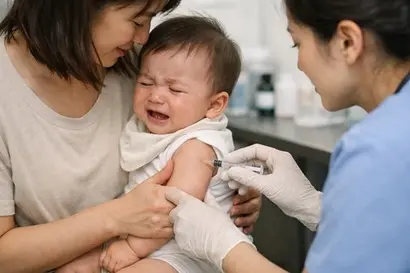
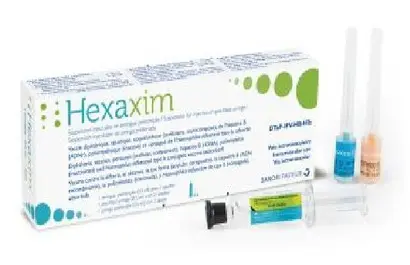
According to the pharmaceutical and bio industry on the 9th, GSK announced that it would stop supplying its 5-in-1 combination vaccine, 'Infanrix IPV/Hib,' starting at the end of June. Consequently, only Sanofi and Boryung Biopharma remain as suppliers of infant combination vaccines registered under the NIP. However, because Boryung Biopharma only offers the 4-in-1 'DTaP-IPV' vaccine, the market's reliance on Sanofi—which holds the 6-in-1 'Hexaxim,' 5-in-1 'Pentaxim,' and 4-in-1 'Tetraxim'—is inevitably absolute.
Infant combination vaccines allow for the prevention of multiple infectious diseases with a single injection. The 4-in-1 vaccine protects against Diphtheria (D), Tetanus (T), Pertussis (aP), and Polio (IPV). The 5-in-1 adds protection against Haemophilus influenzae type b (Hib, a cause of meningitis), and the 6-in-1 further includes Hepatitis B (HepB) protection.
Due to the convenience of reducing injection frequency and minimizing the stress on infants caused by needle pricks, preference for 6-in-1 vaccines over 5-in-1, and 5-in-1 over 4-in-1, is high. Before Hexaxim was registered in the NIP in January of last year, it was estimated that over 95% of newborns received Pentaxim. Industry observers now believe Hexaxim has dominated the domestic infant combination vaccine market.
With a global pharmaceutical giant like Sanofi monopolizing the domestic market, some in the industry worry that a supply shortage could cause significant chaos in the field. The domestic market experienced such instability in late 2021, when administrative issues, such as missing documentation, led to a temporary halt in the supply of GSK’s Infanrix IPV/Hib and Infanrix IPV. This caused a massive surge in demand for Sanofi’s Pentaxim, leading to shortages. Ultimately, medical providers had to resort to administering the 4-in-1 Tetraxim vaccine alongside a separate Hib vaccine. That incident served as the decisive turning point for Sanofi to dominate the domestic infant combination vaccine market.
With GSK now also leaving the market, any disruption in Sanofi’s supply of infant combination vaccines could cause chaos incomparable to late 2021.
While Boryung Biopharma is the only company that has registered a 4-in-1 combination vaccine for the NIP, it is not easy to encourage the use of a 4-in-1 vaccine when a 6-in-1 option is available, simply because it is domestically produced.
LG Chem051910 already possesses a 5-in-1 combination vaccine called 'Eupenta.' However, it is only supplied to underdeveloped countries through UNICEF and other organizations after receiving WHO Prequalification (PQ). It currently accounts for 20-30% of the global public vaccine procurement market.
Why is it not used in South Korea? Price competitiveness is crucial for mass supply to underdeveloped countries. Eupenta uses whole-cell pertussis (wP), which kills and includes the entire pertussis bacteria, to lower costs. Sanofi's combination vaccines use acellular pertussis (aP). While aP vaccines cause fewer adverse reactions like fever or swelling after inoculation, the manufacturing process is more complex, resulting in a higher price than wP vaccines.
LG Chem is currently developing two versions of a 6-in-1 combination vaccine targeting developed countries and underdeveloped countries, respectively. The 6-in-1 vaccine 'LR20062,' being developed for developed countries and the domestic market to compete with Sanofi's Hexaxim, utilizes aP. The 6-in-1 vaccine 'LR19114,' intended for supply to underdeveloped nations, uses wP. LR20062 is currently in Phase 2 clinical trials, while LR19114 is undergoing Phase 2/3 clinical trials.
An LG Chem official stated, "The goal for both vaccines is commercialization by 2030." An industry official commented, "The localization of essential vaccines is important from a social responsibility perspective," adding, "For vaccines registered under the NIP, free inoculation is available domestically, which makes it realistically difficult to recruit clinical trial participants. Therefore, government-level support for the rapid clinical progression and approval of domestic vaccines is necessary."