

[비즈한국] The original protagonist of the 1995 drama 'Sandglass' was not actor Choi Min-soo. It was actor Choi Jae-sung, who played the male lead, Choi Dae-chi, in the 1991 drama 'Eyes of Dawn'. However, according to producer Kim Jong-hak, Choi Jae-sung declined the role in 'Sandglass' because filming 'Eyes of Dawn' had been extremely grueling.
This was perfectly understandable. Back in 1991, 'Eyes of Dawn' was a blockbuster production that took two years and five months to make, involving 25,000 people. The total production budget was 7.2 billion won, averaging 200 million won per episode—nearly triple the budget of other dramas at the time, which hovered around 60 to 70 million won. Moreover, it was a global-scale blockbuster filmed almost entirely on location overseas, with very little footage shot domestically.
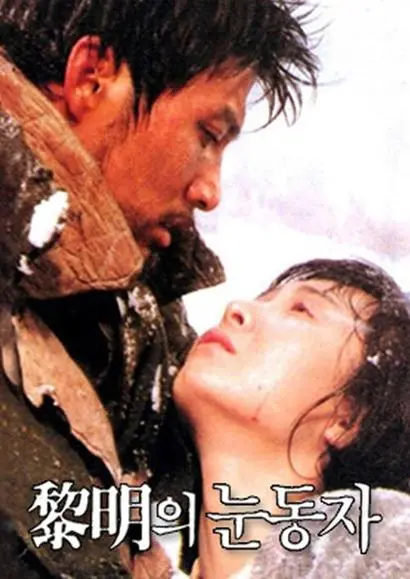
Thanks to these efforts, it recorded a peak viewership rating of 58.4% and an average of 44%. Recognized for its artistic quality, it swept seven awards at the 28th Baeksang Arts Awards in 1992, including the Grand Prize, Best Drama, Best Director (Kim Jong-hak), Best Actor (Choi Jae-sung), Best Actress (Chae Shi-ra), Most Popular Actor (Park Sang-won), and Technical Award (Cinematography, Jo Soo-hyun). It was a reward well-earned after much hardship. At a time when diplomatic ties with the People's Republic of China had not yet been established, filming took place in Shanghai, Harbin, Guilin, Suzhou, and the Philippines. Most notably, Choi Jae-sung actually had to film a scene where he eats a snake.
'Eyes of Dawn' was not an original drama; it was based on a novel by author Kim Seong-jong. At the time, it was a work that was barely even mentioned by the mainstream literary circles. Starting in 1944, it covered historically taboo subjects such as the Japanese colonial period, the conscription of student soldiers, "comfort women," the independence movement, pro-Japanese collaborator issues, left-right ideological conflicts, national division, the April 3rd Incident, the Korean War, and the suppression of partisans. Author Kim Seong-jong serialized the novel in the 'Daily Sports' newspaper from 1977 to 1981, filling 13,000 pages, before compiling it into 10 books. It is significant that this work was serialized in a popular sports daily rather than a prestigious literary newspaper.
The drama production team recognized the power of the original source material in the context of popular culture. Writer Song Ji-na newly adapted the original 'Eyes of Dawn' for television. She successfully exercised selection and focus to align with the zeitgeist following the June Democratic Struggle of 1987. It demonstrated even then that identifying the potential of content and tailoring it to the general public's level is paramount. It serves as a clear case study proving that television dramas can carry social and historical significance while gaining popular attention and commercial success.
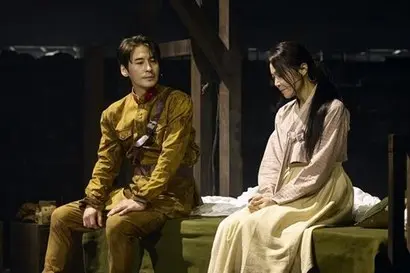
The musical 'Eyes of Dawn' can also be understood in this context. Returning in 2019, 2020, and 2025, the musical carries its own meaning and value. By focusing intensively on the "comfort women," the independence movement, and the April 3rd Incident, the musical emphasizes social and historical messages even more strongly than the drama. In this era, where attempts to distort the truth regarding "comfort women" and the April 3rd Incident persist, such work appears highly necessary.
Our content industry needs to look beyond the authority or reputation of the original work, identify its potential, and transform it into a "gem" of content. There is a need to reflect on the current climate of remake production that is merely obsessed with view counts or downloads. With the high public preference for genre literature, the reality is that relying solely on "pure literature" has its limits for K-Content. While not pure literature, the task of discovering works that combine social implications with mass appeal and turning them into visual content is crucial. This has become even more important due to the Hallyu (Korean Wave) phenomenon. In an era where AI produces content, this kind of planning capability is even more essential.
'Eyes of Dawn' holds significance in terms of One Source Multi-Use (OSMU) and media mix strategies. The transition from a serialized newspaper novel to a drama, and then from a drama to a musical, creating a audience-friendly alternative performance, is of profound importance. The stage design and seating arrangement, which allow audiences to view the performance from all directions and overlook the action from above, create a three-dimensional and vivid experience, rather than a one-sided performance. It attempts a performance style that makes the audience feel as if they are participating in the historical scene, making them feel it is not a thing of the past, but a current event. Additionally, the integration of traditional "madang-nori" (folk theater) performance styles with LED runway stages excellently embodied the story arc and the characters' psychological states, helping the audience empathize with the thematic consciousness.
However, to cater to evolving content sensibilities and audience receptivity, adjusting the duration of tragic and painful sections while increasing content that tells of hope could further enhance the musical's appeal. To suit genre preferences, it is necessary to leave lingering traces of the love and hope between the male and female leads. Ultimately, the narrative setting that future generations survive to carry on a new world is critical.
The author, Kim Heon-sik, has spent his time navigating and exploring the forest of pop culture phenomena since his 20s, driven by the hope that there is a way to make the world a better place through culture. In the 21st century, where AI and quantum computers are at play, he continues to walk the same path with the same conviction.