

[비즈한국] Various interpretations have emerged within the international community regarding the event where the U.S. carried out airstrikes on key strongholds, including the Venezuelan capital of Caracas, and secured the person of President Nicolás Maduro. While the U.S. government has put forward the law enforcement logic of responding to drugs and international crime, analyses from foreign media and the energy industry are gaining traction, pointing to the 'extra-heavy crude' held by Venezuela as the core background of this military action.
What is Extra-Heavy Crude?
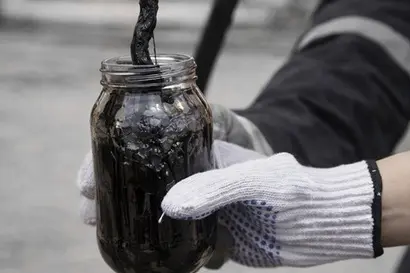
Extra-heavy crude is crude oil that has a much higher viscosity than typical light or medium crude, and contains large amounts of sulfur and metal components. It is so heavy that it hardly flows at room temperature, requiring high-level technology and large-scale facility investments in all stages of extraction, transportation, and refining. Because of this, it was once evaluated as a low-economic resource, but as refining and purification technologies have advanced, it is being re-evaluated as a long-term strategic resource.
Venezuela possesses the Orinoco Belt, where vast amounts of extra-heavy crude are deposited. According to international energy statistics, Venezuela is considered a country with one of the world's largest oil reserves, a significant portion of which is extra-heavy crude. There are even assessments that it exceeds Saudi Arabia in terms of simple reserves.
The problem is that Venezuela is unable to properly utilize this resource. Due to overlapping factors such as nationalization policies, political instability, long-term U.S. sanctions, and the exodus of technology and capital, foreign capital and advanced technology essential for the development of extra-heavy crude have been effectively blocked. Venezuela's oil production, which once exceeded 3 million barrels per day, has recently plummeted to the level of hundreds of thousands of barrels.
In the energy industry, this is assessed as: "Venezuela has the world's best oil, but it has lost the ability to revitalize it." The analysis suggests that who fills this vacuum, and in what way, has emerged as a key variable in the international energy order.
Why it is Particularly Sensitive for the U.S.
Although the U.S. is the world's largest oil producer, it paradoxically carries a structural dependence on certain types of crude oil. Many of the large refining facilities concentrated on the U.S. Gulf Coast were designed with extra-heavy crude in mind. These facilities operated by receiving stable supplies of crude oil from Mexico and Venezuela in the past.
However, as sanctions on Venezuela were prolonged, this supply chain was severed, and U.S. refiners had to continue bearing the burden of securing alternative crude oil. For this reason, the U.S. energy industry has perceived Venezuela not as a simple oil-producing country, but as a 'strategic oil source that perfectly matches U.S. refining infrastructure.'
In fact, U.S. energy companies such as Chevron and ExxonMobil were deeply involved in the Venezuelan oil industry in the past. After nationalization, these assets were confiscated or abandoned, and in the U.S., there has been a growing view of this as a loss in terms of energy security.
What they really want is 'Oil Hegemony' to counter China
It is pointed out that there is a limit to interpreting this situation only as a short-term oil price issue. Currently, the global crude oil market has a coexistence of concerns over supply surplus and forecasts of demand slowdown, so it is unlikely that oil prices will soar due to the Venezuela variable alone. However, the prevailing analysis is that what the U.S. is aiming for is not price, but control over the long-term oil supply structure, that is, oil hegemony.
In particular, a significant amount of Venezuelan extra-heavy crude flowed into China even during the sanctions phase. The interpretation is that from the U.S. perspective, it was difficult to tolerate a structure where strategic resources fall under the influence of a rival country. If the U.S. reorganizes the Venezuelan regime and oil industry structure in the future, it will be able to regain dominance over the flow of energy in Latin America.
The world's largest extra-heavy crude reserves held by Venezuela, the U.S. technology and capital to revive them, and the competition for energy hegemony with China and Russia have intertwined, resulting in military and political conflict. This is why the analysis that what the U.S. ultimately aims for is not mere regime change, but a structure in which Venezuelan oil is incorporated back into the 'U.S.-centered global supply chain,' is gaining strength.
An energy industry official said, "The essence of this incident goes beyond democracy or criminal response and is a matter of 'who controls the oil'," adding, "It seems that the U.S. will place more importance on who decides the supply and controls the flow than on extracting more oil."