

[비즈한국] Companies sometimes make decisions that are difficult to explain by money alone. Understanding the underlying laws or systems can provide insight into the deeper reality. 'Useful Business Tips (Useful Business Laws)' introduces clues to help understand business flows.
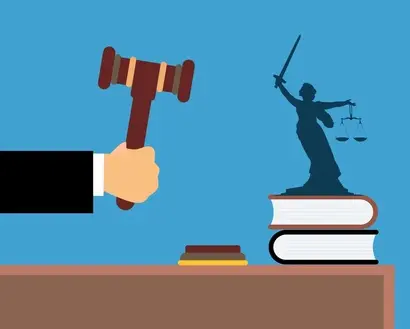
In general, whether something becomes a legal issue is determined not by whether it can be explained by legal principles like statutes or precedents, but by whether there is evidence for the facts being asserted. If you cannot persuade someone with the logic or legal theory you first conceived, you can try to persuade them with another similar logic. However, if there is no evidence for the facts you are asserting, there is nothing that can be done.
A question I am always asked when consulting is, 'Is legal action possible in this case?' Since my job is to represent one party in a legal dispute, I answer that it is formally possible in most cases, but whether it actually works depends on the presence of evidence. Furthermore, how much of a social impact that issue has also depends on evidence.
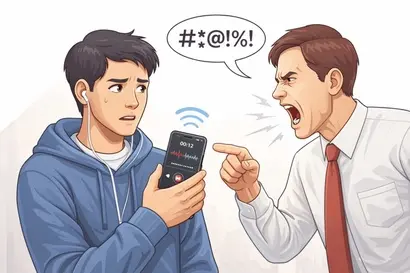
For example, let's say an employee of a 'Gap' (superior) party cursed at an 'Eul' (subordinate) party during the course of continuous transactions based on a so-called Gap-Eul relationship, such as in franchise transactions, agency transactions, large-scale distribution transactions, or subcontracting transactions, and that it was recorded. In this case, regardless of the actual amount of damage, the mere existence of a recording file causes the 'Gap' party to bear immense reputational risk during the incident handling process, and it takes considerable cost and effort to explain it.
Even looking at recent media reports, we can see that various incidents occur due to tips from people in the immediate vicinity, such as aides or managers, who have frequent contact or share information without distinguishing between public and private matters. The performance of smartphones used generally today is comparable to PCs from the early 2000s. Since everyone practically carries a recorder, camera, and notepad at all times, it is an environment where it is extremely easy to secure objective evidence in digital form.
Perhaps reflecting this situation, the way lawyers argue in court is not the same as before. In the past, if there was no objective evidence, they would prove it through the testimonies of witnesses and related parties. In other words, proving through testimony without documents was not rare, and in some cases, it was even evaluated as diligent advocacy. But the situation is different now.
For example, assume you lent money to someone but did not draft a promissory note, and you have not made any calls or sent texts urging repayment since. In such a situation, if you apply for a witness to prove the loan fact solely through the testimony of a third party who claims to have heard about it or was present during the discussion, there is a significant possibility that the court will disallow it. The reasons for disallowing witness applications that I have actually encountered are as follows:
"The court adopts witnesses only when it is judged unavoidable. Even when adopted, it permits witness examination only when it is determined that it is essential for the final judgment by combining various pieces of evidence during the closing of arguments. This is because witness examination is more time-consuming and costly compared to other methods of proof, while the objectivity and neutrality of the testimony are relatively low. In particular, it is not easy to uncover the substantive truth because unnecessary or inappropriate questions are asked during witness examination or due to emotional skirmishes. Since misunderstandings arise between parties regarding the adoption of witnesses or the content of testimonies, and it causes disruptions to the witness's livelihood and life, it is desirable to uncover the substantive truth through reasonable inference based on objective evidence rather than relying on witness examination."
Ultimately, in an environment where securing evidence has become easier, claims without evidence are not easily accepted. Even if it feels unfair, there is nothing to be done. If you really lent a large sum of money in the aforementioned case, wouldn't there be at least one text or message demanding repayment remaining, even if a promissory note was not drafted? If there isn't even a trace of that, the court has no choice but to doubt the possibility that the fact of the loan itself did not exist.
Such things happen in various fields. For example, in a subcontracting transaction, the original contractor requested additional construction, and because of this, additional construction costs were incurred, but the subcontractor terminated the subcontracting transaction without receiving them. In this case, if the subcontractor claims that they did not receive the additional construction costs because they received unfair instructions, various matters are reviewed to judge the validity of that claim.
First, the issue is whether the original contractor actually instructed additional work and whether there is evidence to prove it. Even if there is no evidence of explicit instructions, it is important whether the subcontractor pointed out that the work was separate and not included in the original contract, raised objections, or attempted to discuss it, and whether traces of this remain. This is because it is standard business practice to raise issues or request consultations if asked to do work that exceeds the scope of the contract.
Furthermore, if additional construction costs were incurred but not paid, the core issue becomes whether they demanded payment from the original contractor, whether they halted work or gave notice of suspension if payment was not made, and whether the process remains as evidence. This is because, in common sense, it is rare to continue work by investing one's own costs while not receiving payment, and it is common to at least halt work without a promise or confirmation of settlement.
Summarizing the above, it is ultimately important to secure core content as evidence at every important juncture of a transaction or dispute. If you feel burdened by texting or calling the other party, you should at least record it in an email sharing what was discussed internally. Since securing evidence has become simpler and its importance has increased compared to the past, if there is no evidence, it is highly likely that the fact itself will be considered non-existent, leading to an unfavorable judgment.
In legal disputes, it is difficult for small and medium-sized enterprises to defeat large corporations, and it is also difficult for individuals to fight against companies. There are many reasons for this, but a major reason is that they have a separate organization dedicated to recording dispute situations and collecting evidence—a legal team. Even so, meticulously collecting materials in preparation for future disputes is not a choice, but a necessity. It is not something you can either do or not do; it is something you must do.