

[비즈한국] It has been confirmed that Hi Air’s rehabilitation process has concluded. Hi Air, a small-scale airline, began operations in 2019 but recorded tens of billions of won in operating losses every year. It filed for rehabilitation in 2023 due to management difficulties and recently completed the process. However, the future outlook remains uncertain. First, Hi Air’s Air Operator Certificate (AOC) is suspended, preventing it from operating immediately, and the performance of low-cost carriers (LCCs) in general has been poor recently.
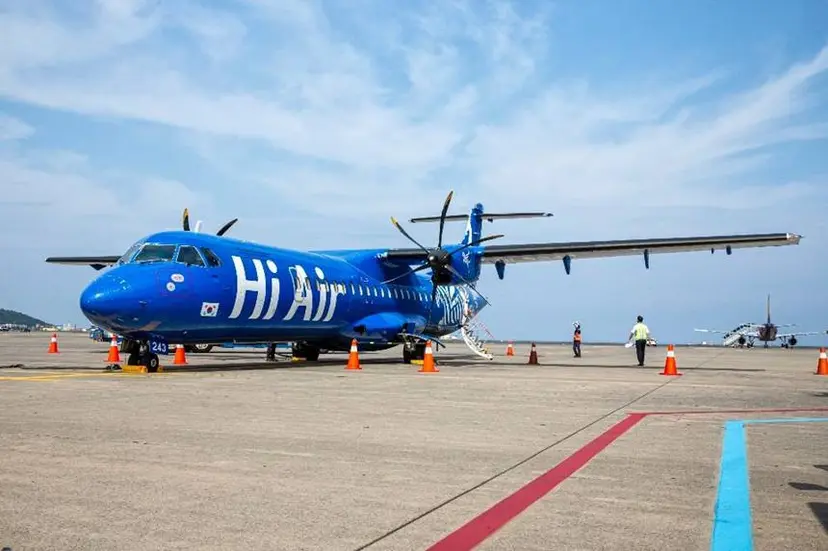
The Seoul Rehabilitation Court terminated Hi Air’s rehabilitation proceedings on December 19 of last year. The court stated, "The debtor (Hi Air) has begun repayment according to the rehabilitation plan, and there is no recognized impediment to the implementation of the rehabilitation plan moving forward. Therefore, the rehabilitation process is terminated in accordance with Article 283, Paragraph 1 of the Debtor Rehabilitation and Bankruptcy Act." Article 283, Paragraph 1 of the Act states, "When repayment according to the rehabilitation plan begins, the court shall decide to terminate the rehabilitation process."
Currently, the largest shareholder of Hi Air is Imagine Corporate Finance 4th. Imagine Corporate Finance 4th is a consortium led by Sangsangin Securities001290, which became the largest shareholder after participating in Hi Air’s capital increase last year. It is widely considered that Hi Air was able to conclude its rehabilitation process thanks to the support from Sangsangin Securities.
Although Hi Air can breathe a sigh of relief with the conclusion of its rehabilitation process, it is not in a position to operate immediately. The Ministry of Land, Infrastructure and Transport suspended Hi Air’s AOC in 2023. An AOC is a certificate granted after verifying that an airline meets the requirements for safe operation. Without an AOC, an airline cannot conduct business.
Hi Air must first obtain a reissuance of its AOC. The legal processing time for an AOC inspection is 90 days, but in reality, it typically takes 4 to 5 months due to factors such as preparation time or requests for supplemental information. However, in the case of reissuance, the time may be shortened if existing data can be utilized.
Even if Hi Air obtains a reissued AOC, there is no guarantee that its future performance will improve. Recently, most LCCs have seen their performance decline. Moon A-young, a senior researcher at NICE Investors Service, assessed, "The domestic passenger market is experiencing intensified competition on short-haul routes due to the supply capacity expansion led by LCCs, leading to a decline in fares. LCCs with weak fare defensibility and cost efficiency are expected to show poor profitability."
Strictly speaking, Hi Air is classified as a small-scale air transport business, not an LCC. Small-scale air transport businesses are limited to a maximum of 80 seats (50 seats for international flights). However, considering that most of the routes Hi Air previously operated were domestic, competition with LCCs will likely be unavoidable.
In the past, Hi Air’s only international route was between Muan and Kitakyushu. However, Muan International Airport is currently not operational due to the Jeju Air incident that occurred in December 2024. It is difficult to predict when it will return to normal. Biz Hankook inquired with Hi Air about its future management plans but did not receive a response.