

[비즈한국] In the early hours of the 3rd (local time), the U.S. government officially announced that it had struck key military and security facilities, including those in Caracas, the capital of Venezuela, and had taken President Nicolas Maduro into custody. While the U.S. described this military action as a law enforcement measure against drug and terrorism-related crimes, some suggest that geopolitical interests surrounding Venezuela’s energy resources and the future restructuring of its economy may have played a role.
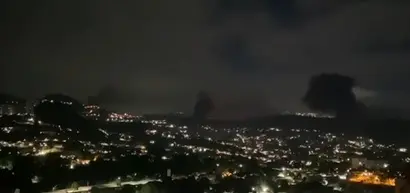
In the operation conducted in the early hours of January 3, 2026 (local time), the U.S. military carried out precision strikes on at least seven locations, including the La Carlota Air Base near Caracas and the Fuerte Tiuna military complex. According to the U.S. Department of Defense, approximately 150 aircraft from the Navy, Air Force, and Marine Corps were deployed. During this process, U.S. Army special forces participated in the operation to secure President Maduro and his wife, Cilia Flores, who were then transferred to a U.S. warship.
The operation, dubbed "Southern Spear," commenced at 10:46 p.m. EST on the 2nd under the orders of President Donald Trump. Immediately following the airstrikes, President Trump held a press conference at his Mar-a-Lago resort in Florida, stating, "We will restore stability in Venezuela and ensure that oil production returns to normal." He hinted that the U.S. could be involved in local administration and the operation of key infrastructure for a certain period.
President Trump evaluated that Venezuela’s oil infrastructure had been severely damaged by prolonged sanctions, underinvestment, and management issues. He explained that international energy companies, including those from the U.S., could participate in modernizing the facilities through investments worth billions of dollars. He expressed the view that such measures could contribute to the stability of the global energy market.
Regarding the backdrop of this military action, some experts are focusing on Venezuela's estimated 300 billion barrels of oil reserves and the potential for a shift in future control structures. President Trump noted that Venezuela’s oil industry previously grew based on foreign capital and technology, pointing out that industrial competitiveness had significantly weakened under the current regime. According to foreign media, Venezuela’s recent oil export volume has stagnated at several hundred thousand barrels per day due to sanctions and infrastructure aging.
The U.S. government stated that a transition period is necessary for the transfer of power and political stability in Venezuela, suggesting that military presence and the management of key energy facilities could coexist during this time. President Trump added, "Once oil production is normalized, we will be able to supply the global market stably."
It is reported that major energy companies, including Chevron—which had maintained limited operations in Venezuela—as well as ExxonMobil and ConocoPhillips, are discussing with the U.S. administration the possibility of re-entry and compensation for past asset issues. However, some analysts suggest that actual large-scale capital injection will not be easy in the short term, given the controversy over international law violations, domestic political and social backlash in Venezuela, and geopolitical risks.
Experts believe that this situation could go beyond a simple military operation to affect the overall political and economic structure of Venezuela, while simultaneously expanding debates within the international community regarding sovereignty and the scope of international law. Whether the primary purpose was, as the U.S. government claims, law enforcement and security, or whether energy and geopolitical interests played a role, remains to be seen depending on the reactions of the international community and subsequent measures.