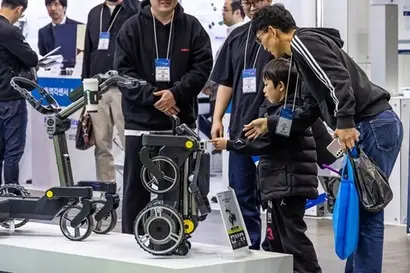
[비즈한국] Amid the restructuring of global supply chains and the wave of the artificial intelligence (AI) revolution, South Korea's technology industry stands at a critical crossroads. While it has established itself as a major production base for the global market by leveraging its semiconductor and manufacturing infrastructure, it remains uncertain how long its current competitiveness will hold in a phase where technology paradigms are shifting rapidly. To mark the new year, Bizhankook examined the current state and future key tasks of the South Korean technology industry based on insights from Hur Jung, head of the Korea International Trade Association and professor of economics at Sogang University, and Jung Dae-young, an associate professor of economics at Yonsei University and former researcher at the Bank of Korea.
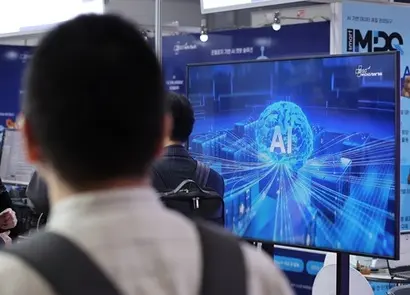
The Meaning of a '7' for South Korean Technology Competitiveness
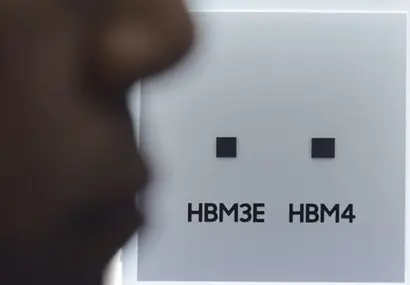
In 2025, semiconductor exports surpassed $173.4 billion, marking an all-time high. The combination of expanded investment in AI servers and surging demand for High Bandwidth Memory (HBM) allowed the South Korean semiconductor industry to enjoy an unprecedented boom. Driven by this record-breaking semiconductor export performance, South Korea’s total exports hit the $700 billion mark for the first time in history. Despite such achievements, there is skepticism regarding whether this has led to a phase of creating a paradigm beyond that. The critical view is that export volumes have simply grown as an extension of existing memory and manufacturing competitiveness, and it is difficult to see this as a turning point that changes the technology ecosystem or market order.
Both experts independently rated the South Korean technology industry at the end of 2025 at a level of 7 out of 10. Professor Hur defines the core of South Korea’s technology competitiveness as a "manufacturing platform." He explains that the process operation capabilities and production efficiency accumulated in semiconductor memory, batteries, and precision manufacturing remain at a world-class level and serve as the foundation supporting South Korea's position in the global supply chain. He noted, "Even if source technologies, core equipment, and standards are brought in from outside, the ability to convert them into high-value products is clearly a strength of South Korea."
However, it is difficult to view these strengths as directly translating into future technology competitiveness. If the U.S. has strengths in source technology and China has strengths in large-scale commercialization, South Korea is skewed toward the manufacturing capabilities in between. In next-generation technology areas such as AI, biotechnology, and quantum computing, the gap with leading countries is clear, and the consensus is that the capability to design technology paradigms themselves and lead standards is still in the accumulation stage.
Associate Professor Jung also showed a similar perception, stating, "South Korea is a country that has occupied the 'sophisticated middle' in the technology value chain. It is excellent at following maps made by others and is strong at learning and absorbing quickly, but the power to draw new maps is still growing."
Strong Technology but Weak Business? Pointing Out a Lack of Strategy
The assessment that "business design is weak," which has been repeated regarding South Korea’s technology industry, is diagnosed as more of a structural problem than a simple lack of capability. While South Korea has shown strength in technology accumulation centered on manufacturing execution and process operation capabilities, its experience in designing global platform businesses and securing scalability has been relatively limited.
Professor Hur cited three reasons for the structural weakness: First, the conglomerate-centered network structure makes linkage for innovation with small and medium-sized enterprises and startups weak; second, the lack of a global platform strategy leaves the country behind in the race for market share; and third, education and research incentives are biased toward application rather than basic research. "Such a structure may be advantageous for the 'productive innovation' of technology, but in the long term, it causes a relative delay in 'business and organizational innovation' that determines profit models," he observed.
Indeed, while South Korean companies are ahead in terms of technological completeness or adoption speed, they show limitations in ecosystem design strategies to secure market leadership around those technologies. Professor Hur diagnosed, "The global AI industry sees competitiveness concentrated in specific platforms where users, data, and developers are integrated in a virtuous cycle, but we have not invested enough in pre-empting early standards or building open ecosystems. As a result, even if individual technologies are excellent, a vicious cycle is repeated where they remain as partial components or subcontracting bases for giant platforms in the global market."
Associate Professor Jung looked at the cause of the strategic vacuum from a behavioral economics perspective. "South Korean industrial culture has a strong tendency to avoid uncertainty, and an incentive structure that treats failure as a penalty has become entrenched," he explained, adding, "Because they try to act only after confirming a 100% correct answer, they are not keeping up with the pace of the global market, which enters the market quickly with 70% completion and revises repeatedly."
The vulnerability of the Intellectual Property (IP) portfolio strategy was also mentioned as a task to be solved. While South Korea’s willingness to secure technology is very high, maintaining 4th place in the world in Patent Cooperation Treaty (PCT) applications, direct revenue generation through technology fees, global licensing, or equity investment remains low compared to major countries. Professor Hur stated, "Even though South Korea is in charge of production and investment, the structure is such that high profits based on technology standards or licenses are attributed to overseas companies, which is a major limiting factor in moving to the upper part of the value chain."
'Manufacturing AI', Talent, and Global Cooperation... As Conditions for a Leap
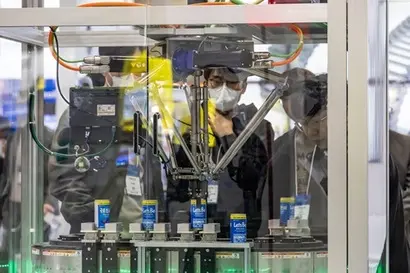
The outlook is that the success or failure of the next five years depends not on "chasing general-purpose AI" but on "the ability to redesign industries with AI." The judgment is that rather than dispersing resources into the competition for Large Language Models (LLMs) themselves, where the gap has already widened, it is more realistic to absorb AI as an "Operating System (OS)" into industries where South Korea has strengths, such as manufacturing, medicine, and finance. Professor Hur viewed that "Manufacturing AI," which combines manufacturing data, automation experience, and on-site operation capabilities, could be a strategic opportunity in the phase of global supply chain restructuring.