

[비즈한국] In the Optimus fund scandal, which caused hundreds of billions of won in losses, a ruling that had initially recognized multi-party liability for financial institutions has been overturned on appeal. In a lawsuit where GC Biopharma Wellbeing234690 sought joint compensation from the fund seller NH Investment & Securities005940, the trustee Hana Bank, and the administrative agency Korea Securities Depository, the appellate court—unlike the first trial which held all three defendants liable—ruled that the trustee bears no responsibility. As NH Investment & Securities has been arguing that Hana Bank and the Korea Securities Depository also share liability, this conflicting ruling is drawing significant attention.
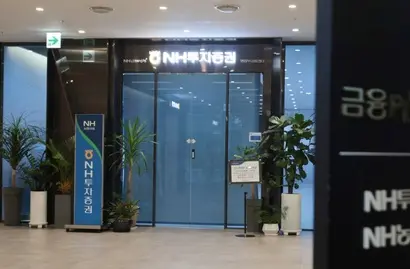
On December 18, 2025, the 16th Civil Division of the Seoul High Court ruled in the second trial of a lawsuit for the return of unjust enrichment filed by the plaintiff, GC Biopharma Wellbeing, against defendants NH Investment & Securities, Hana Bank, and the Korea Securities Depository, that Hana Bank holds no liability for compensation. This result overturns the first-instance ruling, which had been the first to recognize the multi-party liability of the seller, the trustee, and the administrative agency in the Optimus case.
The court issued a partial ruling in favor of the plaintiff, ordering NH Investment & Securities and the Korea Securities Depository to jointly compensate GC Biopharma Wellbeing approximately 1 billion won plus interest. Conversely, it overturned the first-instance defeat against the trustee, Hana Bank, and dismissed all claims for compensation that GC Biopharma Wellbeing had filed against the bank.
The Optimus scandal was a massive fund redemption suspension incident that occurred in 2020, with damages exceeding 500 billion won. Former Optimus Asset Management CEO Kim Jae-hyun and others raised over 1 trillion won between April 2018 and June 2020 under the guise of investing in public institution trade receivables, but instead used the funds for purchasing non-performing bonds and running a Ponzi-like fund scheme. The former CEO was sentenced to 40 years in prison for fraud.
NH Investment & Securities was the primary seller, accounting for over 80% of Optimus fund sales. As the trustee, Hana Bank held and managed the fund's investment capital, while the Korea Securities Depository entered into a service contract with Optimus Asset Management to handle accounting-related tasks.
GC Biopharma Wellbeing, an investor in the Optimus fund, filed a lawsuit in December 2021 demanding that NH Investment & Securities, Hana Bank, and the Korea Securities Depository provide joint compensation for the full investment amount of 2 billion won. The first trial ordered the three defendant companies to jointly compensate the plaintiff for 1.09386 billion won, roughly half of the investment.
The first-instance court viewed the Optimus scandal as a case where Optimus Asset Management deceived investors and financial institutions to embezzle large sums of money. While it noted that it was unreasonable for the plaintiff to shift all responsibility for losses onto others, it judged that the three defendants failed to fulfill their roles in the financial market, resulting in significant liability.
The court pointed out, "The reason this incident escalated from a simple investment fraud into a massive financial scandal is largely due to the interaction of negligence in the duty of care by NH Investment & Securities, Hana Bank, and the Korea Securities Depository, each of which had specific roles assigned by the Capital Markets Act. Consequently, GC Biopharma Wellbeing was unable to enjoy the benefits of investor protection it should have rightfully received as an investor."
However, the appellate court's judgment was different. It concluded that under the Capital Markets Act, a trustee for private equity funds, such as Hana Bank, does not have a duty of care of a good manager or a fiduciary duty toward the beneficiaries. Citing special provisions like Article 249-8 of the Capital Markets Act, the court held that Hana Bank had no obligation to monitor the asset manager's investment instructions, beyond the duties to verify the fairness of fund asset valuations and the appropriateness of base price calculations. It also specified that since there was no duty to monitor or verify the appropriateness of investment prospectuses or asset management reports, the bank had no authority to demand materials for such purposes.
The court stated, "The intent of the Capital Markets Act in excluding monitoring duties for trustees appears to be for deregulation and market revitalization. One cannot arbitrarily impose monitoring duties contrary to these regulations," and thus ruled that Hana Bank has no liability for damages.
Unlike the first trial, which recognized multi-party liability, the appellate court's exemption of the trustee is drawing attention for its potential impact on the final outcome of future litigation. This is because NH Investment & Securities, having already completed compensation for general investors, has argued that Hana Bank and the Korea Securities Depository are also liable and has been pursuing civil and criminal measures against both firms.
In May 2021, NH Investment & Securities filed complaints with the prosecution against Hana Bank and the Korea Securities Depository for aiding and abetting fraud and violating the Capital Markets Act, but the prosecution decided not to indict in February 2025. NH Investment & Securities also filed civil lawsuits for damages. In October 2021, it sued Hana Bank, the Korea Securities Depository, and Optimus Asset Management for over 10 billion won in compensation. This lawsuit has been pending for over four years without a first-instance ruling. In June 2025, a separate lawsuit filed by Nexen for the return of Optimus fund investments resulted in a ruling that only recognized the seller's liability. It remains to be seen how such rulings will influence the damages lawsuit currently being pursued by NH Investment & Securities.
Meanwhile, NH Investment & Securities stated regarding the ruling, "We respect the court's judgment, but we will continue to do our best for the company's interests."