

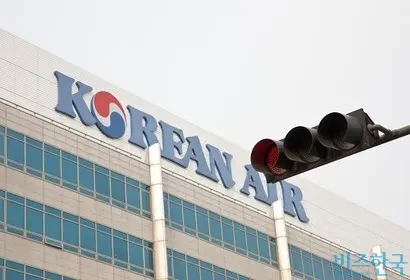
[비즈한국] As Korean Air003490 completes its acquisition of Asiana Airlines020560, it is accelerating the integration of its subsidiary Low Cost Carriers (LCCs). Korean Air operates Jin Air272450 as a subsidiary, while Asiana Airlines owns Air Seoul and Air Busan298690. Korean Air intends to merge these three LCCs. The company plans to place the headquarters of the integrated LCC in the capital region, sparking backlash from the Busan metropolitan community. Air Busan is currently headquartered in Busan, and the completion of the integration would mean the disappearance of a Busan-based airline.
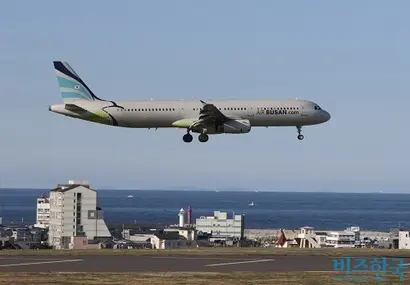
Jin Air and Air Busan disclosed on December 8 of last year, "Based on Korean Air's integration plan for the acquisition of Asiana Airlines, the three LCCs under Hanjin Group have formed a dedicated organization to launch the integrated entity and are carrying out PMI (Post-Merger Integration) tasks," adding that "we plan to aim for the launch of the integrated LCC within the first quarter of 2027 in connection with the parent company's merger schedule."
Currently, the LCC operating the most routes is Jeju Air089590. Once the integration of the three LCCs is complete, they are expected to overtake Jeju Air to become the number one LCC in the country. Choi Ji-woon, a researcher at Yuanta Securities, analyzed, "After the integration of the three LCCs scheduled for 2027, we expect synergy effects in the medium to long term, along with competitiveness derived from securing the largest fleet among domestic LCCs."
The problem is Air Busan. The three LCCs plan to use Incheon International Airport as their hub after the merger. However, the Busan community argues that Busan should serve as the base for the integrated LCC. There are also demands to spin off and sell Air Busan separately if it is difficult to maintain it as a base. Currently, Air Busan is the only LCC that uses Gimhae International Airport as its hub.
Hanjin Group appears unwilling to accede to Busan's requests. Cho Won-tae, Chairman of Hanjin Group, said at a press conference in March last year, "Integrating three LCCs is a massive task that requires great effort," adding, "I have never considered a separate sale of Air Busan, and we plan for the integrated Jin Air to play a role even greater than what Air Busan currently performs in Busan."
There are even arguments for establishing a new LCC based in Busan. The Special Committee for Municipal Administration Evaluation and Alternatives of the Democratic Party of Korea's Busan City Chapter announced in late 2024 that it would push for the establishment of a new LCC tentatively named 'Busan Air'. Former Democratic Party lawmaker Choi In-ho held a forum for the establishment of Busan Air in January last year. In September last year, the former lawmaker also stated on social media (SNS), "We will not be shaken by the controversy over the sale of Air Busan, and we aim to establish a municipal airline where Busan citizens become shareholders, with the goal of its first flight in 2028," adding, "We will grow (Busan Air) into Busan's number one company to prepare for the Gadeokdo New Airport era."
Establishing an airline requires massive amounts of capital. According to its quarterly report, Air Busan's total equity as of the end of September last year was 195.1 billion won. This means that approximately 200 billion won in funds must be raised to establish an LCC of a similar scale to Air Busan. Given initial investment costs, the actual funds required could be higher than 200 billion won.
Currently, there are no companies showing interest in participating in the establishment of Busan Air. Previously, former lawmaker Choi In-ho explained that he would establish the LCC with funds invested directly by Busan citizens. However, it is questionable whether hundreds of billions of won can be raised solely through investments from Busan citizens. Ultimately, it appears that the participation of specific companies or support from the government or local governments will be necessary for the establishment of Busan Air.
Busan Metropolitan City seems to be focusing more on persuading Korean Air rather than establishing a new LCC. A Busan City official stated during the administrative audit of the Construction and Transportation Committee last November, "We are pursuing the attraction of the integrated LCC as a hub carrier for Gimhae International Airport," and "We are continuously discussing this with Korean Air." However, there has been no significant progress. The Gadeokdo Hub Airport Citizen Promotion Group held a press conference last December and pointed out, "Busan lost its local base airline due to the integration of Air Busan, but the government has not offered any countermeasures for this."
The aviation industry also assesses that the possibility of the integrated LCC having its headquarters in Busan is low. An aviation industry official predicted, "Even if Gadeokdo New Airport is completed one day, the possibility of it surpassing Incheon International Airport is low," adding, "For a company, profit is the most important factor, so there is no reason to have a headquarters in Busan unless massive incentives are provided, and it is difficult for political circles to force this."