

[비즈한국] Does great power come with great responsibility? Let's apply this famous line from Uncle Ben Parker to Peter Parker in 'Spider-Man' to the protagonist Kang Sang-woong (Lee Jun-ho) of the Netflix original series 'Cashero.' It becomes 'Great power comes with great money.' One day, Sang-woong inherited superpowers from his father (Jung Seung-gil). More accurately, it was forced upon him. There is a reason it was forced; he would never have accepted it if he knew the conditions. Sang-woong's superpower is that he can exert power equal to the amount of cash he holds in his hand. Once he uses the ability, the money disappears. In short, it is 'my money, my power.' Who would ever be happy with such a superpower?
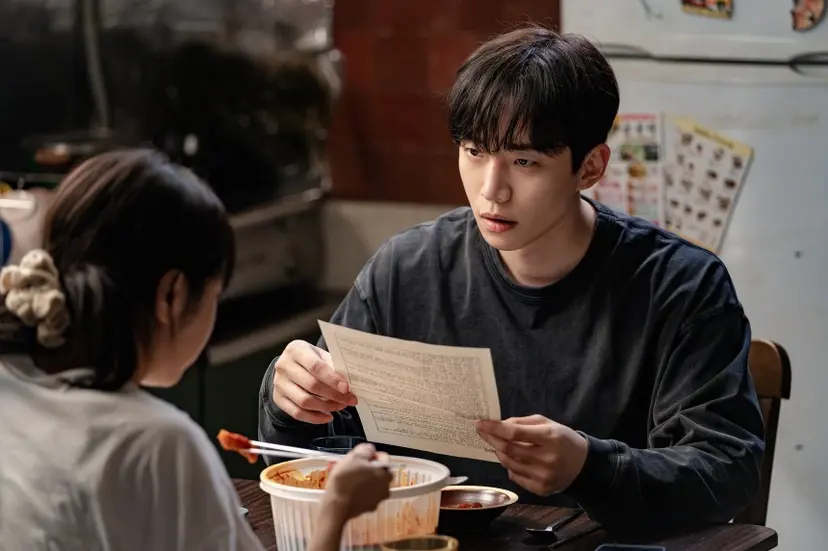
Sang-woong is an ordinary civil servant working at a community center. Although he promised to marry his long-time girlfriend, Min-sook (Kim Hye-jun), his life is ordinary, struggling to scrape together enough for an apartment deposit even after exhausting every resource. In fact, the proposal was Min-sook's idea because the 'newlywed special housing supply' offers a better chance of winning an apartment lottery (with a PlayStation thrown into the mix). For a young South Korean, who barely manages to secure a home by saving every penny, being told to spend his own money to fuel superpowers to help others is absurd, no matter how you look at it.

Min-sook, a cold-headed realist, quickly tests Sang-woong's superpower and orders him not to use it. She argues that there are too many restrictions and the cost-efficiency is poor. To be fair, unless Sang-woong were a Mansoor-level tycoon, there is no luxury to be a busybody helping others when life itself is already a struggle. However, this livelihood-based superhero faces the moment he happens to have 30 million won of his mother's precious savings—money crucial for their future home—and confronts people on the verge of death right before his eyes. Every Korean knows how incredibly difficult it is for an ordinary person to buy a home in the metropolitan area with their own strength. Yet, if one has the power, can they really stare at dozens of people dying and not save them? Even if someone isn't exceptionally kind, anyone with universal humanity would feel conflicted.

Just like Sang-woong, the powers of other superhumans also have limitations. Lawyer Byeon Ho-in (Kim Byung-chul), who claims to be the head of the Korea Superhuman Association, can only use his powers when he drinks alcohol. Bang Eun-mi (Kim Hyang-gi), another member, can use telekinesis equal to the calories she has consumed. It might seem like an easier condition than Sang-woong's money-based power, but is it? Even a kindergartner knows that drinking constantly is bad for your health. The same goes for consuming calories. Eun-mi, nicknamed 'Bbang-mi' (Bread-mi), consumes bread every time she needs to use her power; while it might be fine while she is young, it is clear that constantly eating bread—a mass of refined carbohydrates—will eventually lead to weight gain and fatal health consequences. Unlike traditional superheroes with infinite power, 'Cashero' distinguishes its heroes with these clear constraints, unraveling diverse stories and building up pathos.
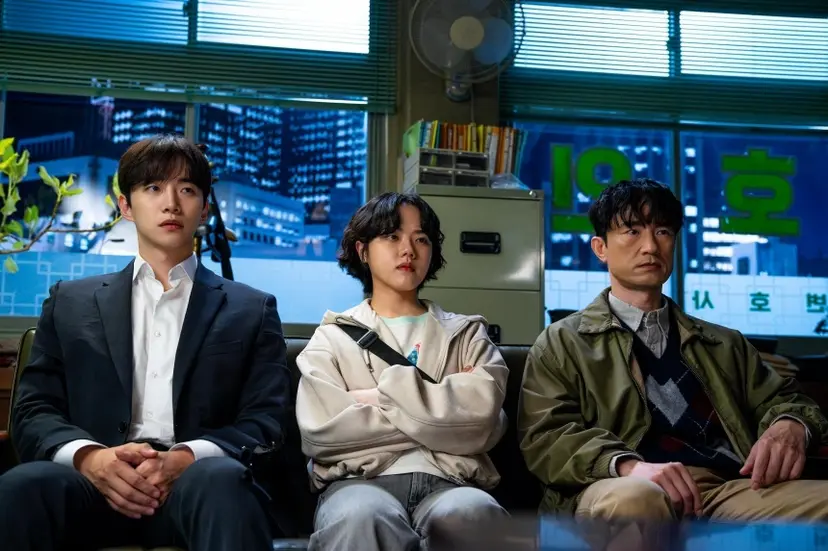
'Cashero' captures the story of everyday heroes facing the 'Beominhoe' (Criminal Society), a villain organization that possesses everything—capital, connections, and power—except for superpowers. Sang-woong's ability is particularly covetable for Beominhoe, which holds massive capital. If you have money, you can use the power to possess anything in the world. The head of Beominhoe, Jo Won-do (Kim Eui-sung), his son Jonathan (Lee Chae-min), and his daughter Jo Anna (Kang Han-na) all pursue Sang-woong with the same greed. Sang-woong, who has no money to spare, exists in a structure where he must barely survive every moment, even while borrowing money from a loan shark, Park Jung-ja (Kim Gook-hee), whose role as a villain or a vague ally remains uncertain.
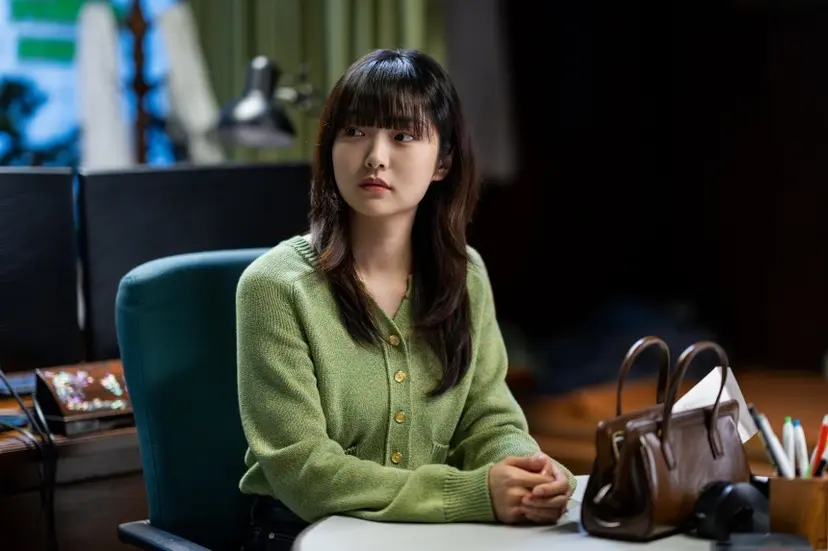
What is regrettable is that the fun provided by the salty and sad yet ingenious premise of 'Cashero' wanes toward the second half. Sang-woong's power level is absolutely based on money, which resonated deeply as it overlapped with a reality where money is the problem regardless of the path one takes. The narrations Sang-woong mutters at every crossroads are natural words that any average person in reality could say if you just remove the superpowers. Many people would likely nod along to the sentiment, 'It's reassuring. Confidence really does come from money.' However, such words only leave a bitter taste for those living in a world where 'money is power.' It is unlikely for a superhero show to end with such a message. That is why Sang-woong's father tells him, like Ben Parker, that there are things more important than money. It's a world where money is power, but saving a person is ultimately about the human heart. It is a very idealistic message, but its persuasiveness feels a bit lacking compared to the ingenuity and relatability of the beginning. It feels like it needed more buildup to match the message. Because it forces the message in the final stages, the focus begins to wander as it goes on.
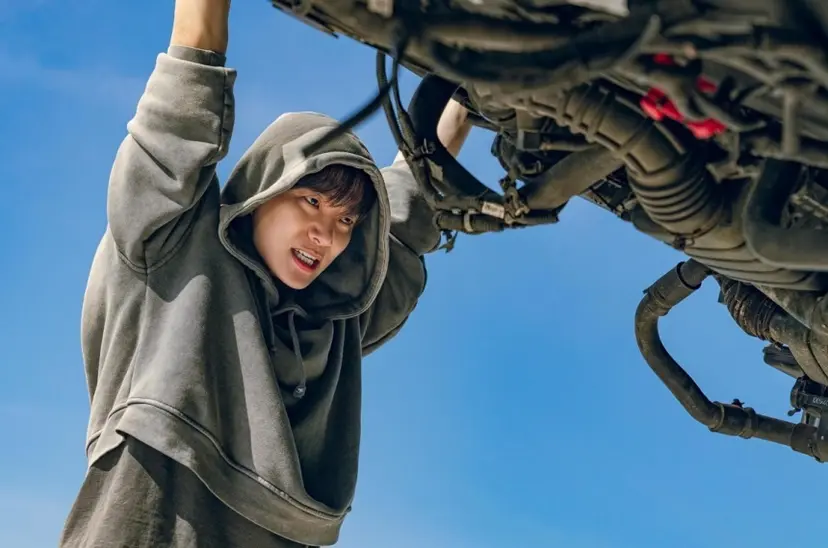
Nevertheless, the black comedy of social satire in the beginning makes you watch 'Cashero' until the end, like picking up loose change, much like the coins that drop every time Sang-woong uses his power. The active performance of Lee Jun-ho, who has risen to become a Korean superhero through 'The Red Sleeve,' 'King the Land,' and 'Typhoon Company,' is distinct, and the fun of watching the villain played by Lee Chae-min, who grew into a star through 'Tyrant's Chef,' is clear. Just as noticeable as Lee Jun-ho is Kim Hye-jun, who plays Sang-woong's girlfriend, Min-sook. Her sharp acting proves once again the standard that every superhero has a wise partner supporting them.
2025 has ended. In 2026, people will continue to work hard to earn money to survive. Regardless of the era, there has never been a time when money wasn't important. Yet, as I live, I often realize that money is not the only thing that matters. Money is important, but I introduce 'Cashero' with the hope that 2026 will be a year where we aren't swept away by money and don't hurt our hearts. May you all have an uneventful year, even if you don't become rich.
About the writer, Jung Soo-jin?
She has worked across various magazines, covering and writing about movies, travel, and pop culture. She doesn't want to fall behind on trends, but has become an 'old-school person' who watches the latest dramas and only predicts obvious clichés for the next scene. She is drifting through the vast OTT world, trying to regain her lost edge, and her current wish is for an integrated OTT subscription plan.