

[비즈한국] The Korea Art Support Project, launched solely to support artists, has now continued for 10 years. Staying true to its original intent, it has supported approximately 230 artists. This was a unique endeavor, unprecedented by any media outlet, cultural organization, or government institution in Korea. We take pride in the fact that this decade of persistence has etched itself into the 21st-century Korean art scene as a significant value. As a result, the '10-year history of the Korea Art Support Project is recognized as a viewpoint for observing the flow of contemporary Korean art.' Now, in Season 11, we aim to pave another path for Korean art.
Abstract art emerged in Western art in the 1910s. Pure abstraction focuses on the harmonious arrangement of the fundamental units of painting: point, line, plane, and color. This is what we call 'formative art.'
Tracing the origins of formative art, the abstract movement encountered at its core is 'Suprematism.' A representative painter of this style, Kazimir Severinovich Malevich, showed the extreme of abstract art by making a blank canvas—with nothing painted on it—into a work of art itself.
Until this point, it seemed that abstraction had no further path to take. However, abstract art survived as one of the methods driving 20th-century art. Even in this century, among the countless schools that appeared in the last century, it continues to expand its vitality alongside Pop Art.
What served as the nourishment that allowed abstract art to grow into a robust modern art form?
First is the design concept that has established itself as the foundation of modern life throughout the last and current centuries. This is because abstract art is a school that takes design sensibility as its essence.
The other is the expansion of expressive methods through the diversification of materials and techniques. This is referred to as 'methodological painting.' Because it focuses on the material feel of the medium and the novelty of technique, it is an art that does not require specific content.
Another path was also explored, which was injecting abstract concepts into abstract expression methods. In art history, this is called 'Abstract Expressionism.' It was an idea to put stories back into abstract art, which had previously found its meaning in the elimination of content.
For example, it was thought that abstract methods were more effective for expressing emotional states like love, anxiety, fear, grandeur, purity, reverence, and joy, or philosophical concepts and religious topics. How can stories be expressed through abstract methods?
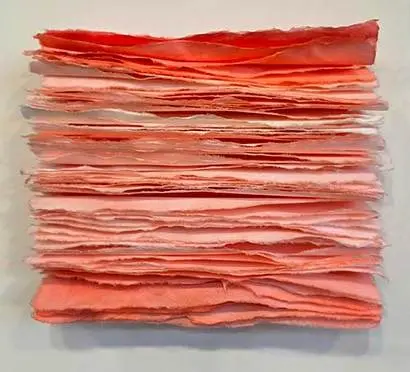
The most successful method has been the use of color. The idea is to display the emotions inherent in the colors themselves. This was based on the Impressionists' color studies and scientific approaches, as well as the Expressionists' method of empathizing with color. This is also familiar to us through designs using colors that have become generalized in modern cities. For instance, many people perceive that red represents vitality, black and yellow represent danger, and green represents stability.
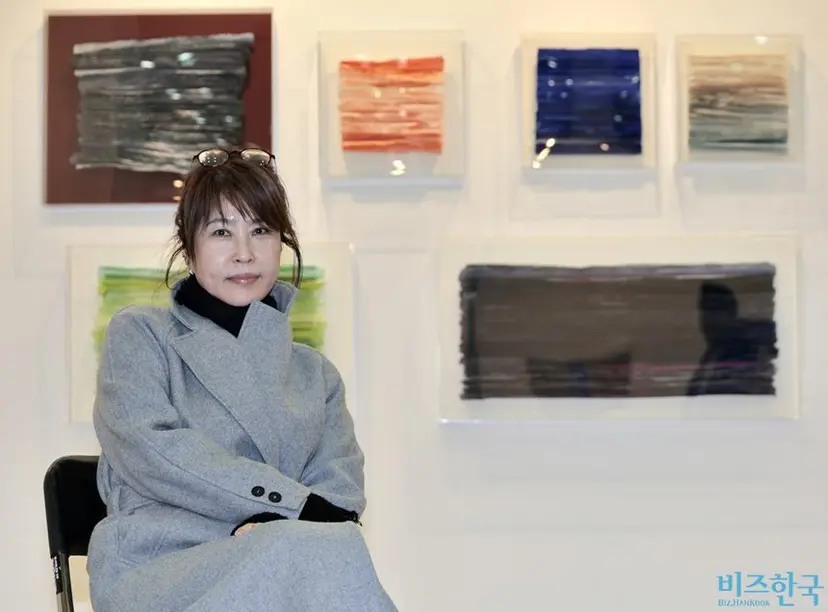
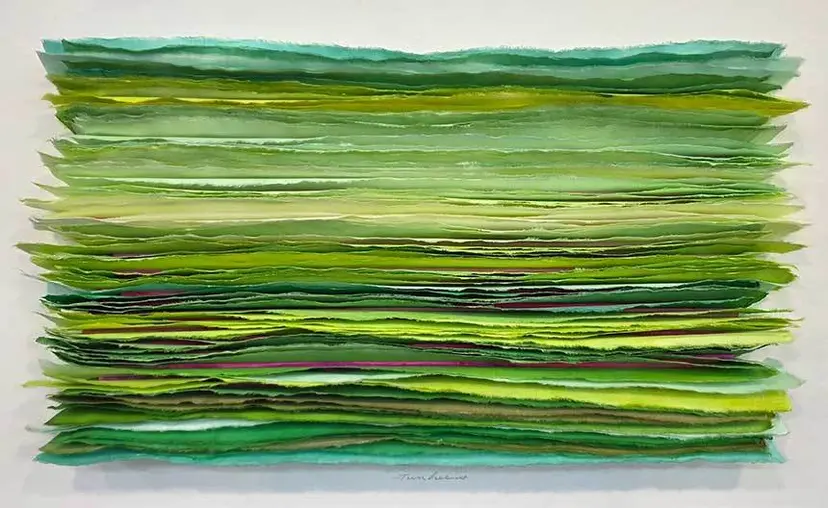
Park Jun-hee incorporates philosophical concepts through this abstract approach. She composes her work by layering colored Hanji. By combining the materiality of the medium with the nature of color, she presents abstract paintings with a new feel. Through the subtle changes in color and the depth between the layered colored papers, she attempts to discover another aspect hidden within ourselves.