

[비즈한국] Major Korean conglomerate groups including Hyundai Motor005380, Doosan, and SK are set to hit the stage at CES 2026 with a 'Practical AI' strategy, aiming to boost actual revenue and efficiency by deploying artificial intelligence and robots into industrial fields. Moving beyond simply showing off their technological prowess, their vision is to place AI at the forefront as a solution to reinforce the competitiveness of their existing core industries and create new profit models.
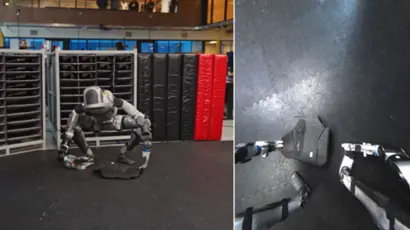
Hyundai Motor's 'Physical AI' Card: 'Atlas & SDF'
AI remains the undisputed protagonist of this year's CES. However, while the past two years focused on the popularization of generative AI and its initial industrial application, the buzzword is now 'Practical AI.' As the prospect grows that only innovations showing results in real industrial settings and daily life beyond the laboratory will survive, manufacturers in automotive, machinery, and robotics are expected to put a transformation of product and service structures centered on AI at the forefront.
Hyundai Motor Group will unveil core technologies that form the future mobility ecosystem at 'CES 2026,' the world's largest technology exhibition held in Las Vegas, USA, from January 6 to 9 (local time). The plan is to lead the paradigm shift in future mobility by integrating AI, robotics, electrification, and autonomous driving technologies. After participating with its largest-ever exhibit last year and skipping CES 2025 earlier this year, Hyundai is returning after two years to set up a massive booth, pooling group capabilities from Hyundai Mobis012340, Hyundai WIA011210, and others.
The announcement drawing the most attention is undoubtedly the demonstration of the humanoid robot 'Atlas.' On the 5th, during the media day at the Mandalay Bay Convention Center in Las Vegas, the next-generation electric Atlas from the group's robotics subsidiary, Boston Dynamics, will make its debut. Atlas is expected to be introduced as a practical robot that collaborates with humans in Hyundai Motor's 'Software-Defined Factory (SDF).' The strategy is to integrate in-vehicle AI, autonomous driving, and production efficiency into a single ecosystem based on an Nvidia Blackwell-powered AI factory.
In line with Hyundai's exhibition theme, 'Partnering Human Progress: AI Robotics, Beyond the Lab into Life,' the company will also reveal plans for establishing cooperative relationships between humans and robots, such as worker assistance, safety management, and logistics automation. Strategies to expand the AI robotics ecosystem, including the SDF that leads software-driven manufacturing innovation, will also be presented.
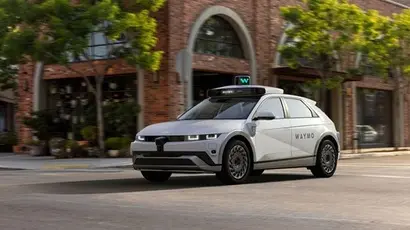
The Ioniq 5 autonomous taxi, which began production in the second half of this year through a partnership with Waymo, is also a key example demonstrating progress as a manufacturing platform. A point of interest will be the plan to upgrade the Software-Defined Vehicle (SDV) strategy, which transforms cars from simple means of transport into data and service platforms. Amid a flow led by global companies like Tesla, which prioritizes Full Self-Driving (FSD), it remains to be seen whether Hyundai can solidify its unique path of 'combining manufacturing capability with AI.'
Doosan's 'Winning Move' for Construction Efficiency... SK Skips
Doosan Group has chosen a pragmatic approach of combining collaborative robots and industrial automation solutions into its existing B2B domain. In particular, AI-integrated construction and logistics equipment, which maximize synergies between Doosan Robotics454910 and Doosan Bobcat, are expected to be featured prominently.
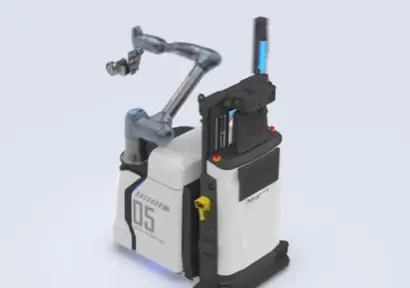
Doosan Bobcat will unveil its vision for future construction sites on the 5th during its media day, including next-generation construction equipment equipped with radar-based hazard detection technology and AI-based maintenance support solutions. Ultimately, these are solutions that focus on productivity and safety. The explanation is that AI can offer optimal solutions based on past maintenance records and technical support information, while also detecting surrounding hazards in real-time and providing collision warnings or intervention.
According to a report by the Association of Equipment Manufacturers (AEM), about 40% of the total workforce in the U.S. construction industry is expected to retire by 2031. The vision is to provide an answer to the challenges facing the U.S. construction industry, such as the generational shift of skilled labor and efficiency loss due to equipment downtime.
Doosan Robotics plans to introduce 'Scan&Go,' a robot capable of analyzing, finishing, or grinding the surfaces of large and complex structures such as aircraft and buildings.

One of the most memorable scenes from CES 2025 was SK Group Chairman Chey Tae-won holding up a model of the company's glass substrate and saying, "I just finished selling some," following a meeting with Nvidia CEO Jensen Huang. However, the atmosphere at this year's CES will be different, as SK Group's scale of participation will be significantly reduced.
SK Group will not operate a joint group booth at this CES, and only SK Hynix000660 will run a small exhibition space and business meeting room. Analysts suggest that this background is rooted in a decision to focus on strengthening internal stability amidst poor performance by major affiliates like SK Innovation and SK Telecom, along with hacking incidents and a trend toward restructuring.
Although they have scaled back for CES, the strategy is to solidify leadership in the AI memory market, led by SK Hynix, while concentrating investments in building AI data center infrastructure to secure a 'golden time' for monetization. Through recent regular personnel reshuffles, SK has completed a transition to a 'small and strong organization' by placing young leaders born in the 80s at the forefront and reducing executive organizations by about 10%.
While the three groups have achieved clear technological progress in AI and robotics this year, it is expected to take time for this to translate into substantial earnings growth. Although SK Hynix is recording record-breaking profits due to the explosive demand for HBM3E (5th generation), the core memory semiconductor for the AI era, major affiliates other than Hynix remain in a transition period where AI investments are turning into profit. The situation is similar for Hyundai and Doosan. Contributions remain at the indirect level, such as manufacturing efficiency through robotics, and even in areas where external growth is notable, such as Doosan Robotics, the proportion of the entire group remains limited.
Ultimately, the key point is whether the AI and robotics fields, which the three groups see as future growth engines, can move beyond cost-cutting to create new revenue. An industry official stated, "If this year was a year that showed the possibilities of AI technology, next year is a time when companies must prove the actual value of those technologies. Companies have a common concern: 'How will we turn AI and robot technology into money?' Their visions will also be focused on the specifics of monetization."