

[비즈한국] It has been confirmed that the Korea Freedom Federation, a leading government-affiliated organization in South Korea, has purchased state-owned land near the Freedom Center in Jung-gu, Seoul—where its headquarters is located—via private contracts over the past two years. The total area of the sold state land is 2,545㎡, and the transaction price reached 20.2 billion won. The Korea Freedom Federation plans to develop the area, including parts of the purchased state land. While the government justified the sale by stating that the land "could not be used independently by the state," doubts remain regarding the appropriateness of the sale. This sale was decided last August during the Yoon Suk-yeol administration.
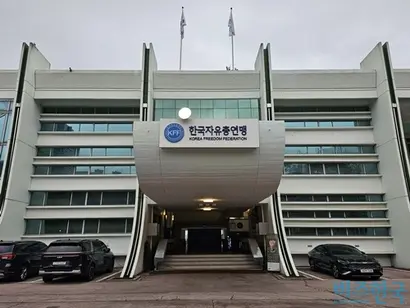
According to Bizhankook’s report, the Ministry of Economy and Finance sold state-owned land adjacent to the Korea Freedom Federation headquarters (Freedom Center) in Jung-gu, Seoul, to the Federation via private contracts over the last two years. The total area of the sold state-owned land is 2,545㎡ (8 plots), with cumulative sale proceeds amounting to 20.2 billion won. The transactions took place in two stages: 13.3 billion won (1,615㎡, 6 plots) in November 2024 and 6.9 billion won (930㎡, 2 plots) in October of this year. It is reported that the Ministry decided on the sale of these lands last August during the Yoon Suk-yeol administration.
The surrounding land is owned by the Korea Freedom Federation. The Federation's predecessor, the Korea Anti-Communist League, received the Freedom Center site (33,038㎡) as a donation from the government in April 1973 during the Park Chung-hee administration. The Emergency State Council, which emerged following the October Yushin, amended the Korea Anti-Communist League Act in March 1973—a month before the donation—to include a new provision allowing state property provided for the Federation's operation to be gifted to them free of charge.
The state land sold this time consisted of plots that the government had retained rather than gifting to the Korea Freedom Federation at the time. The state land sold last year consisted of former roads that had lost their function and are currently being used as a parking lot for the Freedom Center. The state land sold this year is forest land adjacent to a major road (Jangchungdan-ro), currently used as access roads and planting areas for the Freedom Center. The Federation is said to have been leasing these lands from the government for a fee.
The Korea Freedom Federation is currently planning a development project in this area. According to the 'Freedom Center Site Development and Operation Business Public Offering Plan' announced by the Federation last August, the northern parking lot site of the Freedom Center (approximately 8,100㎡) is planned to be leased to a private developer for 50 years for facility development and operation. The state-owned lands sold in this transaction were mentioned in the announcement as sites "scheduled for purchase" or "partially scheduled for purchase." This indicates that the sale negotiations between the two parties began at least before the sale announcement in August of last year.
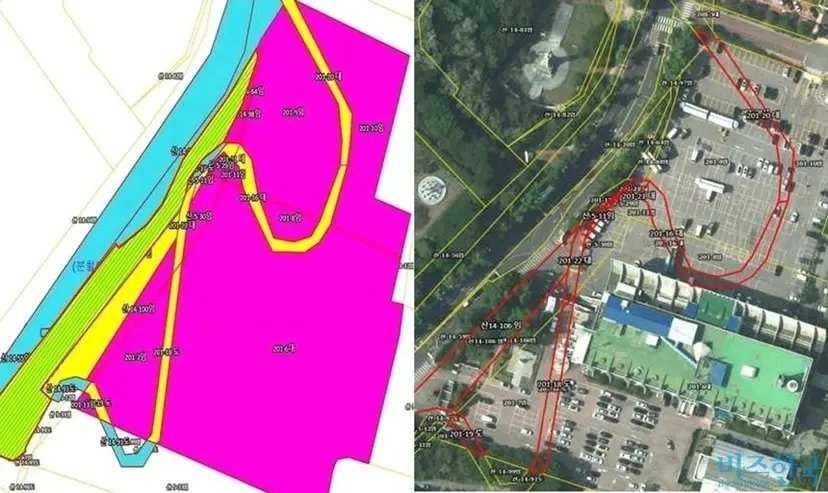
Why was the state land sold to the Korea Freedom Federation? How was the Federation able to purchase state land via private contract? A Ministry of Economy and Finance official explained, "We determined that the state land was land that the Korea Freedom Federation had been using under a lease agreement and could not be used independently by the state, so we decided last August to sell it to the Korea Freedom Federation, which owns the land adjacent to the state property. Under the relevant law, this case qualifies for a private contract." The official added, "The sale price was determined based on the arithmetic mean of appraisals from two appraisal corporations."
According to the State Property Act, contracts for the disposal of non-administrative assets must be publicly announced for general competition. However, if deemed necessary based on the purpose, nature, or scale of the contract, it can be disposed of via private contract in accordance with the enforcement decree. The Enforcement Decree of the State Property Act stipulates that a private contract is possible when the state-owned land has no utility value on its own due to its location, size, shape, or purpose, and is being sold to the owner of adjacent private land.
However, it remains questionable whether this state land sale was appropriate. The state land sold last year was interspersed within the Freedom Center parking lot, making independent use or development seemingly impossible. On the other hand, a portion of the state land sold this year is an 884㎡ rectangular plot located along the main road, leaving room for the government to consider its own use or development. Other methods, such as exchanging the entire state land in the area for neighboring land that could be used or developed, were worth considering. The disposal price was also the statutory minimum appraised value, casting doubt on whether the government effectively exercised its bargaining power.
The Korea Freedom Federation is a national civic organization marking its 71st anniversary. Launched in 1954 to defend and develop the liberal democratic system, it has established itself as the nation's largest security and ideological movement group with a nationwide organizational network. Currently, it receives government support under the Act on the Fostering of the Korea Freedom Federation, engaging in civic education and publishing businesses. It is counted as one of the three major government-affiliated organizations, along with the Saemaul Undong Central Association and the Citizens' Coalition for Better Life.
The Korea Freedom Federation has frequently been suspected of political intervention. During the Park Geun-hye administration, it was accused of being mobilized for government-backed demonstrations and assisting in general elections, leading to the establishment of a 'political neutrality' clause in its articles of association in 2018 during the Moon Jae-in administration. However, this clause was deleted in March 2023, about a year before the general election, during the Yoon Suk-yeol administration. Subsequently, controversy over political intervention flared again as a far-right YouTuber was appointed as an advisor to the Federation. The political neutrality clause was reinstated this past October following the inauguration of the Lee Jae-myung administration.
Meanwhile, President Lee Jae-myung ordered a full halt to the sale of government assets last month. The order requires a comprehensive review of assets currently in the process of or under consideration for sale before deciding whether to proceed. President Lee directed that, in principle, sales should be restrained except for unnecessary assets, and if an inevitable sale is required, it must receive prior approval from the Prime Minister. This analysis suggests the move was taken following a series of criticisms regarding the cut-rate sale of state assets during the Yoon Suk-yeol administration.