

[비즈한국] The fallout from the Coupang personal data breach shows no signs of subsiding. The intensity of government pressure continues to mount, and a trend of "leaving Coupang" is spreading among consumers. In particular, some analysts suggest that the drop in Coupang's usage rate is accelerating as public criticism grows over the company's inadequate response. In line with this, there is also talk that the "spillover benefits" for rival platforms are becoming visible.

User Attrition Continues to Grow
Seller A, who is listed on Coupang, said they are feeling exhausted from the constant calls they have been receiving from advertising agencies lately. They said, "Advertising agencies are flooding us with calls because they know that Coupang sellers' sales are declining. I get calls from over 10 different places a day asking me to run ads," adding, "It seems like they are exploiting the anxiety that sellers are feeling."
Seller A sighed, "For a while after the data breach, the sales decline was minimal, but the drop has become more significant recently. I thought it would blow over quickly, but I didn't expect the aftermath to last this long."
According to Mobile Index from data tech company IGAWorks, Coupang's estimated daily active users (DAU) fell to the 14 million range as of last weekend. The DAU was recorded at 14,843,787 on the 20th and 15,193,116 on the 21st. It has been about two months since October 25th (14,907,800 users) that Coupang's daily user count has dropped to the 14 million level. Compared to the previous week, the number of users has decreased by about 3% in just one week.
As the structure is such that a decrease in users can lead directly to lower sales and exposure, anxiety and nervousness are spreading among sellers listed on Coupang. Contrary to the expectation that the data breach would naturally calm down over time, the fact that customer churn is becoming even more pronounced as time passes has left sellers unable to hide their bewilderment.
Complaints from delivery drivers about reduced volumes are also being heard. One delivery driver said, "Delivery volumes are noticeably decreasing. The volume has dropped by about 20% compared to usual. It has fallen to the level seen two years ago." Another driver added, "I usually deliver to about 100 households, but in the last two weeks, it has dropped to the 80-household level," saying that it feels like the "(data breach) has had an impact."
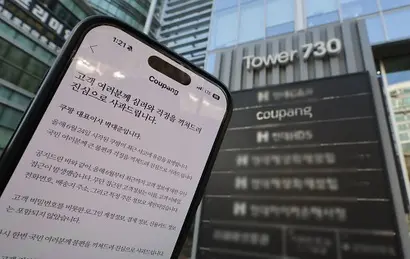
The aftermath of Coupang's data breach is also affecting the overall e-commerce industry. As signs of user churn from Coupang are detected, expectations for "spillover benefits" are rising among rival platforms. With the trend of increasing user numbers and traffic becoming more distinct, particularly among some e-commerce companies recently, expectations across the industry are growing further.
According to Mobile Index, Gmarket's DAU increased by 3.4% from 1,368,991 on the 13th to 1,414,904 on the 21st. Naver Plus Store also saw its DAU grow by 2.6% from 1,291,484 to 1,324,832 during the same period.
Kurly and Oasis Market, which were mentioned as alternatives for early-morning delivery, also saw a noticeable expansion in their user bases. During the same period, Oasis Market's DAU increased by 16.7%, and Kurly's by 7%. The online bookstore industry is also said to be feeling the spillover effects. Aladin saw its DAU increase by 10%, and Yes24053280 recorded a 5.3% growth rate.
An industry official stated, "Hasn't there been a general slowdown in the e-commerce market growth? However, with a slight rebound trend appearing recently, expectations are beginning to emerge."
Public Sentiment Turns Due to Inadequate Response; Can Coupang Normalize?
Industry analysts suggest that Coupang's response approach exacerbated the crisis. Coupang officially announced on November 29th that a data breach involving approximately 33.7 million customer accounts had occurred. However, controversy intensified when it was revealed that they had been aware of the breach on November 18th but waited 11 days to notify users.
In particular, criticism was raised that the company tried to downplay the issue by using the term "exposure" instead of "breach" in its initial announcement. Experts inside and outside the industry are pointing out that Coupang's focus on managing public opinion rather than providing a swift and transparent explanation has amplified user distrust.
Kim Bom-suk, Chairman of the Coupang Inc. Board of Directors, did not issue a direct apology regarding the data breach and failed to respond to a summons from the National Assembly. Although Harold Rogers, who was appointed as the interim representative of Coupang Korea on the 10th, attended the National Assembly hearing, his attitude of avoiding clear answers on key issues further fueled backlash from the Assembly and the public.

The government is further increasing pressure on Coupang. The National Tax Service has launched a special tax audit on Coupang Fulfillment Services, the logistics subsidiary of Coupang's Korean entity. This investigation is reportedly expected to encompass not only the Korean entity but also broader suspicions of tax evasion surrounding Coupang Inc. and Chairman Kim Bom-suk.
Even the possibility of a business suspension for Coupang is being discussed. Han Ki-jeong, Chairman of the Korea Fair Trade Commission, appeared on a news program on the 19th and stated, "If Coupang does not properly implement measures for victim recovery, we could impose a business suspension," which caused a stir.
Industry experts analyze that even if it does not reach the point of a business suspension, normal operations for Coupang may not be easy in the future. Lee Jong-woo, a professor of business administration at Ajou University, said, "If this atmosphere continues, in the worst-case scenario, the possibility of selling Coupang Korea could even be discussed," adding, "If intense tax audits and regulatory risks continue, the company will inevitably face situations it cannot handle."
He continued, "Coupang touched a matter that shouldn't have been touched. As remarks and attitudes that seemed to disregard the Korean market and public opinion have accumulated, public sentiment has effectively turned against them," analyzing that "the trend of user churn is likely to continue for the time being."