

[비즈한국] SpaceX is blanketing the Earth's atmosphere with countless Starlink satellites. The intention is noble: to fill the heavens with a constellation of satellites to ensure internet access anywhere on the planet. However, Starlink is becoming a new adversary for astronomy. Giant ground-based telescopes now suffer from Starlink satellites crossing the sky every day. Every time a photograph is taken, the long, streaking trails left by these satellites appear, making it an essential task to erase them from almost every set of observational data.
However, a more shocking analysis has recently been published. Starlink satellites do not merely disrupt optical observations; they have begun to interfere with radio observations as well. In particular, significant damage is appearing in low-frequency radio observations, which seek the origins of the universe and evidence of the Big Bang. Not only optical astronomers but also radio astronomers have begun to voice their grievances regarding the impact of Starlink.
In 2019, the commercialization of reusable rockets became a reality, and SpaceX began launching a vast number of Starlinks. As of 2025, over 8,000 satellites are in orbit, and on average, a satellite is launched every three days. A massive cluster of artificial satellites filling the sky inevitably hinders ground-based observers, and radio astronomy is no exception.
The International Telecommunication Union (ITU), which manages humanity's 'electromagnetic waves,' strictly separates the realms of daily life and science. Under this protection, radio astronomy detects cosmic radio waves within specific frequency spectrums between 3 kHz and 900 GHz, which do not overlap with the frequencies used by our daily devices like smartphones or internet connections. Due to the intense artificial radio interference already leaking from cities, it is no longer possible to see faint cosmic signals in those frequency bands. This is why radio observatories are located far from urban areas. However, radio waves from satellites passing overhead are unavoidable, no matter where you hide on Earth.
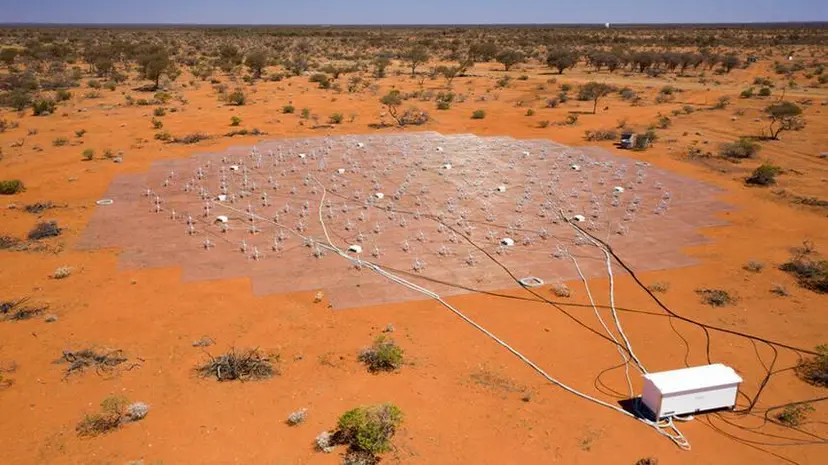
For this analysis, researchers used the Engineering Development Array 2 (EDA2) radio telescope, which observes the universe in the low-frequency range. This telescope is a prototype built as part of the SKA-Low, a massive, next-generation low-frequency radio telescope array scheduled for construction in Western Australia. Utilizing this, they observed the sky in the 50-350 MHz frequency range, where the future SKA-Low will conduct its observations. Over 29 days, they captured 76 million images, within which an unexpectedly large amount of artificial radio noise was detected.
A total of 112,534 instances of radio noise were detected, and analysis revealed that this noise originated from 1,806 Starlink satellites. The signal from Starlink satellites is overwhelmingly more frequent than from others, which is a natural consequence given their sheer number. Observations from another low-frequency radio telescope, LOFAR, also detected a significant number of Starlink signals. In just one hour of observation, 68 instances were detected at 110-188 MHz, 10 at 88 MHz, and 97 at 100-188 MHz.
The signals from Starlink satellites detected in the low-frequency range below 5 GHz are not simple internet downlink signals; their frequencies are strictly different. These signals are what we call Unintentional Electromagnetic Radiation (UMER), generated by the electronic components inside the satellite. Such UMER is not subject to ITU regulations. The ITU only limits the direct electromagnetic waves used by satellites to communicate with the ground, not the radiation that unintentionally leaks as internal devices operate.
Unfortunately, Starlink satellites are 'talking' too loudly in the low-frequency range, cluttering the view of radio telescopes. It is as if something entirely unexpected is happening in a sort of radio 'Wild West.' In the low-frequency range below 5 GHz, only about 5% of the frequency spectrum is allocated to radio astronomy. There is nowhere else to retreat, which only compounds the damage.
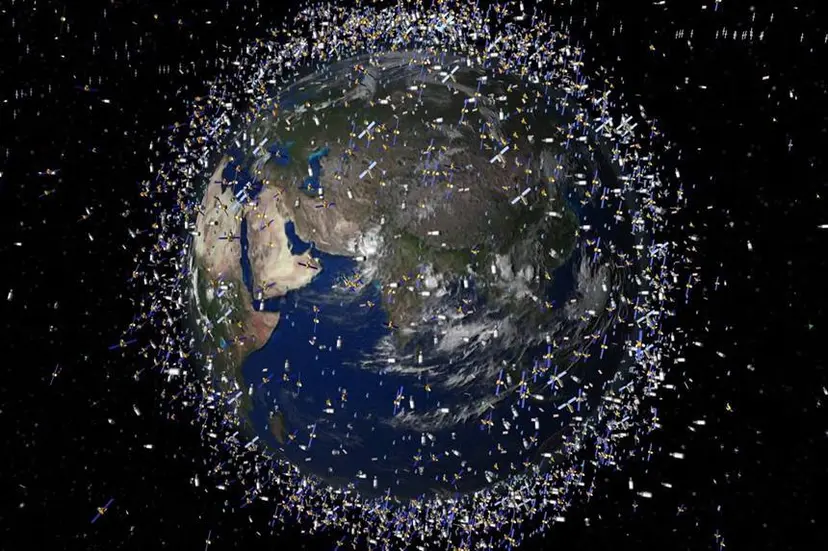
The most frequently detected satellite in this analysis was Starlink's v2-mini Direct-to-Cell (DTC) model, with 175 identified. The DTC model currently accounts for 70% of all operational Starlink satellites. DTC satellites are designed to send internet signals directly to user smartphones without the need for a ground base station, making their signals correspondingly more powerful. The 1,806 satellites captured in just one month represent about 30% of all Starlink satellites currently in operation.
To minimize misidentification, astronomers were extremely rigorous in their satellite detection criteria, filtering out data with low probability. Therefore, it is estimated that the actual number of satellites causing radio noise is even higher. Radio noise detected by telescopes is not limited to Starlink's UMER; it also includes various radio waves, such as FM radio signals transmitted from ground antennas, that are reflected off the satellites.
For astronomers, Starlink's encroachment into the low-frequency radio observation field is deeply alarming. This region is specialized for viewing crucial moments in cosmic history—specifically the 'Epoch of Reionization,' when the universe was re-ionized by the birth of brilliant stars and violent galactic activity shortly after the Big Bang. However, with countless Starlink satellites layered over the memories of the Big Bang, we are losing the ability to view the precious history of our universe in its entirety.
As this issue has belatedly become visible, astronomers are now arguing that the ITU must systematically regulate UMER. While it is not yet fully understood how the UMER emitted by satellites in space leaks, leaving it unaddressed means we will face a future where more Starlink satellites launch, filling our skies with noise and potentially blinding radio telescopes to the universe.
As this discontent mounts, SpaceX is attempting to reach agreements with institutions like the U.S. National Radio Astronomy Observatory, such as temporarily disabling Starlink operations when passing over areas where major radio telescopes are located.
In fact, the Starlink project has long raised concerns on various fronts. Beyond the impact on observational astronomy, it requires careful consideration from an environmental perspective. Satellites contain high amounts of aluminum, a material rarely found in naturally occurring meteorites. As satellites burn up while entering the atmosphere, this aluminum reacts with oxygen in the air to form aluminum oxide. Analysis suggests that each falling Starlink satellite creates about 30 kg of aluminum oxide nanoparticles on average. With 4 to 5 Starlink satellites falling every day—a natural process as they exhaust fuel or are affected by solar activity—this means approximately over 300 tons of aluminum oxide accumulate in the atmosphere annually.
Aluminum oxide triggers chemical reactions that produce chlorine in the atmosphere, and chlorine can deplete the ozone layer. Many astronomers worry that the impact cannot be ignored. There are even analyses suggesting that metallic debris from satellites scattered in the atmosphere could potentially cause minute changes in the Earth's magnetic field. We have reached a point where we are leaving our mark not only on the ground but also above our heads, and in doing so, our lives are facing a new form of threat.
In 1995, atmospheric scientist Paul Crutzen, who won the Nobel Prize in Chemistry for his research on the ozone layer, suggested that humanity has become a force capable of leaving geological-scale traces in the earth, proposing that the present be classified as the 'Anthropocene.' Now, the concept of the Anthropocene has expanded beyond the earth beneath our feet. We are leaving our traces in the sky as well. We are at a point where we need a brand-new level of reflection, something humanity has never before attempted: how to wisely and fairly share the sky and space above our heads.
References
https://ui.adsabs.harvard.edu/abs/2023A%26A...678L...6G/abstract
https://public.nrao.edu/news/astronomers-satellite-internet-provider-develops-new-system-to-share-the-sky/
https://spaceaustralia.com/news/emerging-risk-radio-astronomy
About the author, Ji Ung-bae: He loves cats and the universe. After watching 'Galaxy Express 999' as a child, he dreamed of sharing the beauty of the cosmos. He is currently an assistant professor in the Faculty of Liberal Arts at Sejong University, engaging in various science communication activities including lectures and writing. He has authored books such as 'A Piece of the Universe Every Day', 'Scientists of the Starry Universe', 'Cannot Go But Can Know', and 'Strange Questions That Come to Mind When Looking at the Universe', and has translated works such as 'The Hitchhiker's Guide to the Real Universe', 'How I Killed Pluto', 'Quantum Life', and 'Cosmigraphics'.