

[비즈한국] The pharmaceutical industry is strongly protesting after the government introduced a plan to overhaul the drug pricing system, which significantly cuts the prices of generic drugs under the justification of saving health insurance finances. Industry representatives argue that this policy goes beyond merely worsening profitability; it shakes the very growth structure of the domestic pharmaceutical industry. They warn that if the industrial ecosystem—which relies on profits from generics to fund new drug research and development (R&D), facility expansion, and investments in bio-ventures—collapses, the ultimate damage will be felt in public health and national competitiveness. The conflict between the government and the pharmaceutical industry regarding drug prices is heading toward a full-blown clash.
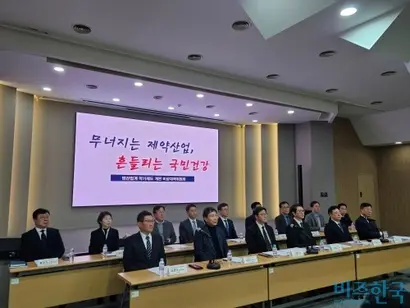
On the 22nd, an emergency press conference was held at the Korea Pharmaceutical and Bio-Pharma Association building in Bangbae-dong, Seocho-gu, Seoul, led by the Emergency Response Committee (ERC) for the Improvement of the Drug Pricing System for the Development of the Pharmaceutical and Bio Industry. Anxiety within the industry has been escalating since the government's drug pricing overhaul plan was announced at the Health Insurance Policy Deliberation Committee on the 28th of last month.
The pharmaceutical industry is concerned that this proposal ignores the reality of the industrial field. Even large pharmaceutical companies that develop innovative new drugs rely heavily on generics for a significant portion of their revenue; if generic profits shrink, investment in new drug R&D and facilities could decrease. Critics point out that this could lead to the domestic pharmaceutical industry, which has recently been achieving successive breakthroughs in new drugs, missing its "golden time." The ERC estimates that for every 1% drop in corporate profits, R&D investment will fall by 1.5%. However, the government's plan intends to lower the generic drug price calculation ratio from the current 53.55% to 40%, a reduction of 25.3%. The committee expects an annual loss of up to 3.6 trillion won.
Yoon Woong-seop, Co-chair of the ERC (Chairman of the Korea Pharmaceutical and Bio-Pharma Association, Vice Chairman of Ildong Pharmaceutical249420), warned, "With the operating profit margin of the top 100 domestic pharmaceutical companies at only 4.8% and net profit margins at around 3%, the drug pricing overhaul will accelerate the collapse of a domestic industry already pushed to its profitability limits." Co-chair No Yeon-hong (Chairman of the Korea Pharmaceutical and Bio-Pharma Association) also voiced his concerns: "Since the introduction of the actual transaction price system in 1999, the industry has managed to achieve these results despite facing price cuts over 10 times. We are now on the cusp of major achievements in the coming years. If drug prices are cut further, it will kick away the ladder that leads from generics and improved drugs to new drug development."
Warnings were also raised that cuts in generic drug prices could negatively impact the entire bio-industry ecosystem beyond just pharmaceuticals. Analysts suggest that if pharmaceutical companies' capacity to invest is reduced due to falling profits, the flow of capital toward promising bio-companies will inevitably decline. Cho Yong-jun, Vice Chair of the ERC (Chairman of the Korea Pharmaceutical Cooperative, Chairman of Dong-A Socio Holdings/Dong-A Pharmaceutical006620), stated, "While bio-ventures grow with investments from financial investors (FI), pharmaceutical companies also participate as strategic investors (SI) using their operating profits to help with the initial difficulties," adding, "There is a need for a deeper understanding of the generic industry."
On the 28th of last month, the government announced a plan to lower the price ceiling for generic drugs from the current 53.55% of the original drug price to 40% to save on health insurance costs. Furthermore, it set a policy to abolish the premium system that applied 59.5% of the original drug price for the first generic released for one year, and to reduce the number of generics receiving the price ceiling from 20 to 10 for the same ingredient. The ERC is demanding a full review of the proposal and has signaled that it will watch the government's response before determining its next moves, suggesting that conflict between the two sides is expected to intensify.