

[비즈한국] The KRW/USD exchange rate is nearing the psychological resistance level of 1,500 won, casting a dark cloud over the entire South Korean economy. The aftermath of global monetary tightening, geopolitical risks, and the spread of protectionism based on 'nation-first' policies are fueling the depreciation of the won, shaking the foundations of an economy that is highly dependent on foreign trade.
In particular, the real estate market—the core of South Korea’s asset market and a key determinant of national sentiment—is facing an unprecedented, multifaceted crisis brought on by the macroeconomic variable of exchange rates. Recalling the market collapse and pain caused by past surges in exchange rates, the impact of the current high-exchange-rate climate on the structural volatility of the real estate market transcends simple price fluctuations and connects directly to the survival of the entire industrial ecosystem.
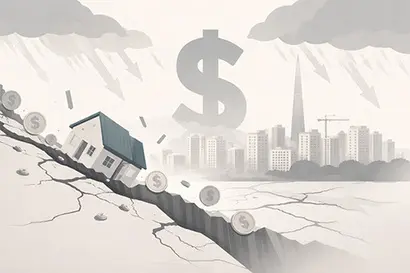
The first channel through which rising exchange rates project onto the real estate market is the inevitable link to interest rates. In a capitalist economic system, defending the value of currency is the destiny of a central bank. A rapid decline in the value of the won accelerates the outflow of foreign capital, leaving the Bank of Korea with no choice but to maintain a high-interest-rate stance, considering the interest rate gap with the U.S. This leads to an increase in loan interest rates at commercial banks, dealing a fatal blow to the South Korean real estate market, where household debt is overwhelmingly high.
Borrowers who used excessive leverage to acquire assets during the past period of low interest rates are now facing snowballing interest burdens, which erodes household disposable income and paralyzes actual purchasing power. Ultimately, a high exchange rate forces high interest rates, and high interest rates act as the primary catalyst for the evaporation of housing demand and a transaction cliff, cementing downward pressure on the market.
The second point to note is the irreversible increase in costs on the supply side caused by high exchange rates. The South Korean construction industry has a structural vulnerability in that it relies on imports for most of its energy and raw materials. A rise in the exchange rate causes the import unit price of key raw materials such as crude oil, bituminous coal, and iron ore to skyrocket, which transfers into cost increases across the entire construction process, from cement and steel bars to finishing materials. The recent conflicts over construction cost increases at major redevelopment sites nationwide are the materialization of the 'inflationary counterattack' brought on by high exchange rates.
Construction firms are avoiding new orders or slowing down projects due to deteriorating profitability, a move highly likely to boomerang back as a supply shortage within the next few years. The high exchange rate is forcing up sale prices, raising the threshold for ordinary citizens to own homes, while simultaneously creating a double bind of a 'supply cliff' due to deteriorating business feasibility, which deepens market supply-demand imbalances.
Third, the high exchange rate is triggering the detonator of the real estate project financing (PF) market and threatening the soundness of the financial system. Real estate development projects presuppose highly sophisticated financial techniques and long-term capital input. However, the interest rate hikes and soaring costs resulting from the rising exchange rate maximize the uncertainty of these projects, tightening the flow of funds from the financial sector.
Difficulties in raising new capital and the failure to refinance existing loans could lead to a chain reaction of bankruptcies among construction companies and developers, which carries a high risk of causing simultaneous insolvency for the financial institutions that provided funds to those projects. The exchange rate variable sits at the starting point where a crisis in the real economy shifts into a crisis in the financial system. Despite the government's soft-landing measures, if the high-exchange-rate climate persists, the accumulated PF insolvency contains enough destructive power to explode at any time as a potential time bomb for our economy.
Fourth, we cannot ignore the relative decline in asset values and the solidification of market polarization. From the perspective of global investors, the decline in the value of the won means that real estate assets in Korea are on 'sale' when priced in dollars. This facilitates the influx of foreign capital into so-called 'top-tier' areas, such as office buildings in downtown Seoul or high-end residential areas in Gangnam, becoming a factor that reinforces the downward rigidity of prices in specific regions.
Conversely, for domestic residents, the anxiety over the falling value of won-denominated assets grows, increasing the desire for the 'dollarization' of assets. Consequently, while real estate in provincial or suburban areas with lower location competitiveness is shunned, a 'super-polarization' phenomenon—where demand is concentrated only in core areas with excellent value preservation capabilities—will be further intensified by exchange rate volatility. This could become the seed of social conflict by widening asset gaps between regions.
Fifth, the 'psychological panic' caused by high exchange rates worsening macroeconomic indicators as a whole is the biggest downward risk for the real estate market. Real estate is sensitive to the expectations of market participants, so much so that it is called a psychological asset. Rapid fluctuations in the exchange rate amplify concerns over worsening external trade conditions and current account deficits, fueling distrust in the national economy as a whole.
When economic entities lose confidence in future income and take a conservative position, decisions to purchase homes, which involve long-term and large-scale capital input, are the first to be deferred. The disappearance of transaction volume leads to a stagnation of front- and rear-end related industries such as brokerage, interior design, and moving services, creating a vicious cycle that lowers the quality of public services as local government tax revenues from real estate acquisitions decrease. The economic anxiety triggered by high exchange rates is inhibiting vitality across society and pushing the real estate market into a swamp of long-term stagnation.
To overcome this crisis, the government and policy authorities must devise more fundamental and multi-dimensional countermeasures. Simple stopgap measures such as easing real estate regulations or providing short-term funding are insufficient to overcome the macroeconomic waves of a high exchange rate.
First, financial authorities must preemptively clear up potential insolvency in the real estate PF market and strictly distinguish between sound and unsound projects to induce qualitative improvement of assets. While temporary liquidity supply is necessary, it must prevent moral hazard caused by the prolongation of 'zombie companies' and maximize the market's self-cleansing mechanisms.
In addition, an institutional foundation that can mediate conflicts arising from construction cost increases must be solidified. Through the refinement of standard contracts and the advancement of construction cost verification systems, unnecessary disputes in the private sector should be reduced, and the public sector must rationally reflect cost increases to ensure that the housing supply chain does not collapse.
This is not merely a matter of helping the construction industry; it is a critical task directly linked to the residential stability of future generations. At the same time, it is necessary to increase the effectiveness of policy financial products for ordinary citizens and end-users who are vulnerable to exchange rate volatility, and to design a dense housing welfare net so that the impact of economic fluctuations is not concentrated on the socially vulnerable.
Participants in the real estate market also need a cool-headed shift in perception. They must escape from the illusion of explosive asset value growth enjoyed during the past periods of low interest rates and stable exchange rates. Real estate has now evolved into a complex financial asset that moves in tandem with macroeconomic trends, rather than a mere object of speculation.
One must keep in mind that blind investment without reading exchange rate trends, interest rate directions, and changes in the international situation can lead to irreversible financial losses. A conservative investment strategy that diversifies risk through asset portfolio diversification, ensures rigorous leverage management, and focuses on assets with actual intrinsic value is more urgent now than ever.
In conclusion, the high-exchange-rate situation we face today is both a massive test of the South Korean real estate market's constitution and an opportunity to resolve structural contradictions. While the pain brought by the rising exchange rate is bitter, we must use this as an opportunity to normalize the price structure of a market riddled with bubbles, induce a soft landing for household debt, and enhance the efficiency of the construction industry. Rather than panicking or relying on vague optimism in the face of crisis, all economic entities must humbly accept the grave warning posed by the macroeconomic variable of the exchange rate and engage in pain-sharing and innovation.
The government must maintain a consistent policy stance that increases market predictability, companies must seek cost reduction and productivity improvement through technological innovation, and households must establish sound consumption and investment cultures. No matter how high the waves of a high exchange rate may be, if the fundamentals of our economy are strong and the wisdom of market members is consolidated, this crisis can become a stepping stone for the South Korean real estate market to mature to the next level.
The earth becomes firmer after a storm passes. We look forward to this current period of labor becoming the foundation for a sustainable real estate market and a healthy economic structure in the future, and it is time for our society to show its potential to wisely overcome the waves of exchange rates.
Kim Hak-ryeol, head of the Smart Tube Real Estate Research Institute, known by his pen name 'Pashong', previously served as a team leader at the Real Estate Research Division of Gallup Korea. He operates and hosts the Naver blog 'Pashong's World Tour' and the YouTube channel 'Stu TV'. He is the author of books including 'Rewriting the South Korean Real Estate User Manual (2025)', 'The Power of Gyeonggi-do Real Estate (2024)', 'Absolute Principles of Seoul Real Estate (2023)', 'The Future of Incheon Real Estate (2022)', 'Kim Hak-ryeol's Absolute Principles of Real Estate Investment (2022)', 'Future Map of South Korean Real Estate (2021)', and 'From Now On, Only Places That Rise Will Rise (2020)'.