

[비즈한국] On December 19, 2025, during a briefing by the Ministry of National Defense, the Ministry of Patriots and Veterans Affairs, and the Defense Acquisition Program Administration, President Lee Jae-myung squarely targeted a painful failure that contrasts with the achievements of our defense industry. Despite South Korea's leap into a powerhouse that exports fighter jets to the global market, he pointedly asked, "Why weren't missiles developed alongside the development of fighter jets?" regarding the reality that we still rely on overseas sources for air-to-air missiles, the very 'teeth' of those aircraft. The President's inquiry accurately hits the current state of the defense landscape, where issues of delayed weapon integration during the FA-50 export to Poland and controversies over the lack of domestic missiles for the KF-21 are intertwined.
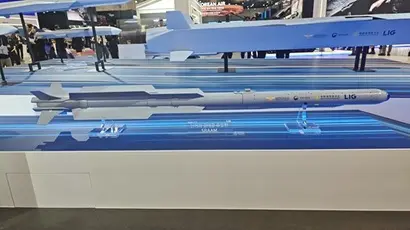
To address the facts first, the AIM-9X missiles intended for the FA-50PL version are tied up in export approval and integration discussions between the U.S. and Polish governments, creating structural limitations that our manufacturers cannot resolve independently. The situation for the KF-21 is not much different. Currently, German-made IRIS-T and British-made Meteor missiles are being imported and operated, and it is difficult to dismiss the criticism that the initial quantity of 150 missiles is insufficient compared to the 120-unit production scale to be completed by 2032. Of course, since the mass production of domestic short-range air-to-air missiles is scheduled to begin in 2033, the claim of 'one missile per jet' may be somewhat exaggerated, but the weaponry vacuum in the initial phase of deployment is an undeniable fact.
Ultimately, the fundamental answer to the President's question must be found in the short-sighted feasibility logic of our past defense policies. In the early stages of fighter development, parallel development of domestic missiles was repeatedly thwarted by the framing of 'budget waste' and 'performance risk.' Many experts at the time argued that importing foreign weapons was unconditionally advantageous, claiming that domestic missiles would become a weakness rather than a strength of the airframe. There was even support for abandoning the localization of radars—the eyes of the fighter—to license-produce or directly import foreign models to ensure ease of integration with foreign missiles.
The result of such choices was disastrous. As seen in the case of the improved FA-50, we faced a double whammy: delivery delays caused by importing and installing specific radars from foreign manufacturers to accommodate their missiles, and ultimately losing control over weapon integration itself. If we had developed domestic radars and guided weapons as a package from the start, the current situation of having to rely on third-country approvals in export negotiations would not have occurred.
This phenomenon is still repeating itself. Investments in core technology development or essential components are still frequently blocked by the wall of 'business feasibility' that considers only the initial purchase cost. This is because it emphasizes the economic logic that buying off-the-shelf is cheaper, ignoring the cost-saving effects on Total Life Cycle Cost (TLCC) and the value of strategic independence that initial investment brings. However, we have already painfully experienced how vulnerable platform exports are without independent core weaponry.
The air-to-air missile project, for which localization has already been announced, must now evolve beyond complaints about development costs into a general-purpose platform that can expand into various derivative systems, such as surface-to-air missiles, anti-radiation missiles (ARM) for air defense suppression, and long-range air-to-surface missiles. A nation that puts off today's tasks until tomorrow can never become a defense powerhouse. We must keep in mind that full-scale support for domestic guided weapons, ammunition, and core engine technology is the only path to turning the Republic of Korea into a truly 'smart, elite, and strong military' in 10 years' time.