

[비즈한국] As the Serious Accidents Punishment Act (SAPA) enters its fifth year of implementation, industry perspectives remain divided. Contrary to its purpose as a preventive measure to correct structural safety inadequacies, there is a prevailing perception that the law is primarily focused on punishment in the event of an accident. Amidst this, a senior official from the Ministry of Employment and Labor personally stepped forward to address these misunderstandings head-on, stating, "The SAPA is not meant for punishment, but to induce chief executives to make responsible safety investments and build management systems."
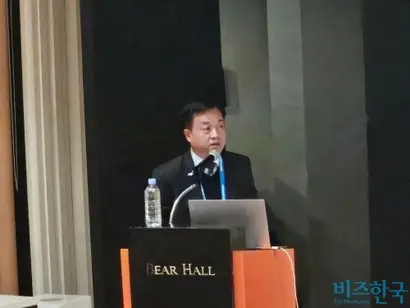
Kwon Tae-sung, Head of the Seoul Regional Employment and Labor Office, attended the 2025 General Meeting of the Pharmaceutical Safety and Health Association held at the Daewoong Pharmaceutical annex in Gangnam-gu, Seoul, on the 16th to explain the comprehensive labor safety measures announced by the government in September. He specifically aimed to dispel misconceptions regarding the intent of the SAPA. "The intent of the SAPA is to reduce fatal accidents by encouraging CEOs to invest in safety and health and manage them systematically, acknowledging that even if safety departments work hard, it is difficult without the CEO's attention and active involvement," Kwon explained. He emphasized, "It is not a law that punishes companies if they have managed their safety protocols to the best of their ability."
Article 6 of the SAPA stipulates that business owners and management executives can be punished if a serious industrial accident occurs due to a violation of their duties to ensure safety and health, as assigned in Articles 4 and 5. This means that business owners may be exempt from liability if they have faithfully fulfilled their duties, such as: establishing and implementing a safety and health management system (including personnel and budget); creating and implementing follow-up measures to prevent recurrence after an accident; implementing improvement or correction orders issued by central or local government agencies; and fulfilling management obligations required by safety and health-related laws, even if an unavoidable accident occurs.
There have been cases where courts have cleared management executives in SAPA trials by finding no causal link between the violation of duties and the accident, or by judging that the accident was unforeseeable and unavoidable. In March of this year, the Ulsan District Court acquitted the CEO of SK Multi-Utility and a subcontractor's CEO, who were indicted for violating the SAPA following a December 2022 accident where a subcontractor's worker was crushed to death by coal at the SK Multi-Utility cargo handling area.
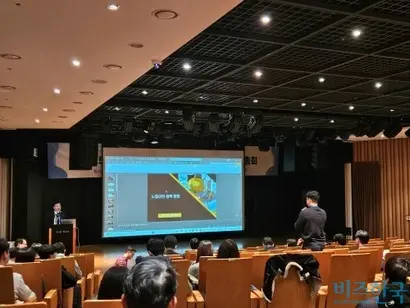
Kwon requested that companies proactively respond to safety management, noting that the Lee Jae-myung administration has made labor safety a top national priority. The first cabinet meeting ever to be broadcast live was focused on measures to eradicate serious accidents, and President Lee Jae-myung consistently delivers the message that "safety is an obligation, and life is more precious than money." When fatal accidents occurred consecutively at POSCO Group affiliate sites, the President strongly criticized them, stating, "Deaths from industrial accidents are akin to murder due to willful negligence." Consequently, Kwon predicted that the trend of strengthening accident prevention policies through the SAPA would continue for some time.
After his lecture, Kwon expressed his willingness to Bizhankook to continue communicating with the pharmaceutical and bio industries to improve understanding of government policies, not just in health and safety, but in various fields. "From our perspective, we welcome channels that administratively connect with associations to introduce policies and explain their intent," he said. "In the construction industry, information is shared on a quarterly basis, and I hope we can find various ways to cooperate with the pharmaceutical and bio industries as well."
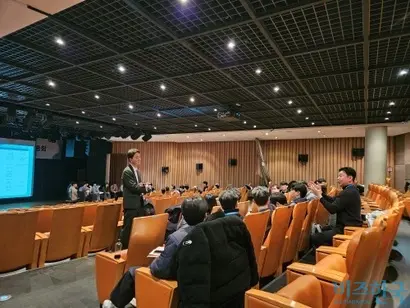
The Pharmaceutical Safety and Health Association is an autonomous organization established for pharmaceutical companies to exchange information related to the SAPA and jointly seek ways to spread a corporate safety and health culture. Safety and health managers from over 40 companies—including pharmaceutical firms like Dong-A Pharmaceutical, Daewoong Pharmaceutical, GC Biopharma006280, Chong Kun Dang185750, and Yuhan Corporation000100, as well as bio companies like ST Pharm, Medytox, and GC Cell—participate, representing teams in safety, health, ESG, and SHE (Safety, Health, and Environment).