

[비즈한국] Our manufacturing sector has shown strong performance, hitting an all-time high in total shipment value since record-keeping began. This result is driven by the boom in the semiconductor industry last year. Conversely, industries such as petrochemicals and steel have shown weakness, highlighting a sharp contrast between high-tech sectors and traditional manufacturing.
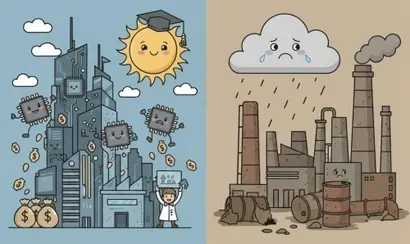
The National Data Agency released the '2024 Mining and Manufacturing Survey Results' on December 17. The Mining and Manufacturing Survey is a national statistical survey used to understand the structure, distribution, and actual industrial activities within the mining and manufacturing sectors. Last year, the shipment value for mining and manufacturing (for businesses with 10 or more employees) reached a historic high of 2,090.2 trillion won, an increase of 97.7 trillion won (4.9%) compared to the previous year's 1,992.1 trillion won.
The mining and manufacturing shipment value first surpassed the 2,000 trillion won mark in 2022 at 2,043.9 trillion won, but fell back to 1,992.1 trillion won in 2023. At the time, factors such as the slump in the semiconductor industry and the decline in international oil prices played a role. Last year, it broke through the 2,000 trillion won threshold again, signaling a recovery in the manufacturing sector.
The number of businesses, number of employees, and added value also reached all-time highs. The number of mining and manufacturing businesses with 10 or more employees reached 73,890, an increase of 508 (0.7%) from the previous year. The number of people employed in mining and manufacturing grew by 62,000 (2.1%) year-on-year to 3.046 million. Added value also increased by 77.2 trillion won (11.4%) compared to the previous year, reaching 752.3 trillion won.
In particular, the recovery of the semiconductor industry drove these results. The shipment value of the electronics and communications industry, which includes semiconductors, reached 71.2 trillion won, a massive 26.4% increase from the previous year. Added value also surged by 48.4% to 169.4 trillion won. The electronics and communications sector saw a significant rebound in both shipments and added value thanks to the explosive growth of the AI market and rising demand for memory semiconductors such as HBM.
A National Data Agency official explained, "A base effect played a role, as the indicators had dropped in 2023 due to the semiconductor industry slump, leading to a significant rebound."
The automotive industry, which was the only sector to see a boom in 2023 amid the manufacturing downturn with a 16.3% increase in shipments, continued to show growth last year, overcoming the base effect and maintaining its market standing. The automotive industry recorded 294.1 trillion won in shipments, a 1.8% increase compared to the previous year.
On the other hand, traditional manufacturing sectors like petrochemicals and steel received disappointing report cards. The shipment value of the petroleum refining industry was 180 trillion won, a 3.2% increase from the previous year. However, this is largely due to the base effect of a sharp decline in 2023, and it remains significantly lower than the 199.4 trillion won recorded in 2022. The petrochemical industry is currently facing poor conditions, to the point of initiating restructuring due to low-cost competition from China.
Steel shipments declined last year, continuing the trend from 2023. The shipment value for the primary metal industry, which includes steel, fell by 1.9% to 182 trillion won. Steel was also hit directly by global oversupply, centered in China. Furthermore, analysis suggests that the steel industry, which is highly sensitive to domestic demand such as construction, has been impacted by the prolonged construction sector slump.
Concerns are rising that the downward trend in the petrochemical and steel industries could become structural. Park Sung-geun, head of the Industry Structure and Policy Effect Analysis Division at the Korea Institute for Industrial Economics & Trade, analyzed, "The outlook for the petrochemical industry is bleak as it relies heavily on exports, and not only China but also the Middle East is entering the petroleum refining market," adding that "in the case of steel, Chinese-made general-purpose products are already being supplied domestically."