

[비즈한국] The full-scale implementation of the European Union (EU) Carbon Border Adjustment Mechanism (CBAM) is just fifteen days away. Industries subject to the regulation, such as steel and aluminum, are busy measuring carbon emissions and verifying the data. However, with the implementation deadline looming, the EU has yet to designate verification bodies or finalize implementation details, raising concerns that the confusion will persist for some time.
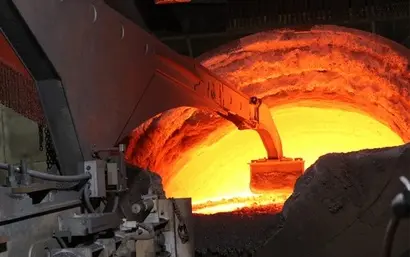
CBAM, which goes into full effect on January 1 next year, is a system that imposes a type of ‘carbon tax (tariff)’ proportional to the carbon emissions generated during the production process when products made in countries with looser carbon regulations are imported into the EU. It was designed to prevent ‘carbon leakage,’ where companies move production bases to countries with weaker carbon regulations to avoid such constraints. The six target categories are steel, aluminum, cement, electricity, fertilizers, and hydrogen.
While the period until October 2023 was a ‘transitional period’ limited to carbon emission reporting obligations, the new year marks the beginning of the ‘definitive period,’ bringing financial burdens as EU importers must have their carbon emission data verified and purchase CBAM certificates.
Carbon emission measurement under CBAM requires calculating the embedded emissions for each product. This includes not only ‘direct emissions’ generated during the production process but also ‘indirect emissions’ from purchased electricity consumed, and ‘precursor emissions’ from raw and intermediate materials. In essence, all carbon emissions occurring throughout the production process must be measured.
An official from the Climate Economy Division of the Ministry of Climate, Environment and Energy stated, “The approach differs from the existing domestic Korea Emissions Trading Scheme (K-ETS), which measures emissions by company,” adding, “We are providing consulting support to companies regarding the calculation methods for product-specific emissions.”
The domestic steel and aluminum industries, which are most heavily impacted by CBAM, are struggling with anxiety. This is because, with only about fifteen days left until the definitive period begins, verification bodies and implementation details have not yet been finalized.
On February 26 of this year (local time), the EU announced the ‘Omnibus Package,’ a legislative amendment to simplify CBAM-related regulations. The package was generally welcomed by Korean companies as it included provisions allowing for third-country verification bodies and eased requirements for emission calculations and certificate purchases. However, since the verification bodies have not been finalized and detailed regulations such as carbon emission calculation formulas have not been released, industries are having difficulty responding.
The steel industry is preparing for data collection and verification by utilizing the EU Emissions Trading System (ETS) approach. POSCO stated, “Due to the uncertainty, we are communicating with clients by creating pilot response guidelines based on the EU ETS method and existing data,” adding, “We plan to continue communicating with the European Commission to ensure our efforts in reducing carbon emissions are reflected.”
The aluminum industry is measuring carbon emissions through ESG consulting firms. Some companies are even building production facilities in Europe to avoid the regulation. Lotte Aluminium completed an aluminum cathode foil plant in Hungary in 2021 and has been producing products there. Products manufactured at this location are not subject to CBAM.
Small and medium-sized enterprises (SMEs) cannot escape this either. Even if they do not export directly, they must measure emissions if they are suppliers for products exported to Europe. However, they lack sufficient capabilities and possess very little understanding of CBAM itself.
In a ‘Survey on SME CBAM and Carbon Neutrality Response Status’ conducted by the Korea Federation of SMEs in October 2023, 78.3% of SMEs answered that they were ‘mostly unaware’ or ‘completely unaware’ of CBAM. Similarly, in the ‘2025 Gyeonggi-do Carbon Neutrality Response Corporate Survey’ by the Gyeonggi FTA Trade Promotion Center, 50% of companies stated they were ‘failing to respond’ to CBAM.
A consulting industry official remarked, “SMEs lack an understanding of the concepts of greenhouse gases and the CBAM system,” adding, “As there are no experts in charge of this within these companies, there are difficulties in both persuading them of the necessity and proceeding with actual measurements.”
Some are raising voices demanding that the government go beyond consulting support and increase assistance for building greenhouse gas inventories, which would enable companies to build their own measurement capabilities. Choi Ki-won, head of the Economic Transition Team at the Green Transition Institute, pointed out, “The 2026 budget for ‘responding to international carbon trade regulations’ is 1.6 billion KRW, and the greenhouse gas inventory construction project supported by this budget is limited to about 40 cases per year.” He added, “Considering that the Ministry of Trade, Industry and Energy estimates there are approximately 18,000 manufacturing companies exporting to the EU, the current scale of support is insufficient for a preemptive response to international carbon regulations.”