

[비즈한국] December 3, 2025, marked one year since Yoon Suk-yeol's declaration of martial law. December 10 was Human Rights Day and the 77th anniversary of the Universal Declaration of Human Rights. As we reflect on the meaning of democracy and human rights this December, I would like to introduce two meaningful books.
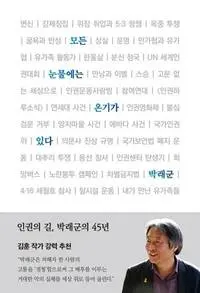
Every Tear Has Warmth
By Park Rae-gun, Published by Hankyoreh Publishing
452 pages, 25,000 won
Park Rae-gun. It is no exaggeration to say that South Korea's human rights movement grew by leaning on him. Serving as the secretary-general of the Association of Bereaved Families for Democracy and a standing activist at Sarangbang Group for Human Rights, he has always been present at the painful parts of Korean society. From Pyeongtaek Daechu-ri and the Yongsan Namildang building to the Sewol ferry and Itaewon. Over the past 45 years, Park has stood guard at countless human rights sites, including campaigns for the truth behind suspicious deaths, the abolition of torture, exposing human rights abuses in facilities for the disabled, movements to abolish the National Security Act, and providing support to families affected by various disasters. In recognition of his dedication, he has received the Deulbul Award, the NCCK Human Rights Award, and the Im Chang-soon Award.
'Every Tear Has Warmth' is a book that summarizes Park Rae-gun's 45-year history of human rights activism, refined and supplemented from the 'Park Rae-gun's Dream of Human Rights' series serialized in the Hankyoreh.
Park Rae-gun entered Yonsei University in 1981 as a Korean literature major but became a student activist after witnessing the reality of the military dictatorship. The reason he has been able to dedicate himself to the human rights movement without tiring is because of a promise he made to his younger brother, Park Rae-jeon. Rae-jeon, then a student at Soongsil University, died after setting himself on fire on June 4, 1988, while calling for the “punishment of the mastermind behind the Gwangju Massacre.” He was only twenty-six, in the prime of his youth. As he covered his brother's coffin with soil, Park Rae-gun made a vow: “I will do your share. I will remain tough and fight until we create the new world for the people that you hoped for.” That vow made by 28-year-old Park continues to this day.
Park Rae-gun describes his own struggle as a “fight you wage even knowing you might lose.” However, as novelist Kim Hoon said, “While his fight may lose in specific instances on the ground, in the bigger picture, he rarely loses.” This is because it is a fight where “you cannot talk about winning or losing.” Thanks to his fighting in that way, Korean society has been able to come this far.
“Why do you live like that?” Park says he is still often asked this question. It likely means: Why do you still live doing such difficult work? Park replies that he does it simply because it is work that needs to be done. 'Every Tear Has Warmth' may well be the deep-hearted answer to this question.
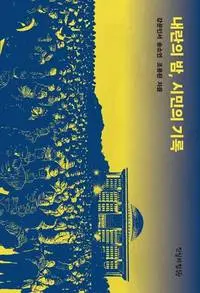
The Night of Insurrection, A Citizen's Record
By Kang Moon Min-seo, Song So-yeon, Jo Yong-hwan, Published by Truth's Power
448 pages, 22,000 won
“The National Assembly is being raided by martial law troops right now, so please head to the National Assembly!”
“We are also heading to the National Assembly!” “I’m going too!” “Me too!”
On the night of December 3, 2024, at 10:27 PM, during those tense moments when Yoon Suk-yeol declared martial law, citizens gathered at the National Assembly. Why did they leave their homes and head to the National Assembly, what actually happened in front of the building, and what kind of fear, anger, and solidarity did they feel at the time?
'The Night of Insurrection, A Citizen's Record' is a book that records the testimonies of 313 citizens who rushed to the National Assembly that night to block the insurrectionist forces. It is the first 'citizen history' created by interviewing 313 people from February to July 2025 and analyzing over 10,000 pages of transcripts. It goes beyond simply reenacting the events of that night; it is a collective reconstruction of the night when, for the first time since 'Gwangju,' citizens became the final bastion of democracy.
Those who rushed to the front of the National Assembly on December 3 display a new public identity as “citizens who protect democracy,” transcending political orientation, gender, generation, occupation, and region. They are the “12/3 Citizens.”
What were they trying to protect? The voices of the 313 are humble, but the society they dream of is concrete: A society where extreme inequality is resolved, the weak are protected, and solidarity functions instead of hatred. A country where the system protects democracy so that citizens do not have to return to the streets.
Just as the records of Gwangju in 1980 saved 2024, if a crisis strikes Korea again, their stories will save democracy.