

[비즈한국] The rapid-fire success of 'Taxi Driver 3' stands out. In an era where television ratings have become somewhat meaningless, 'Taxi Driver 3' is recording significant numbers. With a peak viewership of 15.6% for episode 8 and a nationwide average of 12.3%, it not only topped its time slot but also ranked first among all miniseries aired that week. Furthermore, the 2049 viewership rating, a key indicator, has ranked first across all channels and all programs in December. Why on earth is South Korea so obsessed with the 'Taxi Driver' series?

To be honest, I only recently started watching 'Taxi Driver'. The reason I hadn't watched it before was simple: I felt I already knew what it was about without even watching it. The reason I started late is also simple: having reached its third season with excellent ratings, I felt it was a neglect of my professional duty as a pop culture columnist to skip it. After starting and catching up to the live broadcast of season 3 in just a few days, here is what I thought: It is true that it’s a drama you feel you already know, but there is no reason not to watch it because it is simple, clear, and entertaining. Even those 'professional dieters' who say, 'It’s just a taste I already know,' wouldn't be able to refuse this flavor.
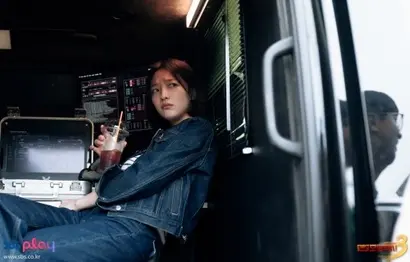
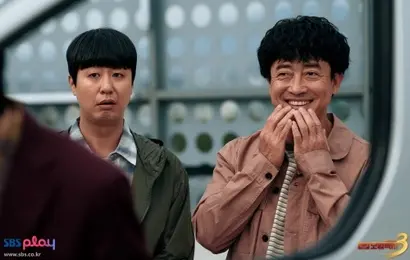
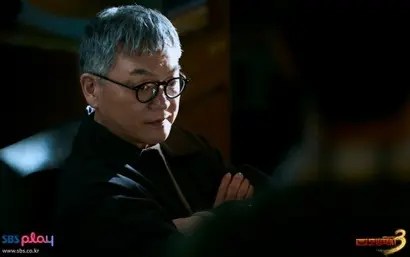
'Taxi Driver' is a series about a private revenge service where a taxi company, Rainbow Taxi, and driver Kim Do-gi (Lee Je-hoon) take revenge on behalf of wronged victims. The members of this service—including Kim Do-gi, Rainbow Taxi CEO and Bluebird Foundation head Jang Sung-chul (Kim Eui-sung), accounting employee and IT expert Ahn Go-eun (Pyo Ye-jin), and maintenance engineers Chief Choi (Jang Hyuk-jin) and Chief Park (Bae Yoo-ram)—all share the pain of having lost family members to criminal acts. Beyond pain, they carry rage. They cannot simply stand by and watch as criminals operate in the blind spots of public authority, evading the consequences of their actions through holes in the social legal system.
In a way, the 'Taxi Driver' series has very high sustainability. After all, the supply of infuriating, unjust criminal cases is inexhaustible. Just as Ji Kang-heon's cry of 'innocent if rich, guilty if poor' remains valid from the 1980s to today. In fact, most of the episodes in the 'Taxi Driver' series are based on real-life events reported in the news, which brings them to life. The 'U-Data incident' from season 1 was inspired by the 'Yang Jin-ho WeDisk case,' and the 'Black Sun incident' in season 2 was clearly an adaptation of the 'Burning Sun club gate.' Other episodes are also based on cases we’ve all heard of in the news, and this trend continues in 'Taxi Driver 3' with episodes covering 'used car false listing and flood-damaged car fraud' and 'professional volleyball match-fixing.'
The reason the public cheers for the 'Taxi Driver' series is clear. In reality, powerful and wealthy criminals find ways to evade justice or receive punishments that are insignificant compared to their crimes. Chairman Yang Jin-ho of WeDisk? He was sentenced to 12 years in prison for multiple charges and is scheduled to be released in 2030. He made tens of billions in illegal profits by distributing sexual exploitation materials, but since there was no forfeiture or recovery of criminal proceeds, he’ll likely continue to live well after his release. The Burning Sun gate? The masterminds received absurdly short sentences, fueling public outrage over who the real core of the power was.
In contrast, the criminals handled by the Rainbow Taxi team in the series receive a desperate retribution from driver Kim Do-gi. The logic of the retribution is 'an eye for an eye.' The gang that sold flood-damaged cars—'ticking time bombs on the road'—is forced into one of their own 'scrap' cars and dropped into an abyss. An offender who killed and buried someone, causing years of agony for the victim's family, is made to endure equivalent pain before being buried in a dirt pit. Although this is clearly private revenge that constitutes a crime, no viewer sympathizes with the punished perpetrators. Perhaps our support for Kim Do-gi and the Rainbow Taxi crew is a manifestation of our deep longing for a world where justice is realized—even if only within the confines of a drama.
Since one episode is resolved over roughly two episodes (some cases take four), a sense of speed is essential. The show boldly ignores cumbersome logical hurdles, emphasizing catharsis by wrapping up revenge quickly. The parts that might feel a bit too heavy are offset by comedy, highlighting the activities of Kim Do-gi and the Rainbow Taxi staff as they adopt various 'sub-characters.' In other words, it takes real, infuriating cases and blends them with comedy and intense action, lightening the gravity of the 'private revenge' theme.

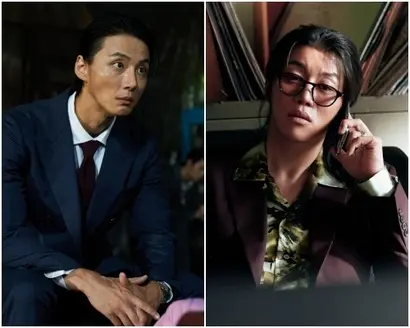
Furthermore, 'Taxi Driver 3' is attracting attention by casting major stars as notable villains. It began with Japanese actor Sho Kasamatsu, known to Koreans for his role as Denji in the Netflix film 'Good News,' as the first villain. Yoon Si-yoon, who played the villain Cha Byung-jin in the used car fraud episode, left a strong impact with terrifying acts that overturned his previous image and visuals to match. Eum Moon-suk, who played the hidden mastermind Cheon Gwang-jin in the volleyball match-fixing case (episodes 5-8), also added tension to the drama as a mad villain. The preview for episode 9 shows Jang Na-ra appearing as a vicious agency CEO for her first-ever villain role. Since Baek Hyun-jin, who played the U-Data chairman in season 1, became a hot topic, top-tier stars no longer hesitate to shine as guest villains. Watching to see who the next villain will be is part of the fun.
Is there a possibility for a season 4 of 'Taxi Driver'? I’d say 99%. As I mentioned, the likelihood of this series running out of source material is very low. However, it is painful to realize that we live in a society that feels so frustrated with reality that we hope for a taxi driver like Kim Do-gi to keep driving. I wish such private revenge dramas would remain as far-off historical plays, but that’s unlikely.
Who is the columnist Jung Soo-jin?
I have worked for various magazines, covering and writing about movies, travel, and pop culture. While I don't want to fall behind trends, I have become an 'old-fashioned person' who watches the latest dramas only to predict the obvious clichés in the next scene. I am drifting through the vast world of OTT services, trying to regain my edge, and my current wish is for an integrated OTT subscription plan.