

[비즈한국] Information and Communications Technology (ICT) exports in November shattered all previous records since statistics began, fueled by a semiconductor boom. This marks the tenth consecutive month of growth, with the trade balance also achieving its largest surplus in history.

According to ICT export and import trends released by the Ministry of Science and ICT on the 14th, ICT exports last month reached $25.45 billion, a 24.3% increase compared to the same month last year. During the same period, ICT imports rose by 2.7% to $12.77 billion, resulting in a record-high trade surplus of $12.69 billion.
The combination of recovering global demand for ICT devices and a rebound in semiconductor prices is driving the expansion of ICT exports and the trade balance. ICT export figures over the past three months—$25.4 billion in September and $23.3 billion in October—have occupied the top three spots for monthly records, highlighting the strong growth trend. Semiconductor exports have reached an all-time high for the fourth time this year.
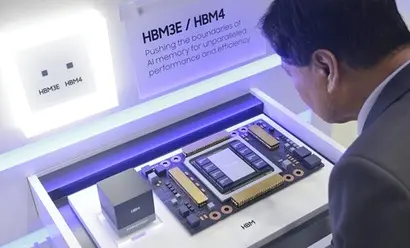
By item, semiconductor exports surged by 38.6% to $17.27 billion, leading the overall growth. This was driven by rising fixed prices for DRAM and NAND memory, as well as steady demand for high-value products such as High Bandwidth Memory (HBM). Increased investment in AI servers and data centers has provided strong support for memory demand.
While mobile phones (3.5%), computers/peripherals (1.9%), and communication equipment (3.3%) also showed growth, displays saw a 3.7% decline.
Exports of mobile phones increased due to strong demand for high-performance components like camera modules and 3D sensing modules. Computers and peripherals transitioned to growth due to robust SSD demand stemming from expanded investment in AI servers. Communication equipment grew on the back of recovering demand for automotive equipment destined for the U.S. and components for Vietnam.
Despite a rebound in OLED exports due to strong sales of new smartphones and increased adoption in IT devices, display exports fell due to declining LCD prices and slowing downstream demand.
By region, exports to China (including Hong Kong) accounted for the largest share at $9.91 billion, up 25.3% from the previous year. Vietnam (11.6%), the European Union (18.1%), the United States (7.9%), and Taiwan (32.2%) also maintained growth trends.
The semiconductor boom is expected to continue for the time being. According to a report published on the 5th by the Institute for International Trade at the Korea International Trade Association, semiconductor exports next year are projected to reach $180 billion, a 5.9% increase from this year. The analysis suggests that continued AI-related investments by Big Tech companies and rising memory prices will sustain the growth in exports.